Automotive group Stellantis, owner of brands like Fiat and Jeep, is quietly reintroducing diesel engine versions for at least seven car and van models in Europe, as the company adjusts its electric vehicle strategy.
According to surveys from dealership websites and company statements to Reuters, Stellantis reintroduced diesel engines for many vehicle lines from late 2025, ranging from passenger vans to the Peugeot 308 hatchback and the premium DS Automobiles No.4 model. In a response to Reuters, Stellantis stated its decision to maintain and even expand its diesel engine portfolio to meet customer demand and drive growth.
This move comes as electric vehicle sales fall short of expectations, and Europe eases emission targets, allowing internal combustion engines to persist longer. In the United States, Stellantis's largest market, a trend of reduced investment in electric vehicles also emerged under President Donald Trump.
Competitive advantage against Chinese automakers
In 2015, diesel vehicles once accounted for over 50% of new car sales in Europe. However, their market share began to plummet after the "Dieselgate" scandal, when many automakers were found cheating on emissions tests. Data from the European Automobile Manufacturers' Association (ACEA) shows that diesel vehicles accounted for only 7,7% of new car sales in 2025, while battery electric vehicles reached 19,5%.
Many automakers had completely stopped selling diesel-powered vehicles. Stellantis also significantly reduced its diesel portfolio, with only a few models remaining compared to dozens five years ago. However, diesel remains a segment where Chinese automakers cannot strongly compete. Additionally, diesel vehicles have significantly lower selling prices than electric vehicles, creating an advantage as automakers face profit challenges.
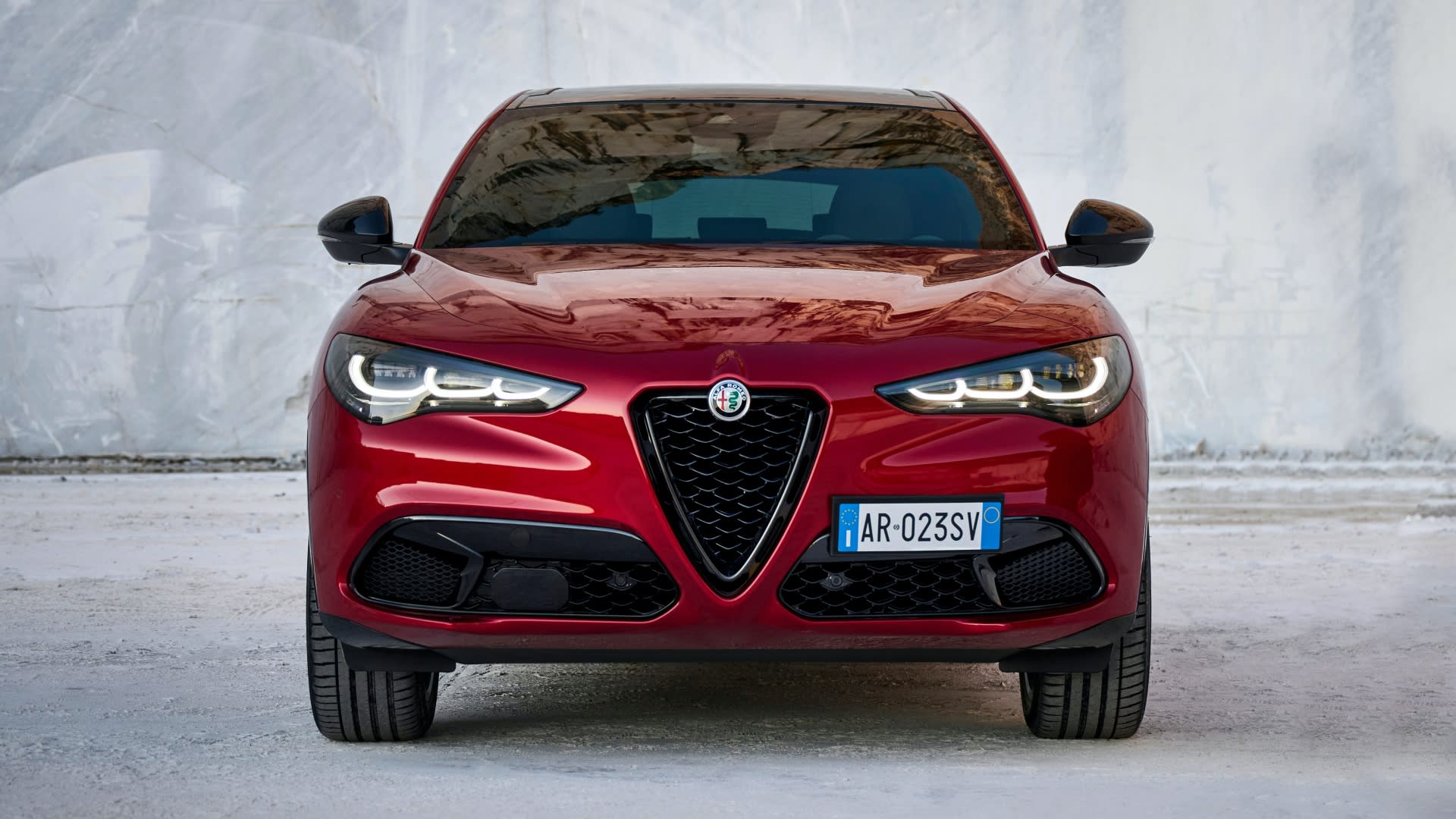 |
Alfa Romeo Stelvio, a crossover model for which Stellantis reintroduced a diesel version. Photo: Stellantis
Last week, Stellantis announced costs totaling 22,2 billion euro (26,35 billion USD) due to adjusting its electric vehicle ambitions, causing its stock to fall to its lowest level since the group's formation in 2021 after the merger between Fiat Chrysler Automobiles and PSA. Previously, the company aimed for electric vehicles to account for 100% of sales in Europe and 50% in the United States by 2030, but actual demand was lower than predicted.
Numerous diesel models return
Stellantis reintroduced several popular internal combustion engine models in the United States, such as the Jeep Cherokee and the Hemi V8 engine, to regain market share. Last year, the company also added a gasoline hybrid version for the Fiat 500 model alongside the battery electric version.
In Europe, where the company's sales decreased by 3,9% in 2025 and 7,3% in 2024, diesel versions of the Opel Astra, Opel Combo, Peugeot Rifter, Citroen Berlingo, and several other models are being reintroduced. The company also continues to produce diesel models like the premium DS7 SUV, along with the Alfa Romeo Tonale, Stelvio, and Giulia sedan lines, to meet high customer demand.
Data from the car buying and selling platform CarGurus shows a sharp decline in the number of new diesel models in the UK, from 167 models in 2020 to 57 models in 2025. Specifically, Stellantis brands in the UK currently offer only 4 diesel models, down from 26 previously.
According to Chris Knapman, editorial director of CarGurus UK, Stellantis is going against the general market trend. He believes that diesel engines remain suitable for those who frequently travel long distances or require significant torque for towing. Furthermore, as Chinese automakers aggressively launch electric and plug-in hybrid vehicles, diesel could become a differentiator, helping European brands maintain a competitive edge.
Ho Tan (according to Reuters)