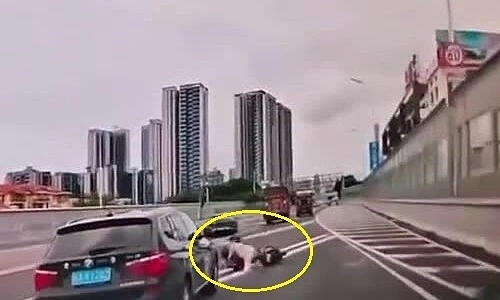
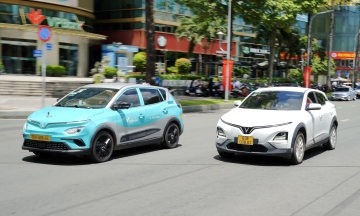
On 10/5, a dashcam captured a dangerous incident on DT379 road in Hung Yen province. An electric motorbike, ridden by a boy without a helmet and lacking a license plate, unexpectedly sped past a car traveling at 80-85 km/h. The video footage suggests the electric motorbike reached speeds of approximately 90-100 km/h, covering tens of meters ahead of the car in just one to two seconds.
According to the Road Traffic Safety Law, electric motorbikes are designed for a maximum speed of 50 km/h and a motor power not exceeding 4 kW. However, the Traffic Police Department (Cuc CSGT) indicated that the vehicle in the video shows clear signs of having been modified to exceed these legal limits.
Most common electric motorbikes currently available in Vietnam have a top speed of around 45-60 km/h. While some higher-power models can reach 70-90 km/h, achieving speeds close to 100 km/h typically requires technical intervention into the vehicle's systems.
How can electric motorbikes be modified for speed?
Electric vehicles can be modified for speed through several common methods. These include replacing the electronic controller to increase discharge current, installing higher voltage batteries, unlocking speed limits via software, or fitting a more powerful motor. In some cases, the drivetrain is also altered to enhance acceleration capabilities.
Finding services that modify electric vehicles is currently quite easy. Social media platforms feature numerous accounts advertising electric vehicle speed upgrades, with costs starting from a few million dong. Users can even purchase batteries, motors, controllers, or related components on e-commerce sites and install them at home by following instructional videos posted by sellers.
 |
Unidentified electric vehicle batteries sold on social media. *Screenshot* |
Why are electric vehicles easier to upgrade than petrol motorbikes?
According to technicians, electric vehicles are generally easier to modify for speed than petrol motorbikes due to their simpler construction and greater reliance on electronic systems. Increasing the power of a petrol motorbike typically involves extensive engine modifications, such as replacing pistons, camshafts, ECUs, fuel injection systems, or exhaust pipes, which demand complex mechanical expertise and significant cost.
In contrast, an electric vehicle primarily consists of a battery, an electric motor, and an electronic controller. Simply replacing the controller with one that has a higher discharge current or installing a higher voltage battery can substantially boost acceleration and top speed. Some models also feature software-based speed limits that can be unlocked through electronic settings or by replacing the firmware, allowing the vehicle to run faster.
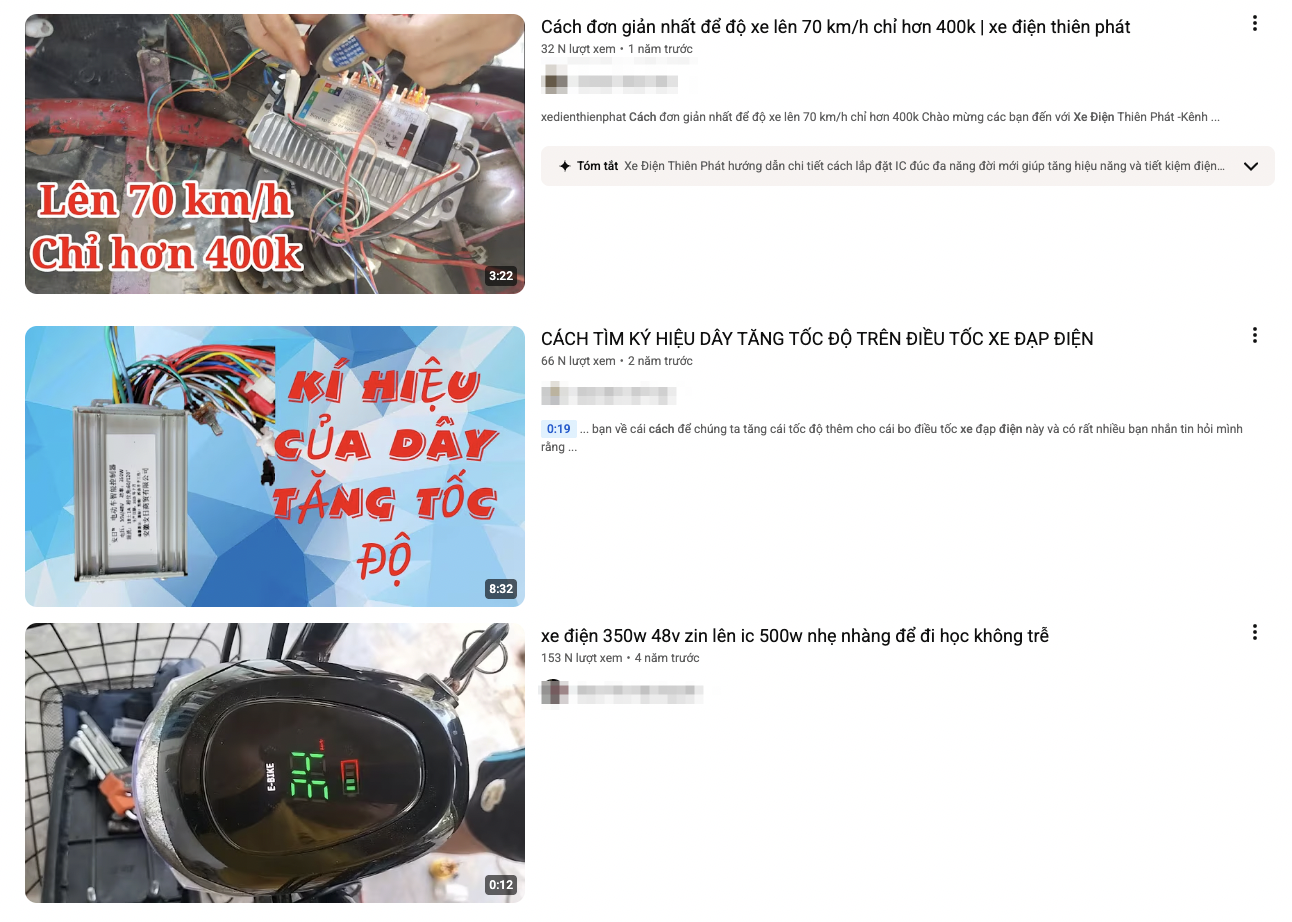 |
Users can easily find videos on how to modify and unlock power for electric motorbikes and electric bicycles online. *Screenshot* |
Furthermore, many common electric vehicles utilize modular components that are easy to remove and install, making battery, motor, or controller replacements much simpler than with petrol vehicles. Users do not need specialized repair skills and can often perform these modifications themselves after watching online tutorial videos.
However, experts warn that increasing power beyond design limits can compromise the vehicle's chassis, braking system, and tires. Many electric vehicles designed for students are intended to operate at speeds around 40-50 km/h. When modified to nearly 100 km/h, these vehicles pose significant risks, including loss of control, battery fires or explosions, and damage to the electrical system from continuous high-load operation.
Proposal to tighten management of electric vehicle modification facilities for students
Under Decree 168, individuals who arbitrarily alter the frame, engine, shape, dimensions, or characteristics of a vehicle, commonly referred to as vehicle modification, face fines of 4-6 million dong. In addition to the monetary penalty, offenders may also be required to restore their vehicle to its original, compliant condition.
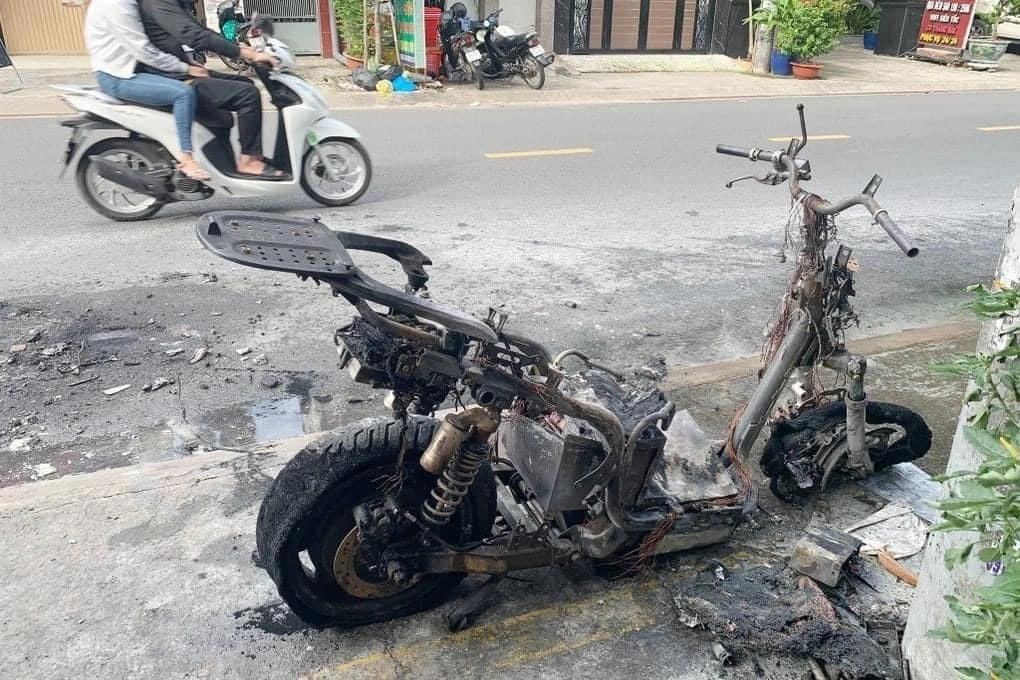 |
An electric vehicle with a modified battery pack (metal box between the frame) caught fire in TP HCM. *Photo: Vietnam Electric Vehicle Association* |
Given the growing prevalence of modified student electric vehicles, many have called for stricter management of repair and upgrade facilities. During a National Assembly Standing Committee (Uy ban Thuong vu Quoc hoi) meeting on 11/5, Hoang Duy Chinh, Permanent Vice Chairman of the Council for Ethnic Affairs (Hoi dong Dan toc), urged the government to investigate solutions for managing the widespread electric bicycle modification occurring in many localities. He noted that while parents purchase electric bicycles for their children's commute to school, students often take these vehicles to repair shops to replace controllers or add batteries to boost speed and performance. "This is very dangerous, many children have caused accidents. When checked, it was found that the vehicle had additional batteries installed," he said.
Hoang Duy Chinh emphasized that this issue is common, particularly in remote areas where the management of repair facilities is lax. The Member of Parliament proposed that authorities intensify inspections of electric vehicle repair and modification shops. He also suggested developing more stringent technical standards to curb unauthorized structural alterations and speed increases beyond the manufacturer's design specifications.
Pham Hai