Ford's future vehicles could autonomously detect approaching hazards and move out of harm's way, if the company's patented technology proves successful. The patent details the system's operation, noting that most of the required hardware and software already exists. However, whether this feature will reach production remains to be seen.
The patent describes a "moving object detection system" designed to monitor potential threats around a parked vehicle. These threats could range from a runaway shopping cart or another driver reversing too quickly, to a car sliding on an icy parking lot.
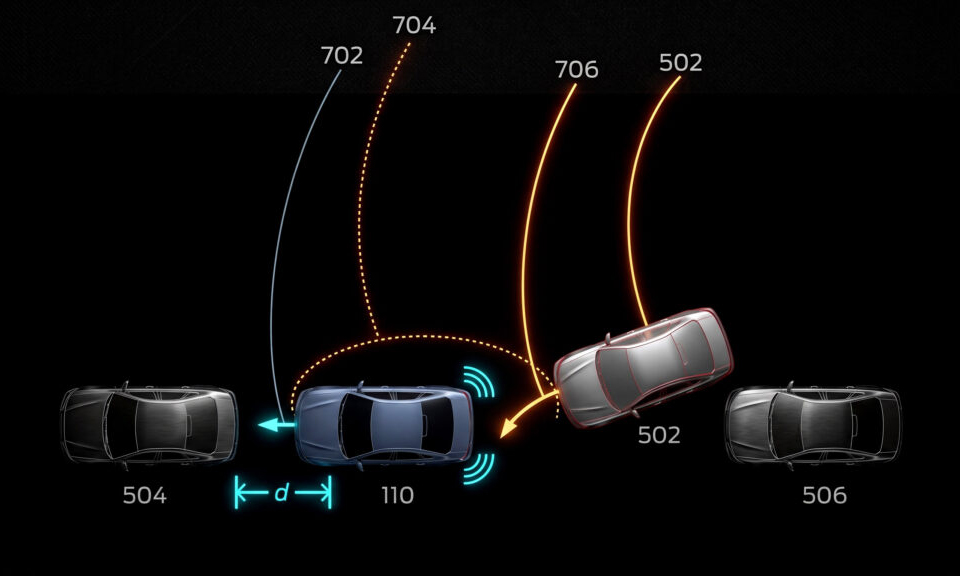 |
Illustration from Ford's patent application. Photo: USPTO/Ford
Utilizing external cameras, sensors, and integrated software, the system would continuously monitor nearby objects to calculate if they are on a collision course. Should the vehicle determine a collision is probable, it could first attempt to warn the approaching entity by flashing its lights, honking its horn, or issuing other alerts, provided there is ample time before impact.
If the system determines a collision is unavoidable through conventional means and sufficient space is available, the parked vehicle could automatically relocate. Ford's patent essentially extends existing active safety systems to operate when no one is inside the car. If a collision cannot be fully prevented, the system is designed to use its cameras to record the event.
A Ford spokesperson told Ford Authority that 'filing patent applications is a normal part of any strong business, as this process protects new ideas and helps us build a robust intellectual property portfolio'.
Consequently, ideas detailed in patent applications do not always indicate a company's definitive business plans or future products.
My Anh