Ford Vietnam recently launched upgraded Ranger and Everest series in the domestic market. A key change is the company's shift from the previous 2.0 bi-turbo diesel engine to a new single-turbo configuration across all diesel-powered models. This decision aims to enhance durability, simplify the operating system, and meet the practical usage needs of most customers.
A notable benefit of the new 2.0 single-turbo engine is that it no longer requires users to add AdBlue exhaust fluid, making usage and maintenance more convenient. AdBlue is a colorless compound, composed of 67,5% water and 32,5% urea, and is non-toxic upon skin contact. The vehicle's selective catalytic reduction (SCR) system directly injects AdBlue solution into the exhaust stream, reducing the amount of NOx gas (NO, NO2) released into the environment. Eliminating this requirement reduces complexity for drivers.
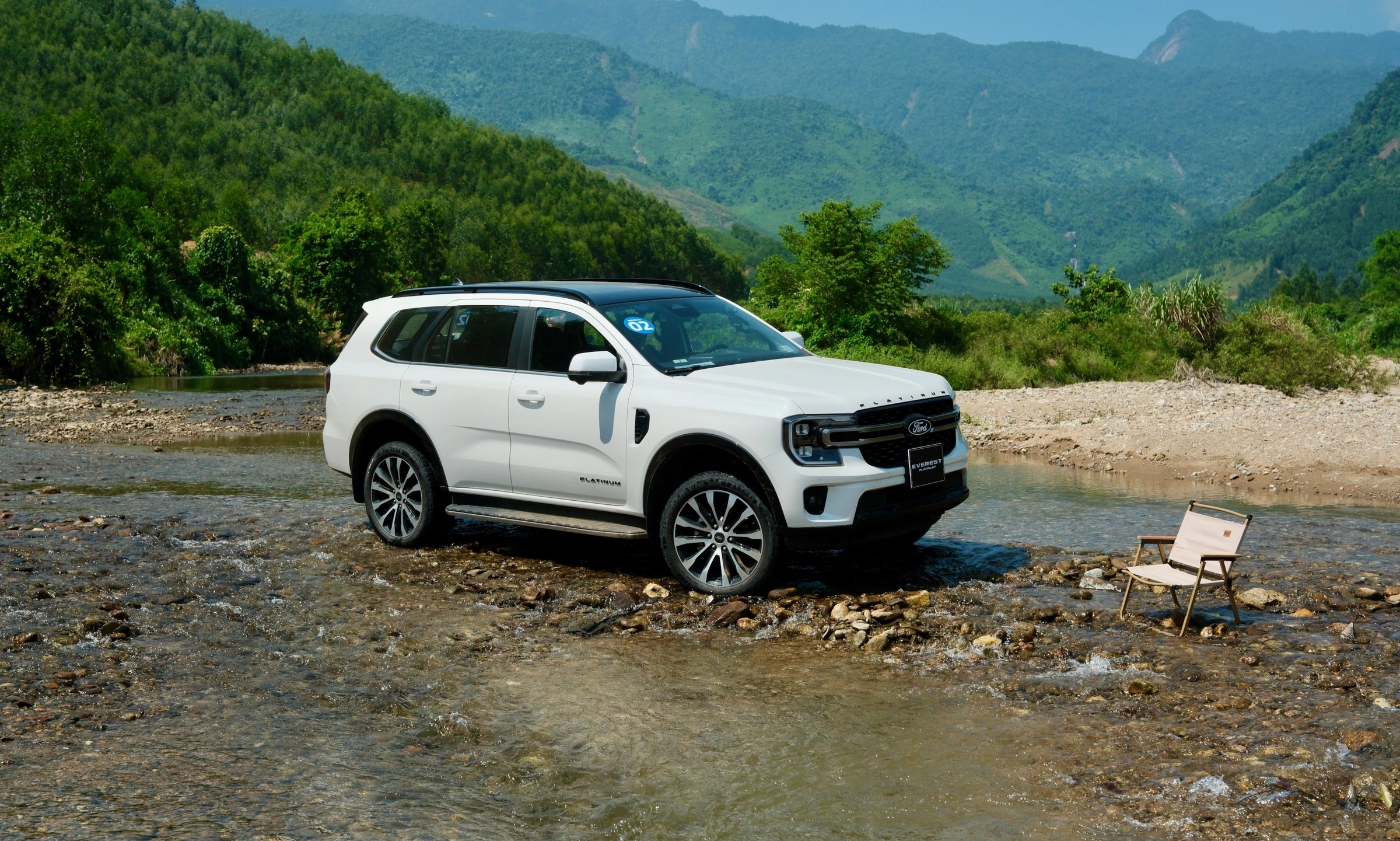 |
The Ford Everest, a vehicle that previously used a 2.0 bi-turbo diesel engine in its last generation, now offers only a 2.0 single-turbo diesel or a 2.3 EcoBoost petrol engine option. *Ho Tan* |
The new 2.0 single-turbo engine produces 170 horsepower and 405 Nm of torque. This is a reduction from the previous 2.0 bi-turbo diesel engine's 207 horsepower and 500 Nm of peak torque. Despite the lower output, Ford states the new engine improves fuel efficiency and maintains stable performance for city driving, highway travel, or light loads. Previously, the 2.0 bi-turbo diesel engine was featured in many premium Ford versions, such as the Everest Titanium+ priced at 1.468 billion VND, the Everest Platinum at 1.545 billion VND, and the Ranger Raptor at 1.299 billion VND. With the latest upgrade, Ford has also introduced larger displacement options for premium versions: a 2.3 EcoBoost petrol engine with 300 horsepower (Everest Platinum), a 3.0 V6 diesel engine with 250 horsepower (Ranger Wildtrak), and a 3.0 V6 petrol engine with 392 horsepower (Ranger Raptor).
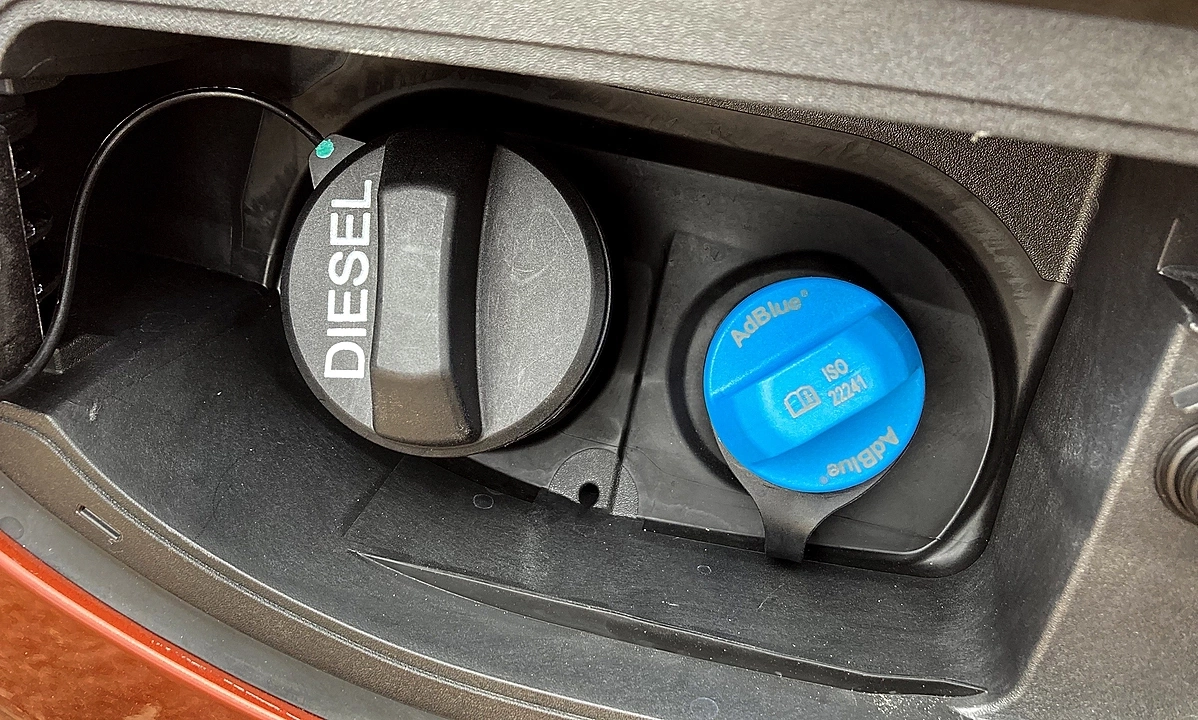 |
The cap for refilling AdBlue solution (blue) on a previous-generation Everest. *Thanh Nhan* |
This strategic shift aligns with a trend observed in several international markets, including Australia, New Zealand, and South Africa, where the 2.0 bi-turbo diesel engine has not been offered in vehicles since early this year. The previous bi-turbo engine faced performance degradation after prolonged use in hot and humid climates across Southeast Asia, particularly when fuel quality was inconsistent or did not meet Euro 6 standards.
Another significant reason for the change is Ford's move to eliminate the "wet belt" cam belt system from the 2.0 bi-turbo diesel engine. This belt operates in an oil-immersed environment, designed to reduce friction and noise. However, its durability after extended use had been a subject of debate. For the new 2.0 single-turbo engine, Ford has adopted a traditional timing chain instead. This aims to improve long-term durability, reduce the risk of camshaft drive system damage, and optimize maintenance costs.
Ho Tan