American, European, and Japanese automakers are increasingly lagging behind their Chinese counterparts, as companies in the populous nation lead not only in electric vehicles but also in batteries, design, and software. During a visit to factories in Beijing and Hefei on the sidelines of Auto China 2026, the BBC observed high levels of automation and rapid software development, making it difficult for foreign brands that once dominated the Chinese market to keep pace.
"I do not see a chance to compete," Honda CEO Toshihiro Mibe told Japanese media after touring a highly automated factory in Shanghai. Ford CEO Jim Farley also warned that Western automakers are "fighting for survival" as Chinese rivals accelerate their global expansion.
After decades of investing in joint ventures with Chinese partners to produce automobiles, foreign automakers are now compelled to change the nature of their collaborations to maintain competitiveness.
"The biggest mistake of the developed world was to think that this transformation was only about electric vehicles; the core issue is who will lead the next generation of mobility technology," commented analyst Bill Russo in Shanghai.
Smartphone on wheels
China's advantage extends beyond the vehicle itself. According to a Rhodium Group report, the country currently leads exports in over 315 product categories, a sharp increase from 163 categories in 2016. Many of these items are directly related to the electric vehicle supply chain, from batteries and components to manufacturing machinery.
The International Energy Agency (IEA) estimates that the production cost of one small electric SUV in China is at least 30% lower than in developed economies, primarily due to cheaper batteries and a complete supply chain. Rhodium Group reported that China has poured tens of billions of USD into its electric vehicle and battery manufacturing industries in recent years.
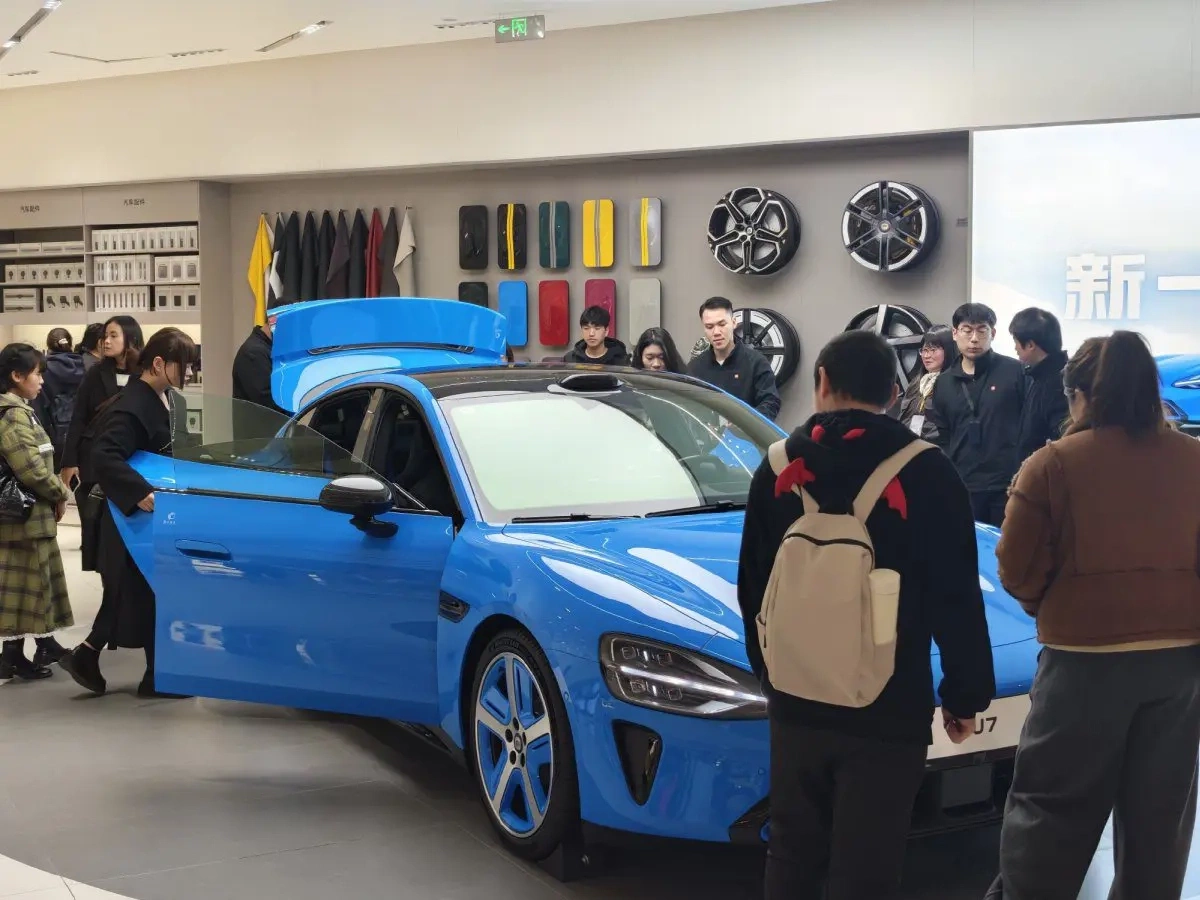 |
Customers view the Xiaomi SU7 electric car model at a showroom. Photo: Xiaomi |
While the US and the European Union criticize subsidies for distorting the market, they have helped Chinese companies expand quickly and continuously lower selling prices. Fierce domestic competition also drives technological innovation.
Corporations like Xiaomi, Huawei, and Alibaba are involved in electric vehicle production, bringing a consumer electronics mindset to the automotive industry. "They are no longer competing with the West; they are competing with each other," Russo said. As automobiles become increasingly reliant on software, from driving assistance to entertainment systems, technology companies continue to boost Chinese automakers' advantages.
This shift is evident at Xiaomi's electric vehicle factory on the outskirts of Beijing, where one completed car rolls off the production line every 76 seconds. Xiaomi only began selling its first electric vehicle model in 2024 but has quickly become one of China's best-selling brands. The company aims to connect automobiles with phones, applications, and smart home devices into one unified ecosystem. At Nio's factory in Hefei, many production stages are almost entirely automated.
Additionally, BYD has developed a super-fast charging system that can add 400 km of range in about 5 minutes, comparable to the time it takes to fill a traditional fuel tank. XPeng CEO He Xiaopeng stated that the company focuses not only on electric vehicles but also invests in humanoid robots and flying cars. "In the next decade, every car company will also become a robot company," he said.
Foreign automakers must adapt
Many foreign automakers have long relied on China to supply products for the global market. Tesla exports Model 3s manufactured in Shanghai to Europe, while BMW also sells Chinese-made electric Mini models in many other countries.
However, even within the Chinese market, many foreign brands are losing ground. According to consulting firm Automobility, the market share of foreign automakers in China decreased from 64% in 2020 to 32% this year.
This trend is eroding the profits of General Motors (GM) and German automakers, companies that historically depended heavily on the Chinese market. The luxury car segment is also under intense pressure. Huawei's Maextro S800 luxury sedan is now China's best-selling car in the over 100,000 USD price range, surpassing the total sales of models that once dominated this segment, such as the Porsche Panamera and BMW Series 7.
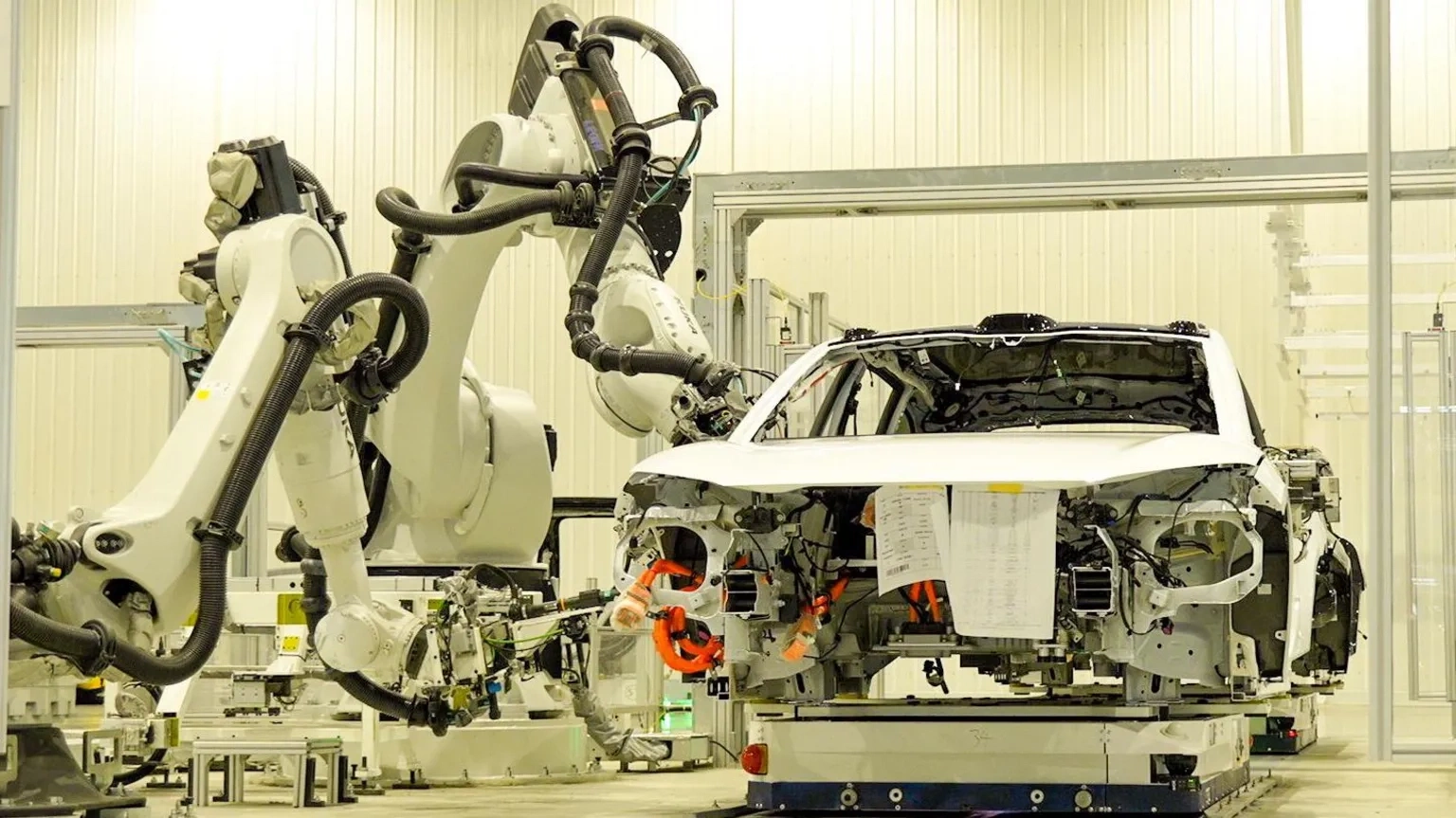 |
Robots automatically assemble electric vehicles at a factory in China. Photo: BBC |
For decades, foreign automakers brought technology and brands to China, while domestic partners provided factories and a consumer market. This relationship has now reversed.
Stellantis recently signed a one billion euro agreement with Dongfeng to produce Peugeot and Jeep models in China for both domestic and export markets. The group also plans to introduce Dongfeng's Voyah electric vehicle brand to Europe and is considering manufacturing Chinese-designed vehicles at a factory in France. Meanwhile, Volkswagen spent 700 million USD to access XPeng's software platform and autonomous driving technology to develop a new generation of electric vehicles, after admitting it could not develop these technologies fast enough domestically.
Toyota, Hyundai, Ford, and Nissan are also expanding their research operations in China or considering manufacturing Chinese-designed models by Chinese engineers at overseas factories. Instead of just leveraging manufacturing capacity, companies are now tapping into local human resources and knowledge.
However, not every strategy has been successful. Audi had to significantly cut prices for its E5 model, a vehicle developed specifically for the Chinese market, after demand was lower than expected. GM recorded billions of USD in asset write-downs from its Chinese operations, and its sales in the first quarter of this year decreased by over 21%. Japanese automakers have also been slower to transition to purely electric vehicles, causing them to gradually lose their advantage in China and Southeast Asia, where Chinese brands are rapidly expanding their market share.
In early 2026, Volkswagen temporarily regained its position as China's best-selling automotive brand. However, this may be due to Beijing's termination of electric vehicle subsidies, which weakened domestic companies in the short term.
China accelerates global expansion
Growth in the Chinese automotive market is also slowing after years of booming expansion. Excess capacity and an intensifying price war are eroding industry-wide profits.
This is one reason Chinese automakers are accelerating their overseas expansion. BYD, Chery, and SAIC are increasing their presence in Europe and emerging markets, despite tariffs of up to 45% in the EU. In the UK, Chery's Jaecoo 7 model quickly entered the best-selling new car list just 14 months after its launch, while tariffs of over 100% almost completely block Chinese vehicles from the US market.
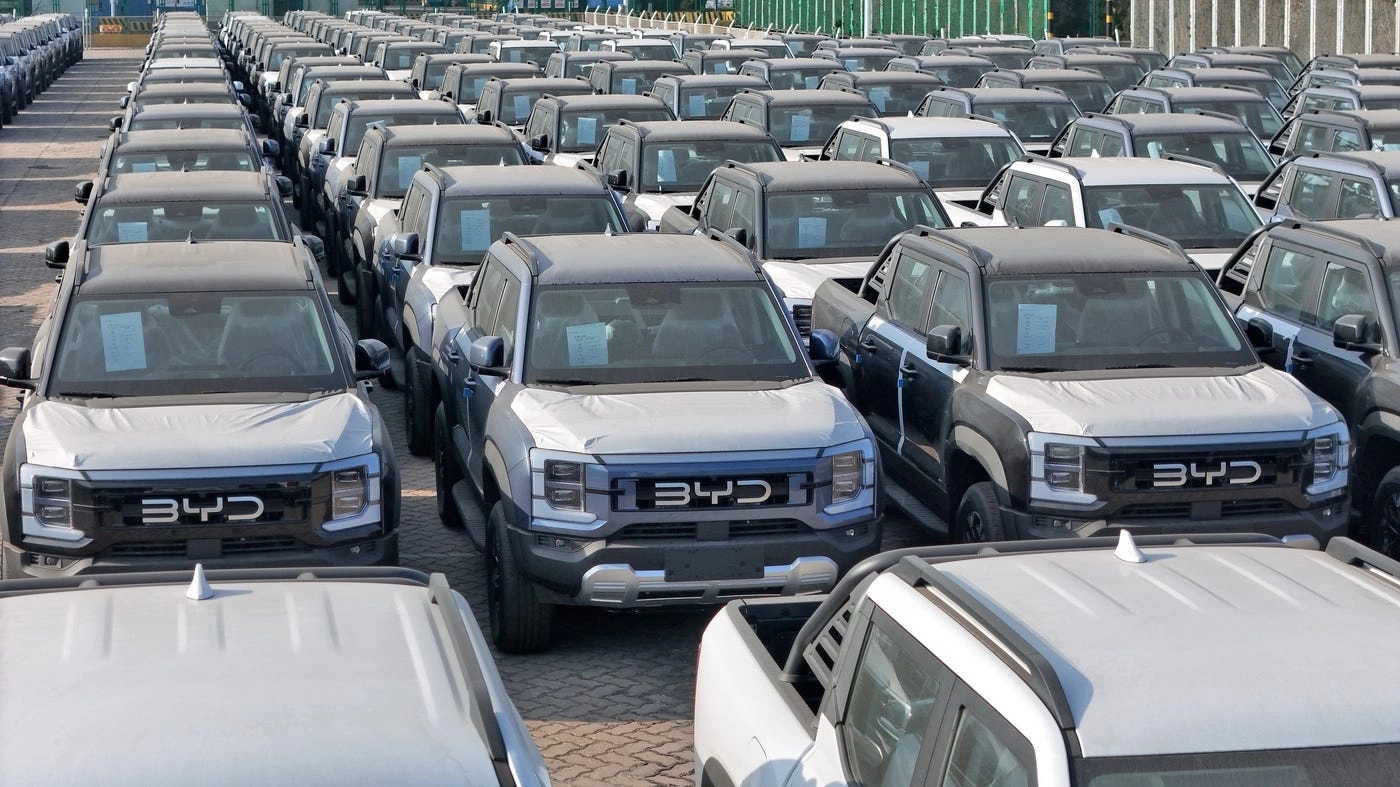 |
BYD Shark electric pickup at port. Photo: Autoweek |
Experts warn that as vehicle manufacturing, battery technology, and software development become increasingly concentrated in China, many production centers in Southeast Asia and Europe risk weakening, with repercussions for local jobs and economies. According to expert James Pearson, tariffs may not protect the Western automotive industry: "If you block them in one market, they will find another."
Bill Russo believes the global automotive industry's focus has shifted. According to him, companies willing to collaborate still have opportunities, while those trying to hinder China's rise may fall behind.
Ho Tan (via BBC)