The collision of two trains at Bekasi station on the evening of 27/4 resulted in at least 14 fatalities and over 80 injuries. All parties are awaiting conclusions from the Indonesian National Transportation Safety Committee (Komite Nasional Keselamatan Transportasi - KNKT) regarding the cause of the incident.
News agencies like AP and Independent quoted Bobby Rasyidin, Chief Executive Officer of the Indonesian National Railway Company (PT KAI), who stated the incident began when a green taxi reportedly stalled at the JPL 85 crossing, near Bekasi Timur station. The KRL train was forced to slow down and stop, colliding with the taxi. The Argo Bromo Anggrek passenger train, traveling behind, then crashed into the KRL train, causing the serious accident.
Local media identified the taxi involved in the accident as belonging to Green SM Indonesia. Following the accident, the company posted a statement on its Facebook and Instagram social media platforms on 28/4, affirming it "has provided relevant information and fully supports the ongoing investigation" and will provide updates once data is verified.
According to Republika, a food vendor approximately 50 m from the scene recounted that the Green SM taxi stalled once it reached the middle of the tracks. Shortly after, a warning was issued that a KRL train from Cikarang heading to Jakarta was approaching, but the taxi remained immobile. Crossing guards repeatedly warned of the approaching train. "They even tried to push the vehicle, but the taxi wouldn't budge", the witness stated.
Another witness told BeritaNasional that they heard a loud screech of brakes before the impact. The train, however, could not stop in time, continuing at an estimated 60-70 km/h and creating a very loud collision.
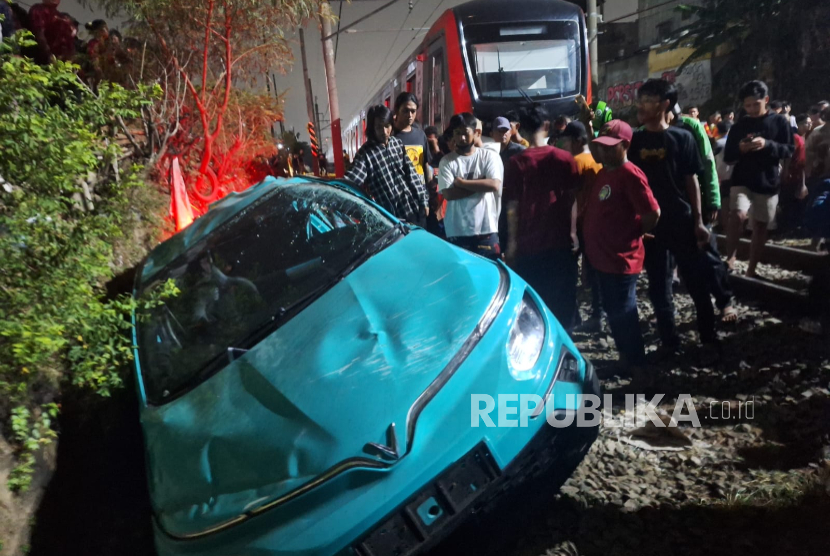 |
Scene of the taxi hit on its side by the train. Photo: *Republika* |
The accident quickly garnered significant discussion on Indonesian social media. Some users argued for clarifying the taxi driver's responsibility if the vehicle indeed stopped and stalled on the tracks. Others raised concerns about the train warning and coordination system, suggesting a need for safety mechanisms even during unexpected incidents at crossings.
The crossing where the taxi encountered the problem lacks automatic barriers or modern signal warning systems. This area is primarily controlled manually, with a small post for coordination staff.
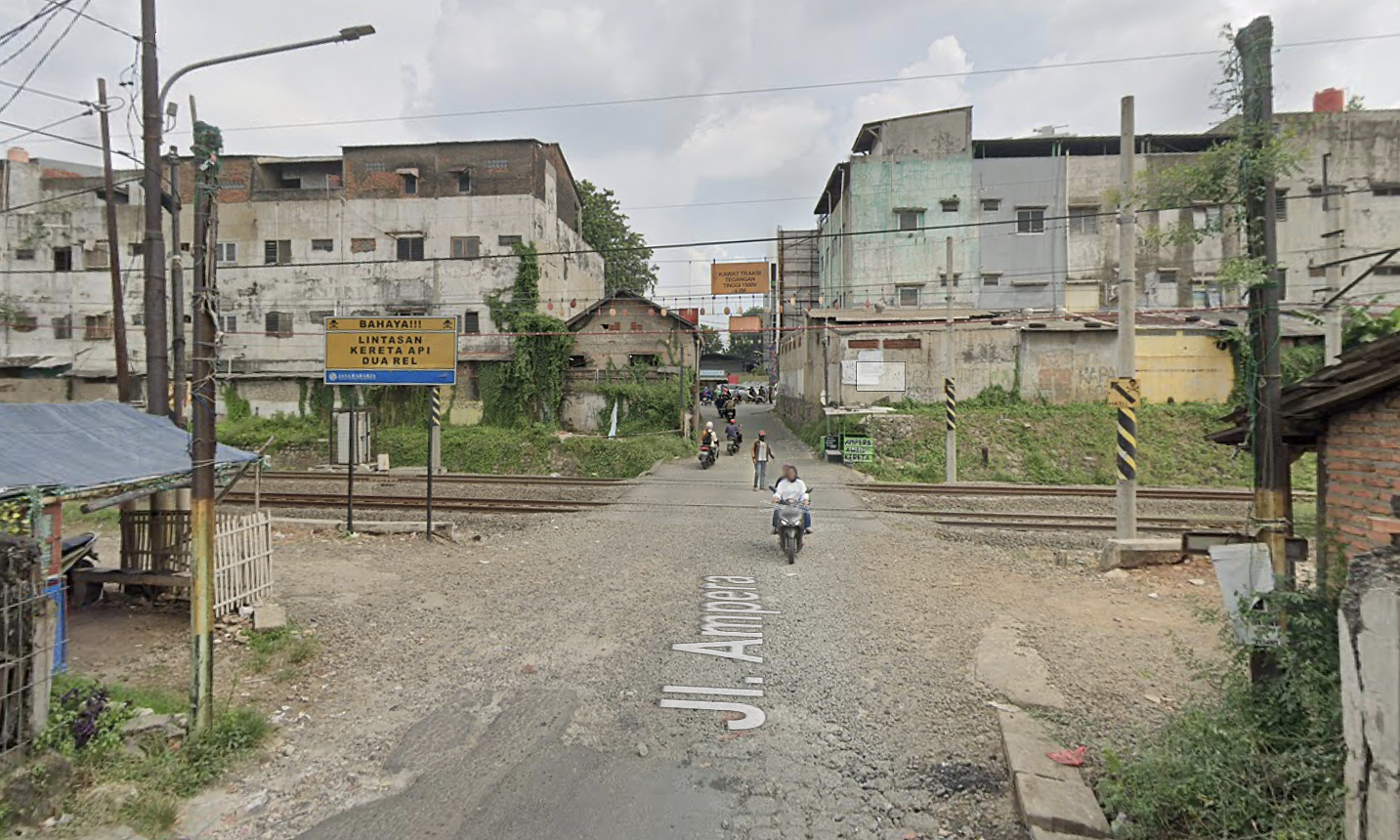 |
The area where the taxi stalled and collided with the train, with a danger warning sign on the left. Photo: *Screenshot* |
This means safety largely depends on the observation and actions of the crossing staff, as well as the awareness of commuters when crossing the railway. Should a vehicle stall or stop suddenly on the tracks, the risk of an incident increases significantly without timely warnings to the train operation system.
Pham Hai