Consumers are currently encountering two types of E10 gasoline at service stations: E10 RON 95-III and E10 RON 95-V. Many drivers express confusion about their differences and potential impact on fuel quality.
According to National Technical Regulation QCVN 01:2022/BKHCN, E10 gasoline is a blend of unleaded gasoline and fuel ethanol, with an ethanol content of 9-10% by volume. RON95 signifies an octane rating of 95, which is suitable for vehicles with high compression ratios, ensuring optimal engine performance and preventing premature engine knocking. The designations 'III' and 'V' refer to quality standard classifications, corresponding to Euro 3 and Euro 5 emission standards, respectively.
The fundamental distinction between Level III (Euro 3) and Level V (Euro 5) lies not in immediate operational efficiency, but in the fuel's 'cleanliness'. This refers specifically to stricter limits on harmful impurities such as sulfur, benzene, and aromatic hydrocarbon compounds.
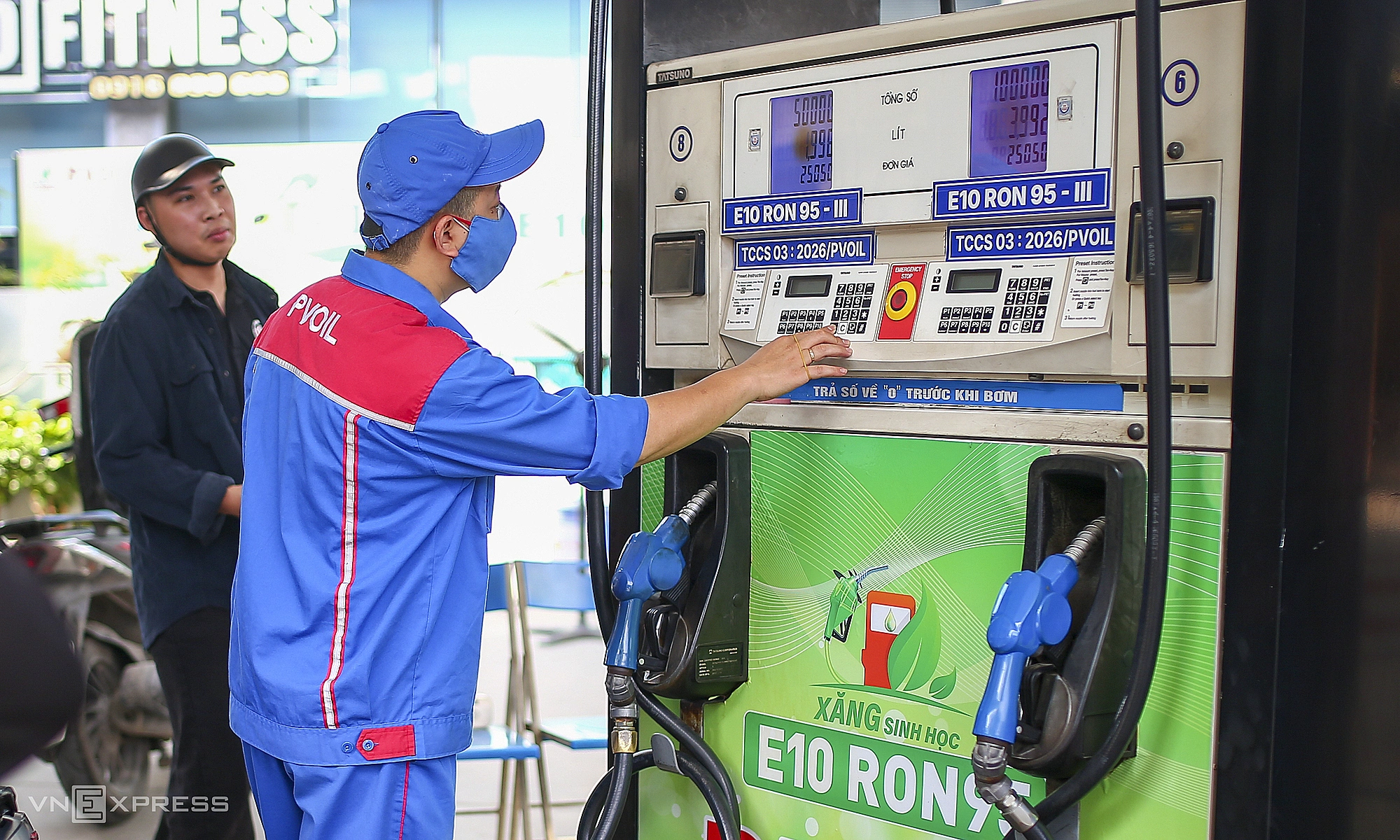 |
An E10 RON 95-III gasoline station in Hanoi. *Photo: Pham Chieu*. |
The table below compares key technical specifications as outlined in QCVN 01:2022/BKHCN:
| Maximum content | Level III (Euro 3) | Level V (Euro 5) |
| Sulfur | 150 mg/kg | 10 mg/kg |
| Benzene | 2,5% by volume | 1,0% by volume |
| Aromatic hydrocarbons | 40% by volume | 35% by volume |
| Olefin | 18% by volume | 10% by volume |
The specifications indicate that Level V gasoline is considerably less polluting than Level III. Specifically, a 15-fold reduction in sulfur content helps protect exhaust filters, minimizes engine corrosion, and reduces acid rain. A 2,5-fold decrease in benzene content from Level III to Level V lowers the risk of cancer from inhalation. Reducing aromatic hydrocarbons decreases soot formation within the combustion chamber. Finally, less olefin mitigates the risk of valve sticking and resin deposit buildup in the fuel system.
Due to differences in refining technology, purity levels, storage costs, and logistics infrastructure, Level V gasoline is priced approximately 1,000 VND per liter higher than Level III. For instance, the current price of E10 RON 95-III in Region 1 is 23,660 VND per liter, while E10 RON 95-V costs 24,560 VND per liter. For a motorcycle with a 5-liter fuel tank, the price difference to fill it completely is 5,000 VND. For an automobile with a 50-liter fuel tank, this difference amounts to 50,000 VND.
There are currently no specific regulations dictating which type of E10 gasoline vehicles must use; the choice depends on user preference and the actual supply available at each service station. For example, some stations designate Level III pumps for motorcycles and Level V pumps for automobiles. Feedback from vehicle user communities suggests that drivers generally do not perceive any performance difference between the two fuel types during use.
Minh Vu