


Chief Justice Surya Kant of India's Supreme Court has urged wealthy citizens to opt for electric vehicles (EVs) instead of luxury cars to mitigate air pollution. This call was made during a Supreme Court hearing on 7/1, addressing Delhi's persistent pollution crisis. Justice Kant described car ownership as a status symbol that significantly contributes to the deteriorating air quality in Delhi and its surrounding areas.
Presiding over a public interest litigation case concerning air pollution in the Delhi capital region, Justice Kant stated, "The rich should also sacrifice. Instead of buying high-end cars, they should buy good electric cars." The bench, which included Justice Joymalya Bagchi, examined long-term solutions to the city's worsening air quality index.
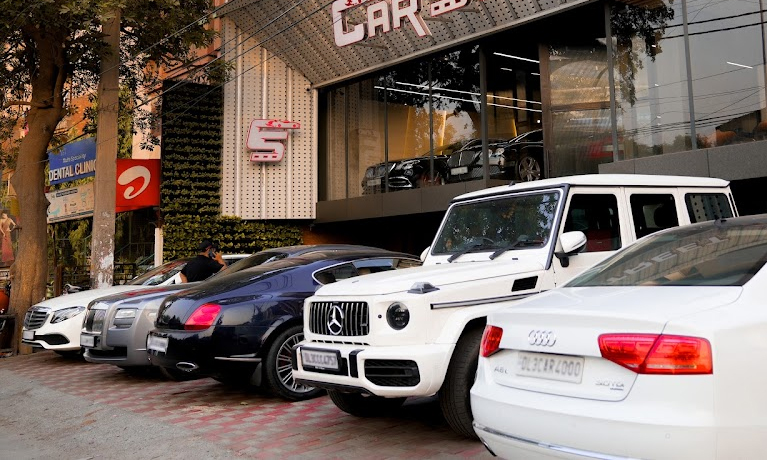 |
Luxury car models in front of a dealership in Delhi. *Photo: Wheree* |
This sentiment echoed a proposal from senior advocate Rakesh Dwivedi, who suggested that reducing multiple car ownership could alleviate pollution levels. Dwivedi also pointed to the automotive industry's influence as a hindrance to policy changes. Justice Kant noted that cars have transitioned from a basic necessity to a social status symbol, with many individuals saving to purchase four-wheelers, often at the expense of simpler transport like bicycles.
The Chief Justice underscored that this cultural shift, where cars symbolize status, exacerbates urban air quality issues. The court emphasized that affluent segments of society bear a responsibility to adopt cleaner transportation options, given their financial capacity to make such transitions.
However, the bench also cautioned against implementing abrupt policy regulations. The court recognized that a blanket directive mandating electric vehicle use without assessing its impact on the state budget would not be viable. Instead, it advocated for long-term, phased action plans, gradually introducing better alternatives while carefully considering economic implications.
The Supreme Court criticized the Commission for Air Quality Management (CAQM) for its perceived lack of urgency in addressing the crisis. The CAQM had sought a two-month postponement on the temporary closure or relocation of toll booths in Delhi's peripheral regions, a measure aimed at reducing traffic congestion. The court rejected this request, instructing the pollution watchdog to convene a meeting of experts within two weeks and submit a report detailing the primary causes of the worsening pollution.
"The CAQM is failing in its duty," the bench commented, observing that the agency appeared to be in no hurry to identify causes or propose lasting remedies, despite extensive public documentation from experts and citizens. The court further questioned why heavy-duty transport vehicles, which contribute a significant portion of the pollution, were not being addressed more aggressively.
My Anh (via Cartoq)



