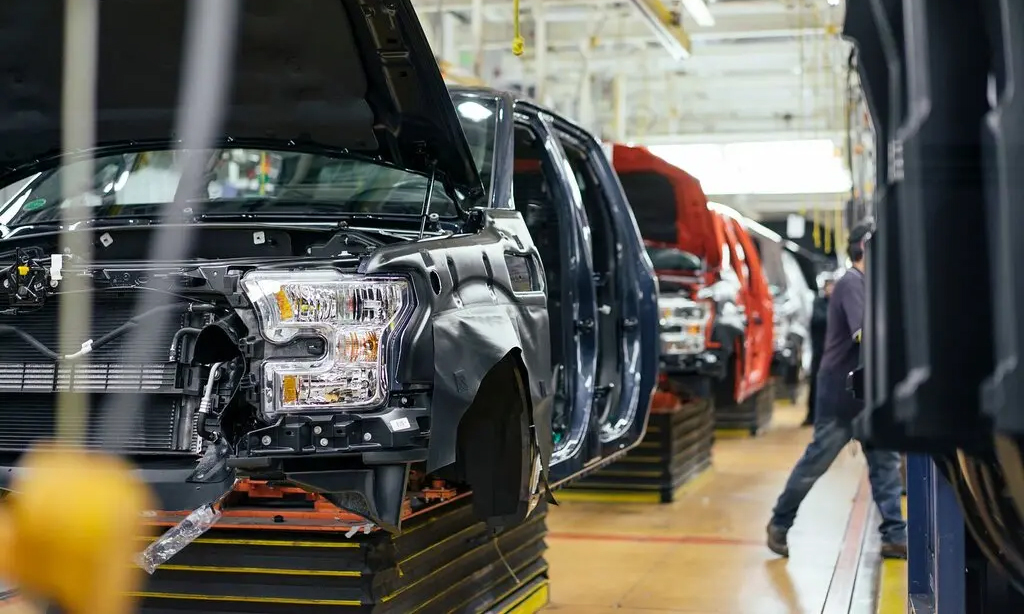
Toyota, the world's largest automaker, sold about 11 million vehicles last year, significantly outperforming most global rivals. Its production volume is more than two times Honda's within Japan's "Big Three," a lead expected to grow amid the volatile global automotive market.
A century ago, Sakichi Toyoda began by manufacturing wooden looms. Today, Toyota Motor, founded by his son, stands as one of the world's most influential industrial conglomerates. Toyota is now charting its course for the next 100 years, with Woven City representing the most significant component of this plan.
The Woven City project, covering about 71 hectares, is being built on the former site of a factory located a few hours southwest of Tokyo. Toyota envisions it as a "city of the future" and a living laboratory for new mobility technologies. This urban area is filled with autonomous robots, personal vehicles, and extensive surveillance camera systems.
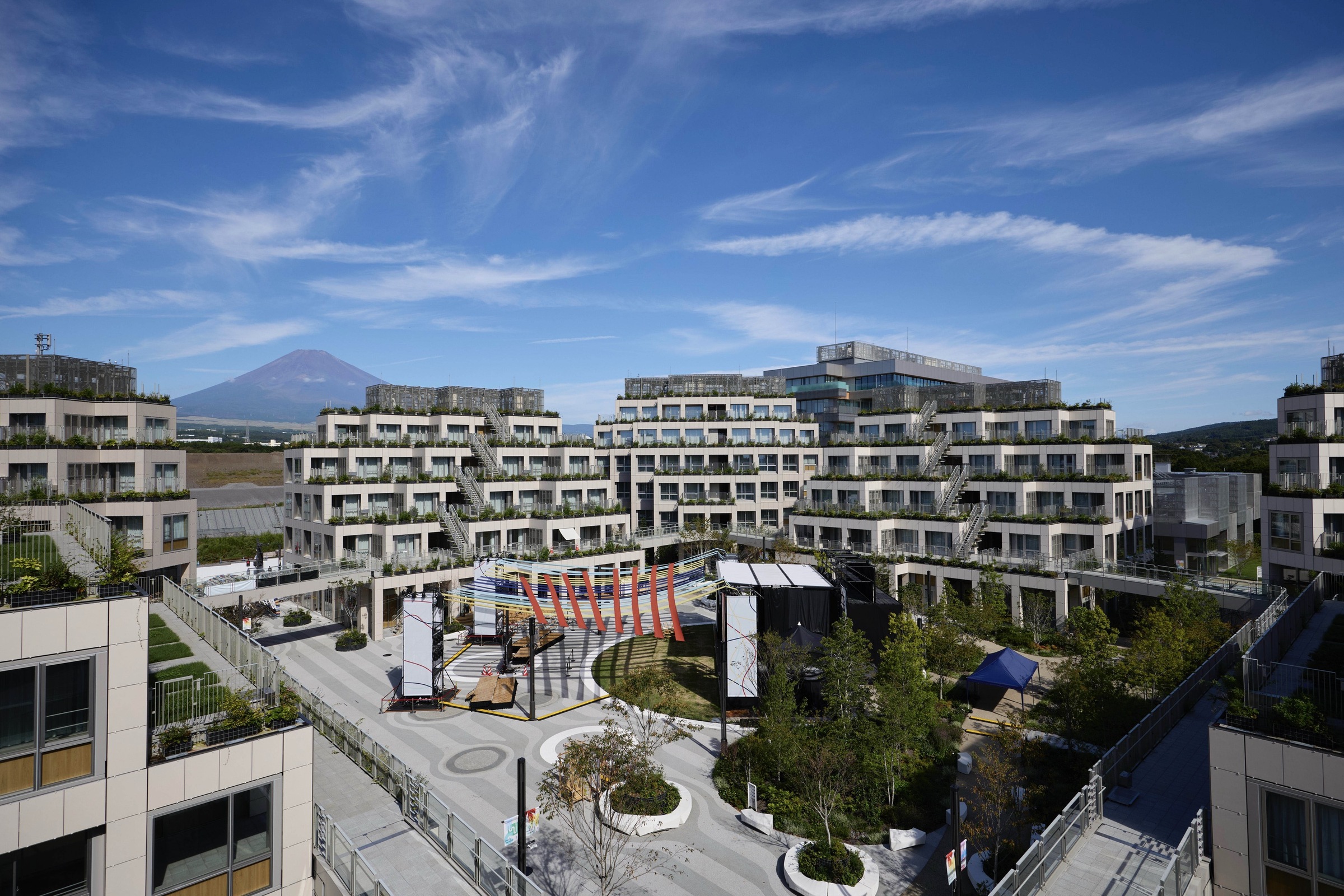 |
Woven City - Toyota's experimental city. Photo: Toyota |
Toyota states Woven City aims to verify real-world operational capabilities, not just showcase technology. Akio Toyoda, the founder's grandson, declared Toyota's ambition to evolve from an automaker into a comprehensive "mobility" corporation offering all transportation solutions. Woven City represents the initial step in this endeavor.
From old factory to experimental city
Toyota unveiled Woven City at CES 2020, while Akio Toyoda served as the group's chairman and CEO. However, the site's history predates this announcement significantly. The Higashi-Fuji factory, built in 1967, produced around 7.5 million vehicles over 53 years. It was also the birthplace of iconic Toyota models, including the AE86 and Century. In 2020, the factory closed as Toyota restructured its production network to accommodate the Woven City project.
Following the announcement, Toyota started Woven City's construction in 2021, completing its initial phase last year. While Toyota has not confirmed an official figure, some estimates place the total project cost at 10 billion USD. The first residents, dubbed "Weavers" by Toyota, moved in late last year. Last week, the company granted international media its first tour of the development.
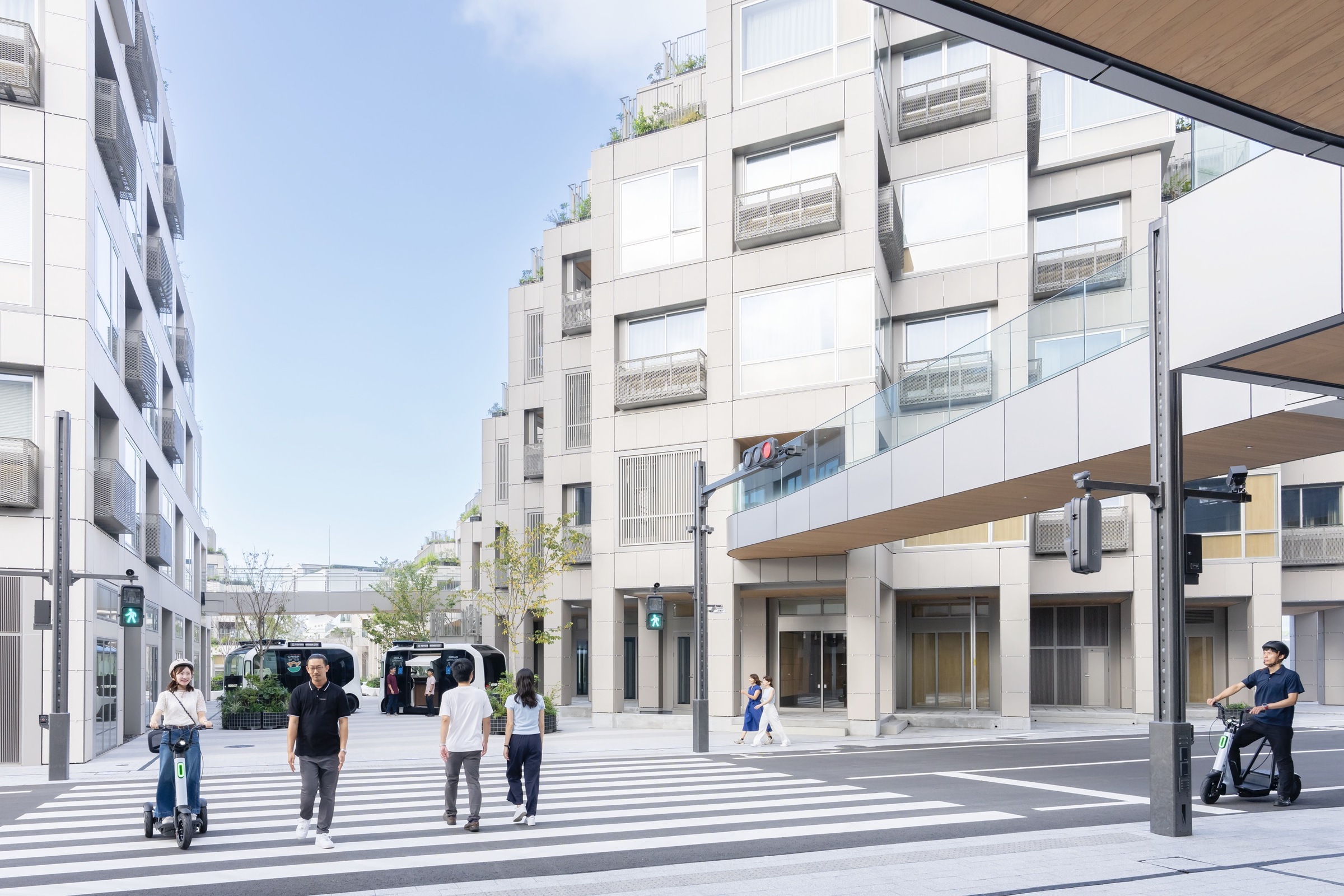 |
Residents in Woven City can travel by "Swake" three-wheeled vehicles, e-Palette buses, or on foot. Photo: Toyota |
The city of robots and AI
The tour's first stop was the "Inventor Garage," which previously housed the Higashi-Fuji factory's metal stamping lines. Toyota transformed this industrial space into an innovation hub for startups and research teams. Though modernized, it retains original elements like peeling concrete floors and decades-old machine oil stains on the walls. A concrete pit, once home to a four-story stamping machine, became an auditorium. The facility also includes scooter ramps and a small hotel for visiting experts on short-term assignments.
Toyota designed the space with numerous workstations and open areas to foster spontaneous interactions among startups, engineers, and researchers. Companies testing technologies at Woven City exhibited their innovations here, including hydrogen-powered bicycles and AI karaoke machines that select music based on emotion recognition.
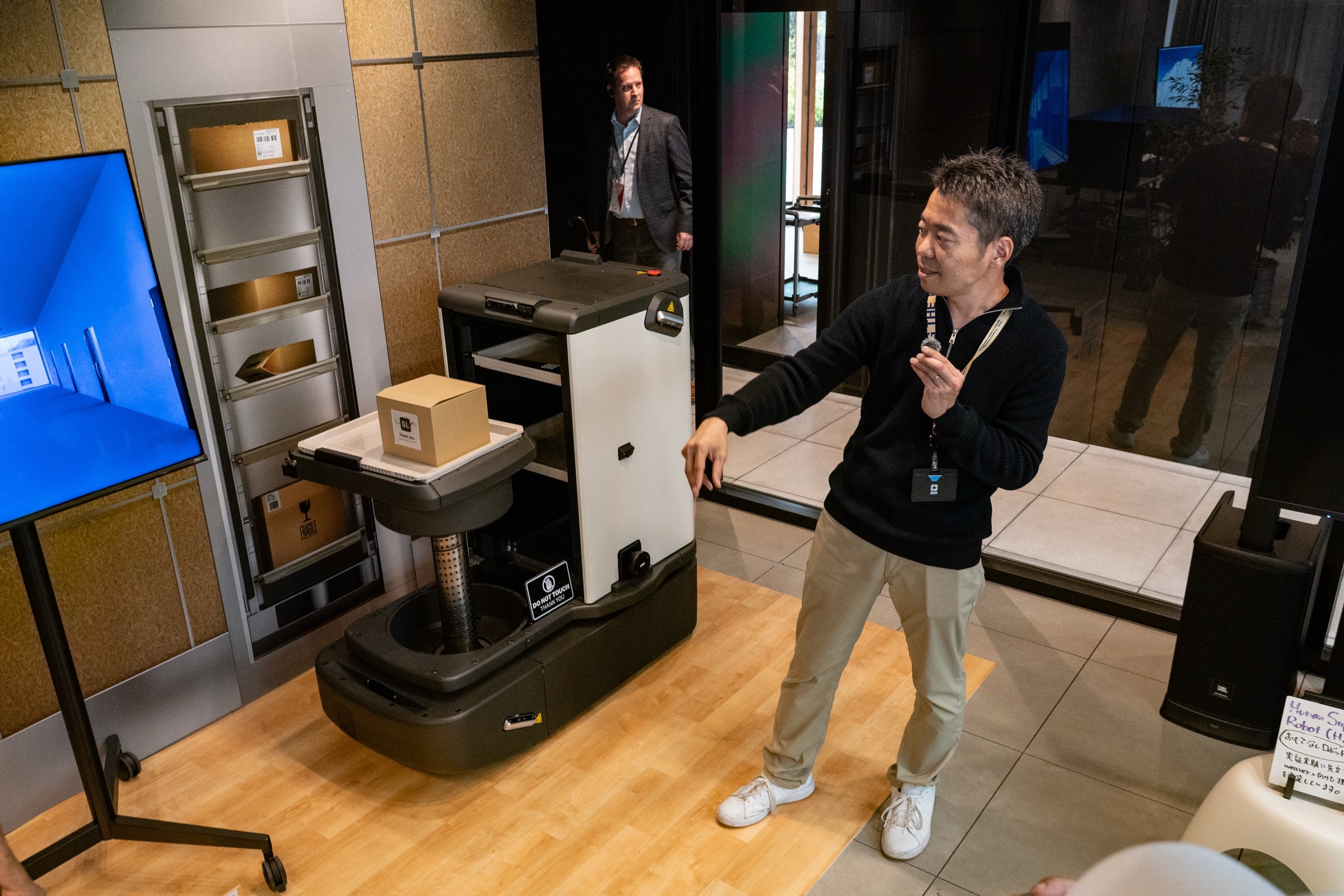 |
Daisuke Tanaka, a resident of Toyota's Woven City, demonstrates an autonomous delivery robot. Photo: Arstechnica |
Toyota also unveiled the AI Vision Engine platform, a system compiling data from cameras across the city. This technology automatically analyzes situations, detects unusual behavior, aids in theft prevention, and issues alerts during medical emergencies. Experimental robots are pervasive throughout the urban area, including indoor transport robots and autonomous delivery robots. Toyota also showcases business concepts it hopes will become billion-dollar tech startups. Yet, Woven City's primary goal, Toyota emphasizes, is to ensure the safe operation of all technologies before commercialization, not merely to create flashy displays.
Pham Hai (according to Motortrend)