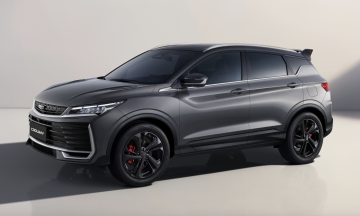
Kunlun, currently an internal codename for Xiaomi's new product, has been frequently spotted in China under heavy camouflage. This large, three-row SUV is set to be the brand's first extended-range electric vehicle (EREV). The move signifies Xiaomi's effort to expand its market share in the new energy vehicle (NEV) segment. When launched, the Kunlun might be named YU9, according to CarNewsChina.
The Kunlun features square headlights, a trapezoidal air intake, and air vents on both sides of the front bumper. Its design includes a high hood, a roof-mounted lidar sensor, and automatic side steps. The vehicle also boasts semi-hidden door handles, large multi-spoke wheels, and wide wheel arches. While specific dimensions remain undisclosed, its length is estimated at around 5,200 mm, positioning it within the large SUV category. Reports suggest Xiaomi's EREV will utilize a battery larger than 70 kWh, providing an electric range exceeding 400 km.
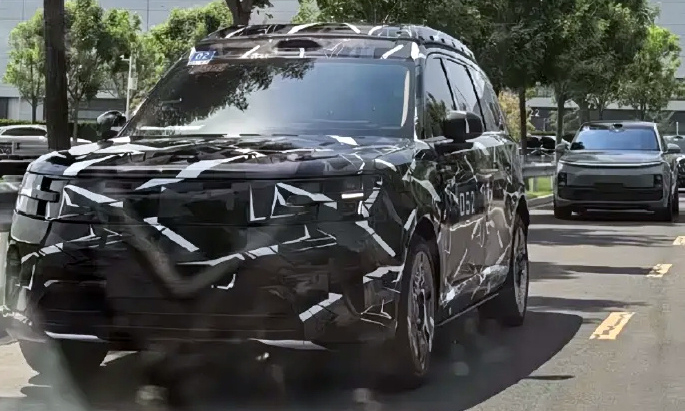 |
The camouflaged Xiaomi Kunlun during testing, with another brand's EREV, the Li L9, behind it. *Photo: Weibo*
Xiaomi currently offers three electric vehicle models: the SU7 sedan, the SU7 Ultra sports car, and the YU7 crossover. The company's sales surpassed 110,000 units from January to April. According to China EV DataTracker, Xiaomi delivered over 71,623 YU7 electric crossovers in Q1 alone, with only the Geely EX2 (Xingyuan) hatchback and Tesla Model Y recording higher sales. This month, Xiaomi is set to introduce its fourth model, the YU7 GT, a high-performance SUV boasting 990 horsepower.
During its latest sighting, the Xiaomi Kunlun was not alone; it was undergoing tests alongside another manufacturer's vehicle, the Li L9. In China, the L9, in production since 2022, serves as an EREV benchmark for other automakers. In February, Li introduced the new generation L9, named Livis, which features a 72.7 kWh battery and a 340 km pure electric range under WLTP standards. This is an upgrade from the previous generation's 44.5 kWh and 52.3 kWh batteries, which offered up to 235 km of pure electric range according to WLTP.
The decision for Xiaomi to venture into vehicles with internal combustion engines, rather than solely focusing on pure electric vehicles, emerged in 2025. This became apparent after the company filed a patent application for a fuel level display system. This filing was listed in Xiaomi's technical archive for fuel-powered and hybrid vehicles, published by the China National Intellectual Property Administration (CNIPA) on 5/12/2025. According to Automotive World, following its rapid success with pure electric vehicles, Xiaomi's shift to EREVs is a strategic move to enter family vehicle segments. This approach is not merely a temporary solution but an effective tool for new automakers like Xiaomi to reach customers who remain concerned about charging infrastructure. Detaching the internal combustion engine from the direct drivetrain also enhances vehicle efficiency and provides engineers with greater design flexibility.
Xiaomi has set an ambitious target of delivering 550,000 vehicles by 2026. The introduction of EREV models is crucial for achieving this figure and will help the company optimize profit margins, especially as pure electric vehicle subsidy policies in China tend to become stricter.
My Anh