The Japanese automaker reported strong overall demand despite a production decrease attributed to the manufacturing transition from the previous RAV4 model to the new version. This follows a record-breaking 2025 for Toyota, where it sold 11,3 million vehicles globally, securing its position as the world's best-selling automaker for the 6th consecutive year, according to Reuters.
However, this growth trajectory is now facing challenges. Alongside the production dip, the company's global sales also fell by 3,3% to 737.134 units. This decline is not due to a lack of demand, but rather the generational shift of a single model: the RAV4.
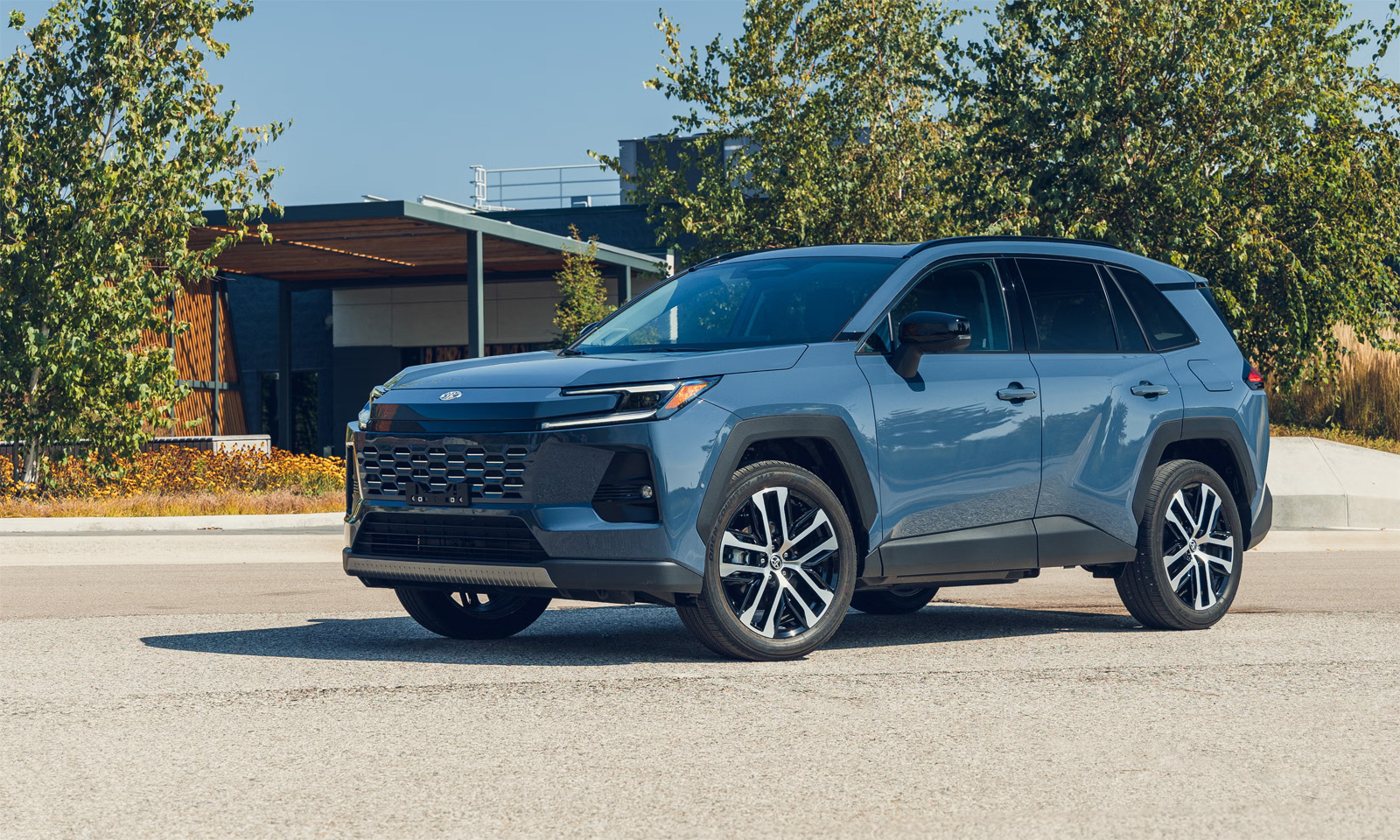 |
The new generation Toyota RAV4 in the US is priced from 33.400 USD. *Photo: Car and Driver*
The scarcity of 2025 RAV4 vehicles at dealerships is severe enough to potentially impact the market. Why is this significant?
For many years, the RAV4 has been Toyota's top-selling vehicle in the US and globally, with cumulative sales exceeding 15 million units by the end of 2025.
The 6th generation RAV4 eliminates the pure gasoline powertrain, offering only hybrid and plug-in hybrid versions as part of Toyota's broader electrification efforts. The standard hybrid variant produces a combined 226 horsepower, while the plug-in hybrid version boasts 320 horsepower with an 80 km electric-only range. The inclusion of toyota safety sense 4.0 and a redesigned interior makes for a compelling upgrade.
According to Autoblog, Toyota's factories simply require time to ramp up production to meet demand. Despite the RAV4 shortage, the brand's sales in the US have increased by 5,1%.
Canada has been the most affected by the regional decline, experiencing a sharp 46,2% drop in production compared to 2025, which contributed to an overall 9,1% decrease in North American production. This impact stems from the fact that up to 80% of RAV4 production for the US market occurs at two Toyota assembly plants in Ontario, establishing Canada as a central hub for the entire RAV4 supply chain. These figures clearly indicate a localized disruption, rather than a structural issue.
Other regions experiencing notable declines include the Middle East (20,4%), China (11,5%), and Japan (2,6%).
My Anh