Toxic smoke enveloped the enclosed space in mere seconds, turning the sleeper bus cabin on National Highway 1 into a deadly "iron box" for sleeping passengers in the early hours of 21/7.
In reality, most passengers board a sleeper bus, find their spot, and go to sleep. Few observe the location of emergency hammers, fire extinguishers, or how emergency exits operate. Conversely, bus operators, concerned about passengers tampering with or stealing hammers, sometimes even hide them. This practice eliminates passengers' chances of survival when an incident occurs.
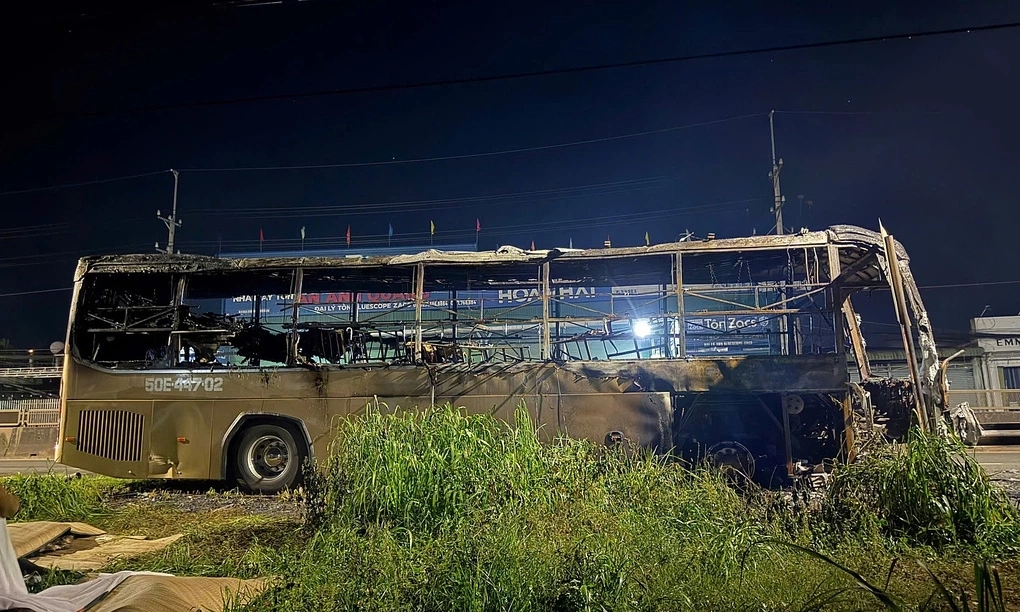 |
The scene of the burned-out bus. Photo: Thanh Huong |
I believe a "takeoff procedure" is essential for buses. Similar to air travel, where flight attendants consistently provide safety instructions on seatbelts, oxygen masks, and emergency exits, even for frequent flyers, why are long-distance buses—a common mode of transport with comparable fire risks carrying numerous passengers—bypassing this crucial step?
Bus operators must integrate safety briefings into their mandatory procedures before departure. Specifically, the bus assistant or driver should dedicate 2-3 minutes to inform passengers about the location of emergency hammers, fire extinguishers, and emergency exits. Passengers require specific instructions on how to hold the hammer and strike the four corners of the windowpane (the weakest points) instead of the center. They also need to know how to use a fire extinguisher.
Bus operators could assign responsibility to passengers seated next to emergency hammers or exits. In an emergency, these passengers would be the quickest responders, breaking windows to create an escape path for everyone in the cabin.
Beyond disseminating information, bus operators should consider more practical solutions to manage assets while ensuring passenger safety.
If concerned about passengers losing or tampering with hammers, bus operators could install emergency hammers with alarms or place long-handled hammers in the cabin and near entryways. In an incident, the bus operator or the first passenger to escape could use a long-handled hammer to break windows from the outside, rescuing those trapped inside.
The image of the charred sleeper bus after the fire underscores that safety knowledge is never redundant. Adding a few minutes of escape instructions before each trip incurs minimal cost or time for bus operators, yet it acts as a "lifeline" for dozens of people when disaster strikes unexpectedly.
Reader Luu Ly