Following the widespread distribution of E10 bio-fuel, some vehicle owners have reported issues like difficulty starting, engine stalling at traffic lights, hesitation, or vibration at low speeds. However, experts and international studies suggest that most of these problems do not stem from E10 fuel itself, but rather relate to the vehicle's maintenance status.
The Ministry of Industry and Trade recently advised caution for older vehicle models, particularly those from the early 2000s or earlier that use carburetors, when transitioning to fuel containing 10% ethanol.
According to the National Renewable Energy Laboratory (NREL) of the US, E10 can be used in most modern cars and motorcycles without requiring structural changes to the fuel system. NREL's tests on older vehicles did not record fuel filter clogging or difficulty starting under standard testing conditions.
However, ethanol in E10 has stronger dissolving and cleaning properties than conventional mineral gasoline. Layers of deposits, fuel varnish, or rust that have accumulated over many years in the fuel tank, lines, and injectors can be dislodged when switching to the new fuel. These impurities then travel with the fuel flow, reducing injection rates or causing blockages in the fuel filter and injectors.
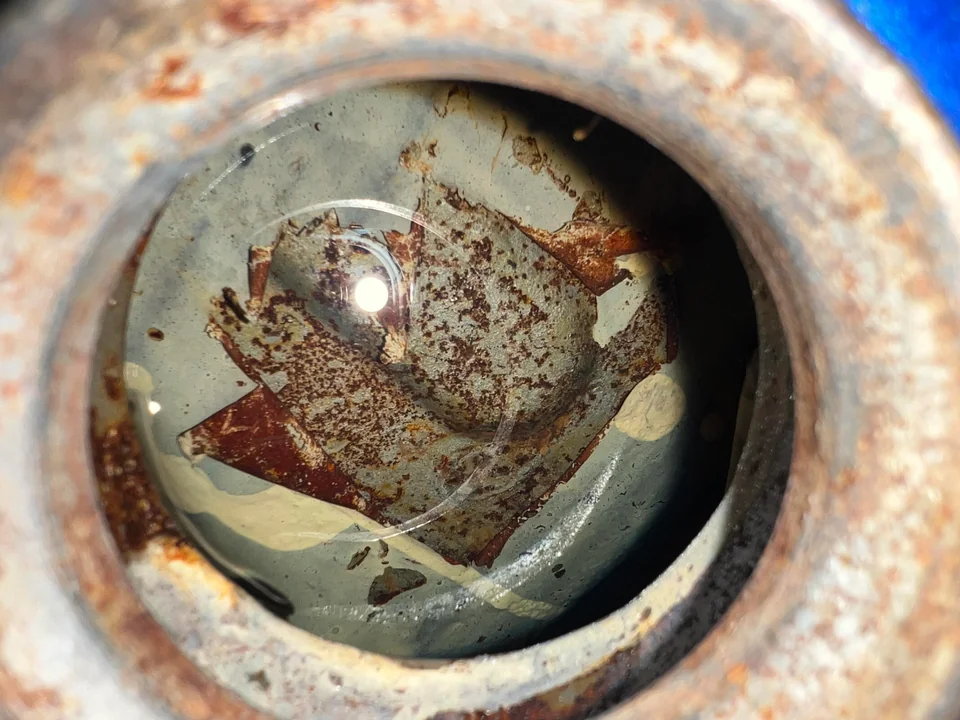 |
Rust inside the fuel tank of a 2006 Suzuki SV650. Photo: *Spizalert/Reddit*
This phenomenon commonly occurs in vehicles that have been in use for many years but have received little maintenance on their fuel systems. According to a technical expert from a Japanese car manufacturer in Vietnam, when fuel injectors are clogged with deposits or the fuel filter is blocked, the engine may experience hesitation, stall at low speeds, be difficult to start in the morning, or vibrate when idling.
The UK Department for Transport's E10-related tests previously noted fuel filter clogging, fuel tank corrosion, and damage to some rubber components in older vehicles not designed for ethanol-blended fuels. Additionally, ethanol can carry accumulated dirt and debris within the fuel system, increasing the risk of filter and injector blockages in older cars. Another factor is ethanol's ability to absorb moisture. When a vehicle is used infrequently or fuel remains in the tank for extended periods, moisture can accumulate in the fuel system. This condition heightens the risk of rust formation in the fuel tank or the creation of new deposits, especially in older vehicles.
Common signs include difficulty starting the car after it has been left overnight, engine vibration, easy stalling when waiting at traffic lights, and slow throttle response. In many cases, these symptoms only appear after switching to E10, leading to the misconception that the fuel itself is faulty.
For these reasons, cleaning the fuel tank, replacing the fuel filter, and cleaning the injectors often resolve most problems encountered by older, less-maintained vehicles when switching to E10 gasoline. For cars with carburetors, the carburetor should also be regularly inspected and cleaned to remove long-accumulated deposits. If rust, deposits, or degraded fuel lines are found, they must be cleaned or replaced before continued use.
The cost for cleaning the fuel system (flushing the fuel tank, cleaning the throttle body and injectors) typically ranges from 100,000-500,000 VND for motorcycles and 500,000-1,500,000 VND for cars.
Pham Hai