After reviewing the general statistics on traffic accidents during Tet Binh Ngo 2026 from the Traffic Police Department, it is clear that the number of accidents, fatalities, and injuries has decreased compared to the same period last year. For many who frequently travel during Tet, the concern about accidents, congestion, and unfortunate collisions is ever-present. Therefore, this reduction is a positive and notable sign, indicating that changes in traffic management are proving effective.
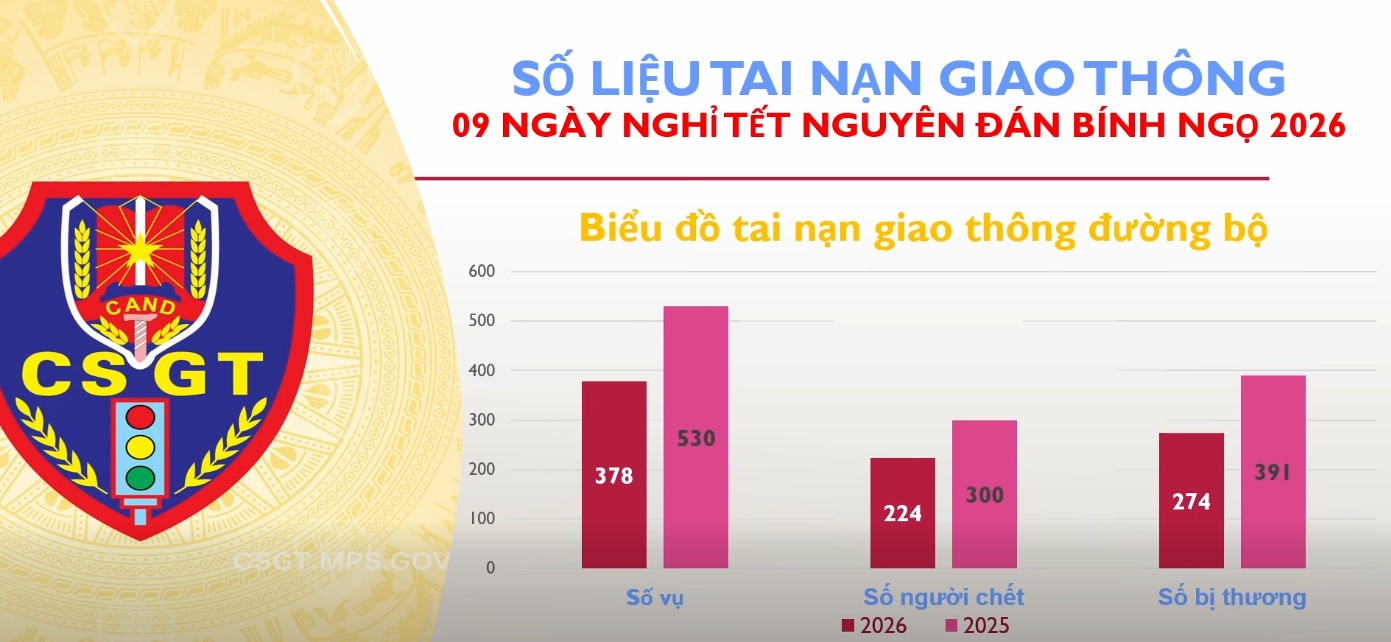 |
Traffic Police Department's data. |
A significant factor is the Traffic Police Department's shift in mindset, no longer treating Tet as an exception but as a continuous peak period. While many previously believed Tet was a time for relaxed enforcement, the strict alcohol checks implemented from the morning of the first day of Tet sent a clear message: the law takes no holidays. This strict approach has prompted road users to adjust their behavior, especially regarding the habit of drinking and driving, a major cause of accidents in past years.
Authorities also intensified efforts to address violations by passenger buses and commercial transport vehicles. These vehicles pose a significant risk due to carrying many passengers, making violations potentially severe. Fines reaching hundreds of millions of dong served not only as a deterrent but also compelled transport businesses to tighten management of their drivers and fleets. Simultaneously, strict penalties for offenses such as speeding, overloading, and violations by young drivers directly contributed to accident reduction.
Technological applications in traffic management marked another advancement. AI camera systems for remote fines and traffic flow analysis data enabled authorities to proactively regulate traffic, open emergency lanes, and implement effective diversions. For instance, traffic organization on the Phap Van - Cau Gie expressway on the afternoon of the 6th day of Tet facilitated safe vehicle flow into the city, preventing the prolonged congestion seen in previous years. Furthermore, receiving feedback through the VNeTraffic application and social media fan pages indicates active public participation in traffic monitoring, creating a widespread control network.
The positive outcome extends beyond reduced accident figures; it also reflects a shift in community awareness. When citizens understand that obeying traffic laws protects them, and authorities enforce rules consistently and transparently, traffic order will gradually become sustainable.
These measures, if sustained and expanded to other holiday periods, are expected to further improve traffic safety. The hope is that safe journeys home and enjoyable Tet celebrations will become the norm in the years to come.
Reader Vu Vu