Thailand's Ministry of Industry is spearheading an initiative to manage end-of-life vehicles (ELVs), focusing on sustainable resource recovery. This strategic move aims to process older vehicles as consumers transition to newer models. Nattapol Rangsitpol, permanent secretary of the Ministry of Industry, stated that relevant units are actively evaluating critical aspects such as advanced dismantling technologies, the establishment of dedicated recycling plants, and securing a consistent supply of vehicles for these processing facilities. The comprehensive plan includes developing efficient dismantling, recycling, and material utilization processes for automobiles no longer in use.
The ELV project is a cornerstone of the Bio-Circular-Green Economy (BCG) development strategy championed by the Thai government. This model encourages businesses to adopt innovative technologies that enhance product value while significantly reducing environmental impact. Officials emphasize that recovering and recycling old automobiles can substantially decrease waste generation, thereby fostering a more sustainable resource management cycle. Materials like steel and plastic from old cars retain high economic value after recycling; for instance, recycled steel can be repurposed for the construction industry.
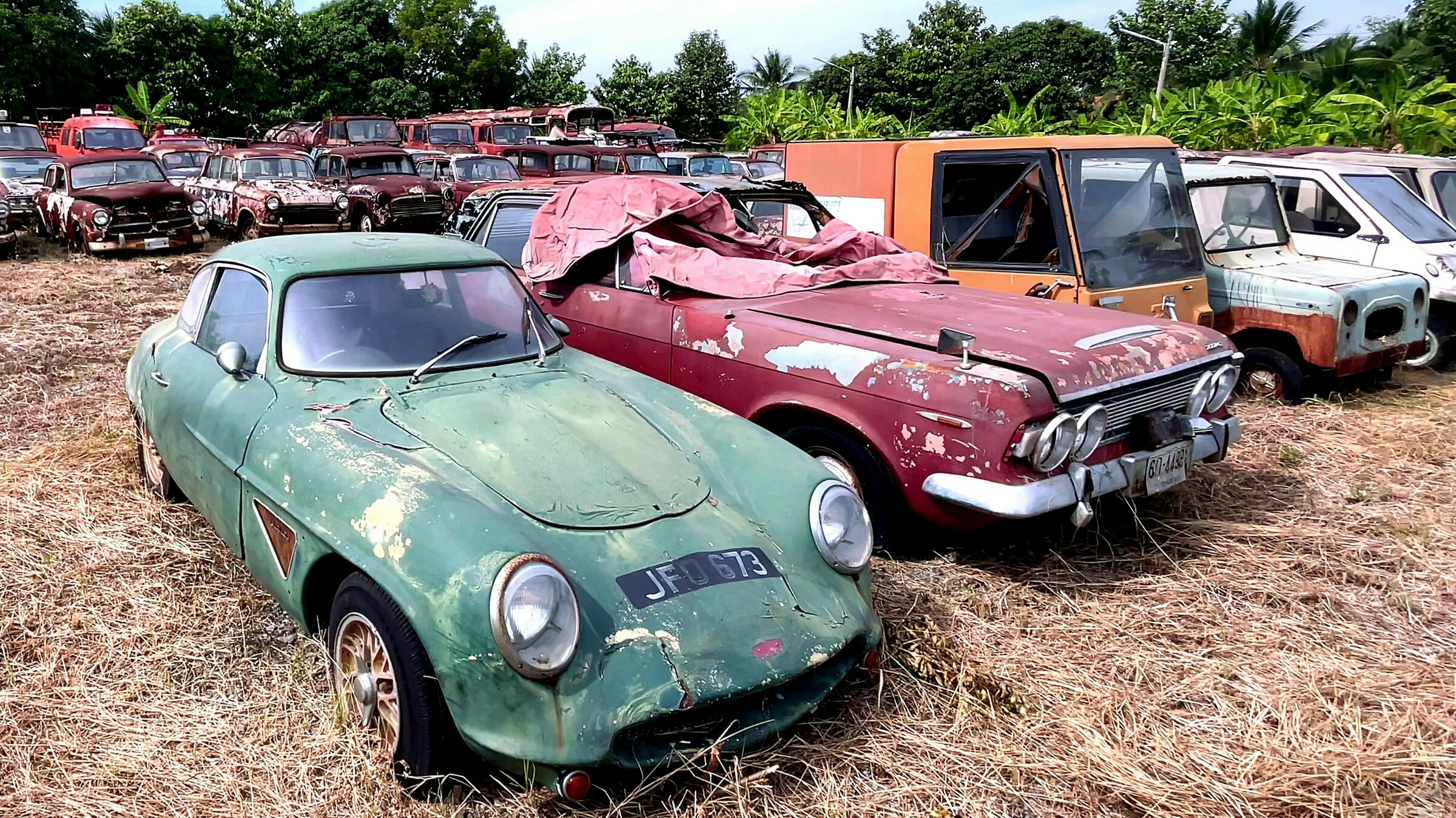 |
Old cars at a scrap yard in Bangkok. *Photo: TheSilentSeekerYT* |
To bolster its automotive recycling sector, Thailand's Ministry of Industry is collaborating with Japanese partners, including the New Energy and Industrial Technology Development Organization (NEDO) and Toyota Tsusho Corporation. This partnership is expected to enhance the country's capabilities in dismantling and recycling end-of-life vehicles, directly supporting both environmental objectives and economic growth. Kriengsak Wongpromrat, president of the Thailand Automotive Institute (TAI), also noted the potential for Thailand to export used vehicles to other Southeast Asian nations to aid in processing vehicles no longer needed. Thailand has previously exported old cars to the Philippines and Malaysia, while also importing some vehicles for recycling.
In a parallel development, Wastech Exponential, an energy company and subsidiary of Millcon Steel, announced plans to build two new waste-to-energy power plants. These facilities are designed to utilize residual waste from end-of-life vehicle processing as fuel for electricity generation, with each plant boasting a capacity of 9,5 MW. Millcon Steel further revealed its intention to expand investments in the recycling sector through its subsidiary, Suntech Recycle & Decarbon. These integrated efforts signify Thailand's progressive formation of an industrial chain centered on the recovery and recycling of old automobiles.
Ho Tan (according to Bangkok Post)