In major cities, intersections are often complex junctions prone to traffic conflicts. Beyond high vehicle density, two common situations exacerbate congestion: vehicles entering an intersection when the path ahead is blocked, and oncoming vehicles turning left prematurely, cutting across straight-moving traffic. During peak hours, these actions significantly slow traffic, leading to severe congestion at intersections.
Vehicles entering an intersection when the path ahead is congested and blocked
A frequent cause of traffic jams at intersections occurs when vehicles continue to enter the junction despite congestion ahead. This forces vehicles to stop mid-intersection, narrowing space for other directions and causing localized gridlock. Under heavy traffic, this blockage quickly spreads to approach roads, creating chain-reaction jams, especially during peak hours.
Drivers must prioritize observing intersection traffic before proceeding, even on a green light. This is especially crucial for cars, given their size and potential to cause greater obstruction. If the path ahead is stationary or insufficient space exists to clear the intersection, drivers should proactively stop before the stop line and wait for the next light cycle. This action keeps the intersection clear for other directions.
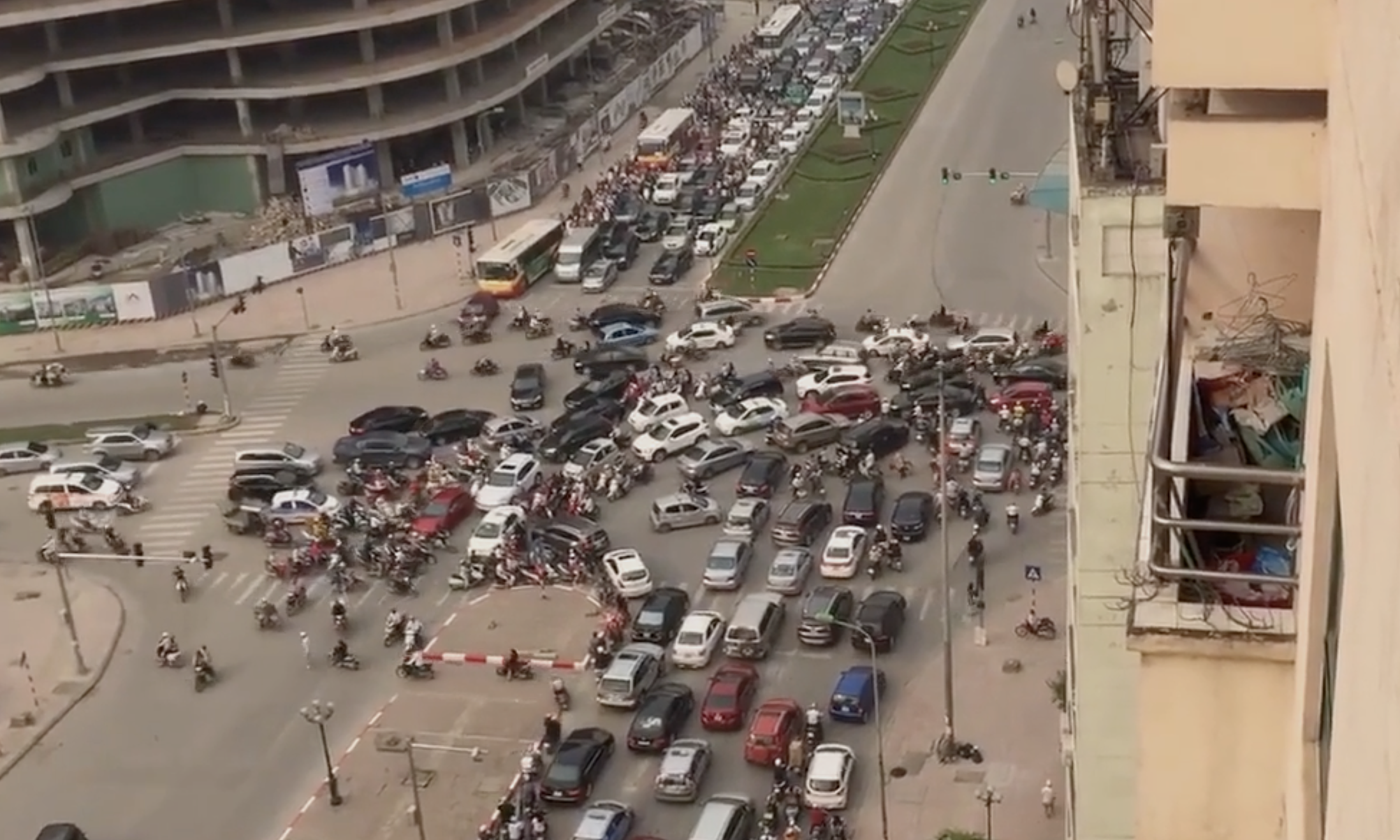 |
Traffic jam at an intersection in Hanoi. *Still from video* |
In heavy traffic, waiting for one light cycle allows traffic to flow more efficiently than forcing entry into the intersection. This reduces cross-congestion, limits widespread jams, and prevents conflicts within the intersection.
Turning left early and cutting across straight-moving traffic
Another common issue at intersections involves oncoming vehicles turning left prematurely, before reaching the center of the junction. When multiple vehicle streams approach an intersection, movement must follow a specific order of priority for efficient flow. Typically, this order is: turn right first, then go straight, and finally turn left.
Turning early causes the vehicle's front or body to encroach on the straight-moving lane, forcing these vehicles to slow or stop completely, quickly congesting the intersection. In heavy traffic, even a few vehicles turning left at the wrong time can disrupt the straight-moving flow, causing vehicles behind to back up and making the intersection more cramped.
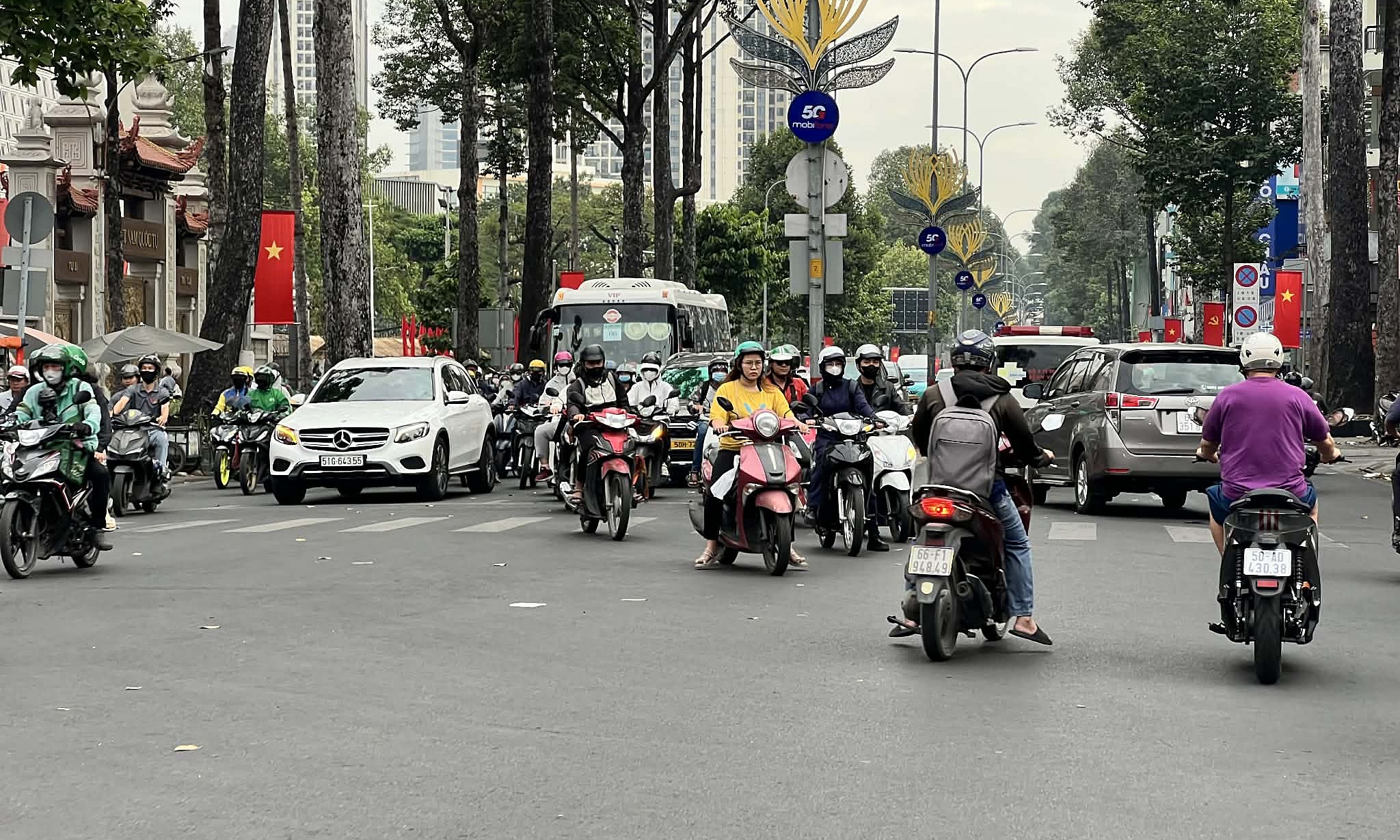 |
Vehicles turning left too early at an intersection in Ho Chi Minh City. *Phuoc Dan* |
Therefore, when turning left, drivers should proceed closer to the center of the intersection before beginning their turn, avoiding early turns that encroach on the straight-moving lane. Maintaining the correct turning position and yielding to straight-moving vehicles preserves space for oncoming traffic, limiting the need for vehicles behind to slow or stop.
In densely populated cities, intersection traffic depends not only on signals but also significantly on how drivers yield and maintain shared space. Proactive observation, correct positioning, and timely actions at intersections ensure smooth traffic flow, contributing to reduced congestion and fewer conflicts.
Ho Tan