Since June, Vietnam has transitioned to using E10 biofuel, replacing mineral gasoline. While most automobiles and motorcycles produced in the last 15-20 years can use this fuel type, a small number of older vehicles still require careful consideration before making the switch.
Which vehicles might not be compatible with E10?
The group of vehicles requiring the most caution includes models using carburetors, those manufactured from the 1990s-2000s or earlier, and vehicles stored for extended periods. In these vehicles, components such as rubber gaskets, fuel lines, sealing rings, or plastic parts may not withstand prolonged exposure to high-concentration ethanol. Over time, ethanol can accelerate material degradation, leading to cracks, hardening, or fuel leaks.
Another issue is ethanol's ability to dislodge years of accumulated deposits within fuel tanks and lines. These loosened deposits can then travel to the fuel filter or injectors, causing unstable engine operation during the initial transition period.
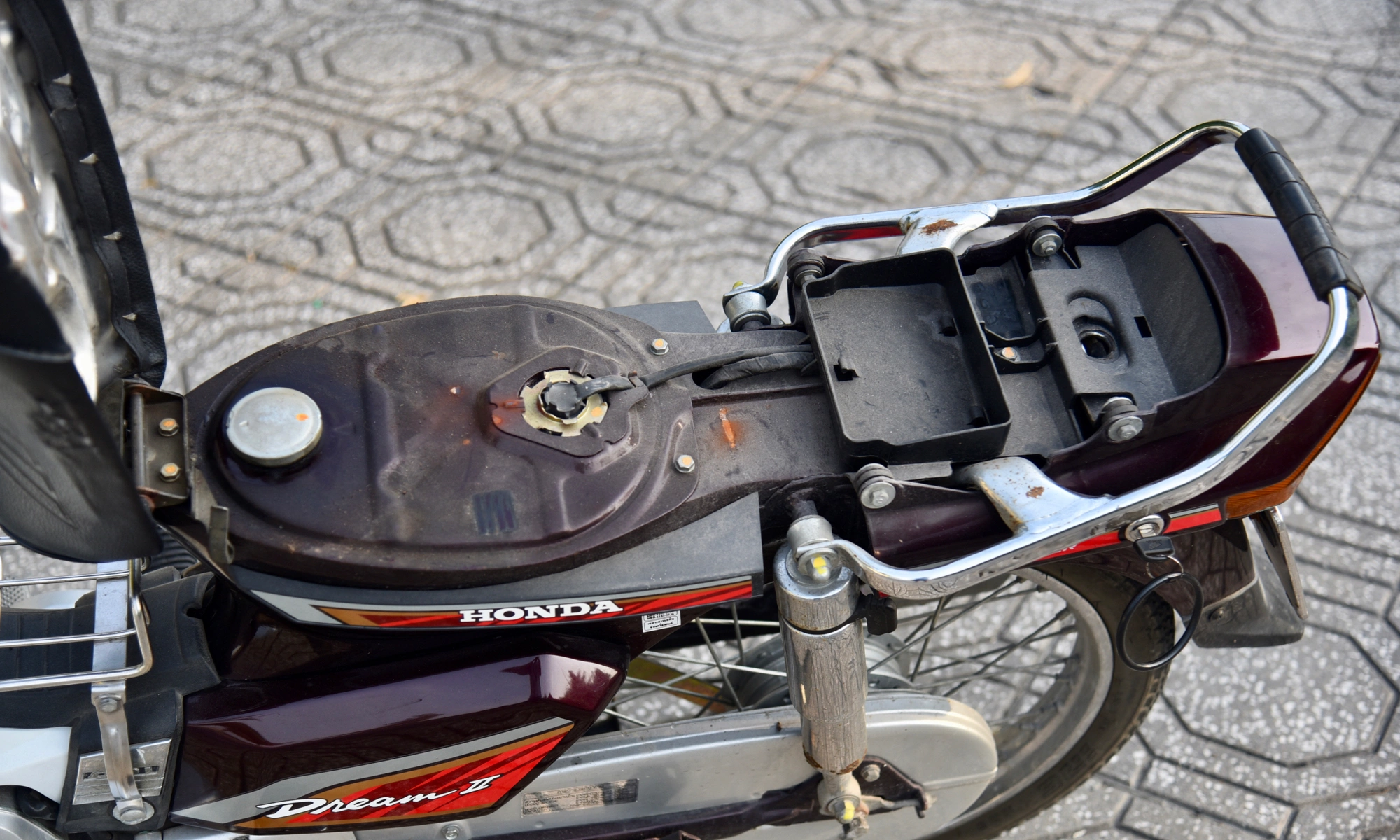 |
The fuel tank on a Honda Dream II, a popular vehicle model in Vietnam, which does not support E10 gasoline. *Ho Tan*
What should vehicle owners do?
The first step is to check the owner's manual or contact an authorized dealer to confirm E10 compatibility. Many vehicle manufacturers published lists of models supporting 10% ethanol-blended fuel years ago.
For older vehicles, owners should inspect the condition of fuel lines, rubber gaskets, and other components in direct contact with gasoline. If signs of degradation, cracks, or leaks are found, replace them with components compatible with biofuel. Today, ethanol-compatible components are readily available, easy to find, and affordable.
When beginning to use E10, vehicle owners should monitor engine performance during the first few tanks of fuel. If issues like difficulty starting, unusual vibrations, or an engine warning light appear, owners should take their vehicle to a service center for inspection. Additionally, E10 should not be stored for extended periods. For infrequently used vehicles, it is advisable to fill with just enough fuel and operate the vehicle periodically to limit moisture absorption.
For very old vehicles not confirmed by manufacturers as E10-compatible, or those where ethanol-compatible components cannot be replaced, owners should prioritize using E5 gasoline if available. Currently, E5 gasoline remains part of the biofuel business roadmap and is expected to be distributed until 2030. Choosing E5 helps reduce ethanol exposure to fuel components that have degraded over time, such as rubber gaskets, fuel lines, or sealing rings, thereby mitigating the risk of material deterioration and associated malfunctions.
Pham Hai