The Asian Development Bank (ADB) projects Vietnam's gross domestic product (GDP) to grow by 7.2% in 2026, with inflation at 4%. This forecast, announced by Nguyen Ba Hung, ADB's chief economist, at a press conference on 10/4, highlights the resilience of Vietnam's economy. The growth is primarily supported by the government's flexible and timely responses to oil price shocks stemming from the Middle East conflict.
The government implemented several temporary fiscal measures, including tax reductions and flexible management of the fuel price stabilization fund. These proactive actions were instrumental in curbing short-term inflationary pressures and fostering economic growth. While ADB's 7.2% growth projection is lower than the government's 10% target for this year, the bank considers it a positive outlook, building on the strong 8% growth achieved in 2025.
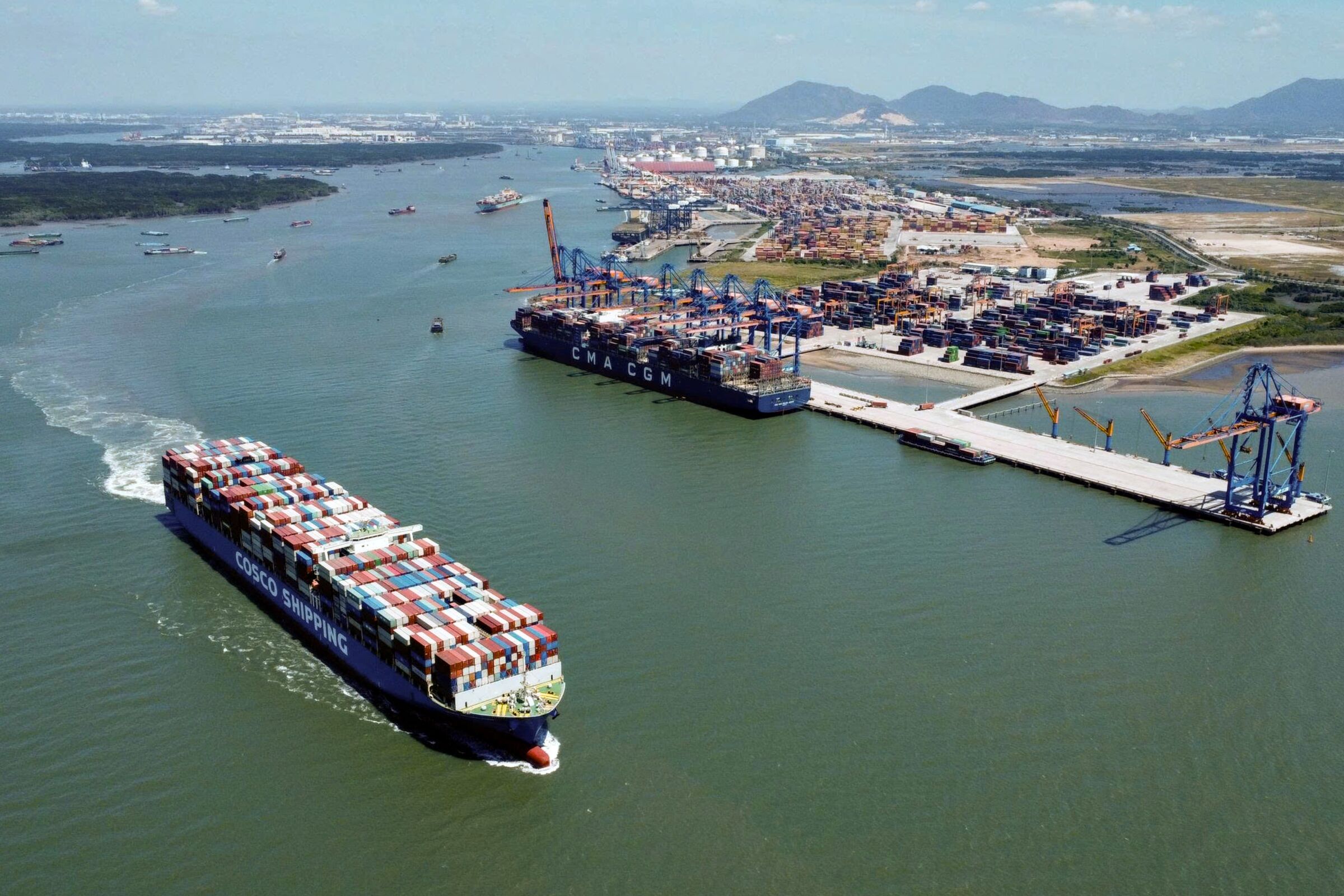 |
Cai Mep - Thi Vai port complex viewed from downstream, 15/8/2025. Photo: Truong Ha
ADB's optimistic growth forecast is based on a scenario where spot Brent crude oil prices fall to 72 USD per barrel this year, and further to 63 USD next year. This projection is notably more favorable than three scenarios the bank released late last month, which anticipated prices around 105-155 USD per barrel in Q2, gradually decreasing until the conflict ends. Currently, Brent crude futures are near 97 USD per barrel, underscoring the uncertainty in global oil markets.
Nguyen Ba Hung stated that specific GDP forecasts for more challenging scenarios have not yet been issued, as such assessments require consideration of many factors, including government responses. Regionally, ADB has announced that economic growth for 10 ASEAN countries could decrease by 0.6-2.3% during the 2026-2027 period. However, these regional assessments are currently model-based and do not account for individual countries' adaptive responses to conflict volatility.
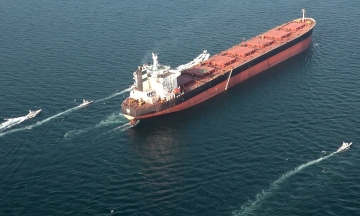
Despite the positive outlook, several risks could impede Vietnam's growth trajectory. The prolonged conflict in the Middle East could continue to disrupt the flow of oil, gas, and fertilizers through the Strait of Hormuz, thereby increasing costs and delaying shipping times. Slower growth among major trading partners could also narrow Vietnam's trade surplus, reducing its overall growth rate.
Furthermore, US tax policy remains unpredictable after 150 days of emergency tariffs. Amid numerous fluctuations, the purchasing managers' index (PMI) approached the 50-point threshold in march, when the conflict occurred, after maintaining a high level in previous months, signaling potential economic slowdowns.
In the long term, ADB experts recommend that Vietnam needs to improve energy efficiency, diversify supply sources, and accelerate the transition to clean energy. In the medium term, analysts believe growth levers lie in improving public sector efficiency, attracting private capital, and strengthening economic resilience. Key solutions include: promoting institutional reform, administrative restructuring, optimizing public investment, and refining the legal framework.
Thuy Truong