These were the central topics shared by international experts at the workshop "digital transformation: trends and strategic vision," organized by VietinBank as part of the "Digital Symphony" event on 15/5.
At the event, experts focused on sharing insights into future banking trends and discussed how the finance and banking sector is redefining customer relationships through digitalization, data, and AI.
 |
The workshop "digital transformation: trends and strategic vision" organized by VietinBank. Photo: VietinBank |
The workshop "digital transformation: trends and strategic vision" organized by VietinBank. Photo: VietinBank
Opening the workshop, Guillaume de Gantes, head of banking and financial services at McKinsey & Company, shared his perspective on the trends shaping the global and Vietnamese banking industries. According to the expert, AI is becoming central to banking operations, driving the shift from traditional models to customer-centric approaches, building integrated ecosystems, and enabling deeper personalization through data and AI.
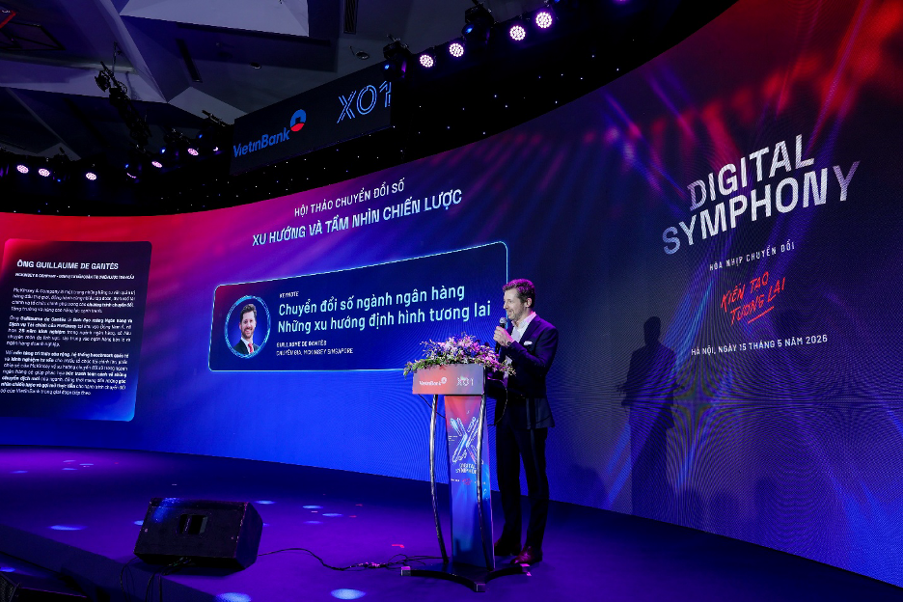 |
Expert Guillaume de Gantes presented a keynote on the topic: "digital transformation in banking - trends shaping the future." Photo: VietinBank |
Expert Guillaume de Gantes presented a keynote on the topic: "digital transformation in banking - trends shaping the future." Photo: VietinBank
He also noted that, alongside the trend of AI application, banks are entering a competition to become customers' "main bank," a development parallel to the growth of integrated financial ecosystems and the increasing demand for cybersecurity and digital risk management.
Drawing from his experience implementing solutions at numerous international banks, Guillaume de Gantes stated that the biggest challenge of AI transformation lies not in the technology itself, but in the ability to translate strategy into tangible change across each customer journey and operating model. This requires banks to modernize their technology infrastructure, enhance data management capabilities, and build more agile organizational models.
"Competitive advantage in the future will belong to organizations capable of integrating AI into operational processes, risk management, and personalizing customer experiences at scale," Guillaume emphasized.
From a customer experience perspective, Robin Speculand, a digital transformation strategy consultant who advises organizations like DBS and Singapore Airlines, believes the banking industry is moving from "customer service" to "customer experience" and, even higher, to "customer obsession." This is where every operational decision revolves around customer needs and behavior.
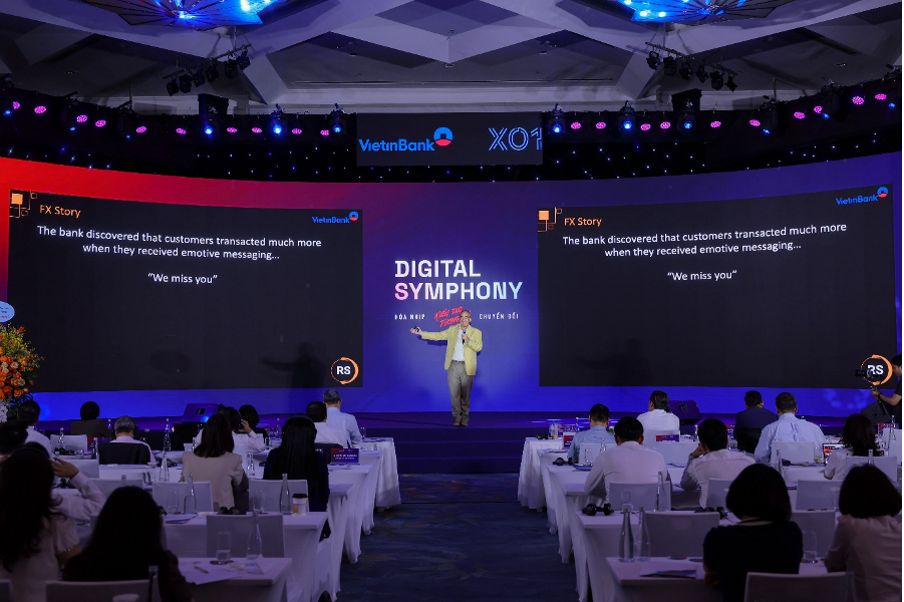 |
Expert Robin Speculand presented a keynote on the topic: "customer obsession - customer-centricity as a competitive advantage." Photo: VietinBank |
Expert Robin Speculand presented a keynote on the topic: "customer obsession - customer-centricity as a competitive advantage." Photo: VietinBank
According to Robin Speculand, customers today no longer care how many digital features a bank offers, but rather about the actual experience they receive at each touchpoint. Data and AI, therefore, should identify the right needs at the right time and build personalized interactions, rather than serving only the goal of cross-selling products.
"The winning bank in the future will not be the one with the most digital features, but the bank that knows how to use digital technology, data, AI, and human insight to build deeper relationships with customers," Robin Speculand said.
Following the two presentations, the panel discussion "redefining customer relationships in the digital, data, and AI era," moderated by Tran Cong Quynh Lan, deputy general director of VietinBank, focused on transforming technology trends into practical operational capabilities within the bank.
Experts suggested that the rapid changes in customer behavior, AI, data, and digital platforms are compelling the banking industry to alter its approach to customers. Shobhit Awasthi, a digital transformation and AI expert at McKinsey & Company, observed that the largest gap currently exists between the expectation of "customer-centricity" and the actual experience customers receive. According to him, many banks have invested heavily in technology, yet customer journeys remain fragmented due to siloed operating models and a lack of continuous data connectivity.
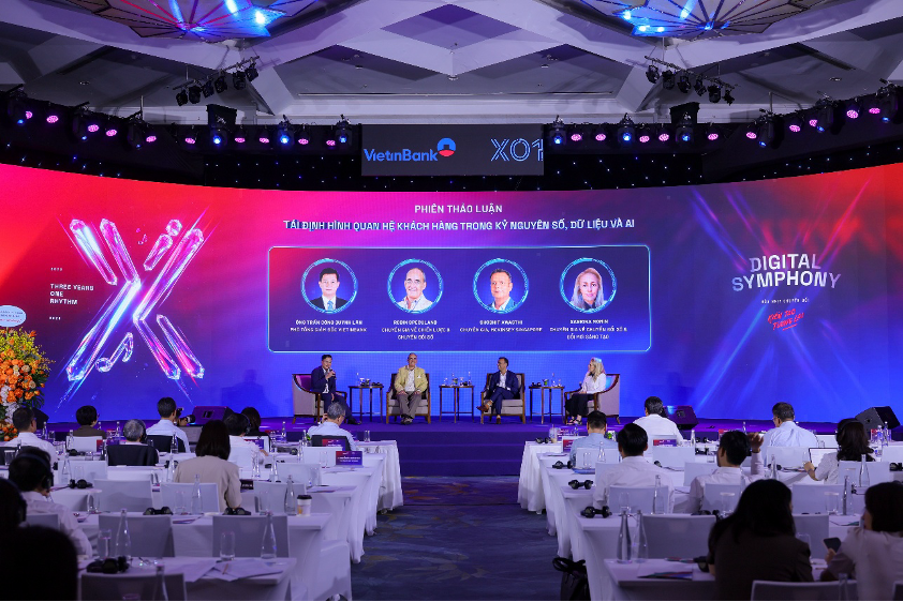 |
The panel discussion "redefining customer relationships in the digital, data, and AI era." Photo: VietinBank |
The panel discussion "redefining customer relationships in the digital, data, and AI era." Photo: VietinBank
Meanwhile, Robin Speculand noted that many banks currently still operate with a "cross-selling" mindset instead of genuinely accompanying and serving customers' needs at every moment. According to the speaker, data and AI should not solely serve the purpose of selling more products, but instead help banks understand customers better.
The trends and insights shared at the workshop also clearly reflect VietinBank's digital transformation strategy for phase 2026 - 2028. During this period, digital transformation will no longer be limited to digitizing processes or applying technology, but will aim to change how value is created, how customers are served, and how the bank operates.
Entering the "Harmonizing" phase, VietinBank is promoting system-wide digital transformation towards standardization and flexibility. For phase 2026 - 2028, the bank has identified three pillars of action: enhancing efficiency and delivering superior value to customers; standardizing and disseminating digital transformation capabilities across the entire system; and fostering a culture of innovation and pioneering spirit.
A bank representative emphasized that AI, data, and technology are driving rapid changes in the banking industry. The ability to adapt, understand customers, and translate strategy into practical action will be the foundation for sustainable competitive advantage. With a customer-centric approach and a focus on applying data, AI, and innovation, VietinBank is building a foundation for a new phase of development in the digital era.
Minh Ngoc