On 27/5, Reuters reported that China updated its carbon emission growth for the 2020-2025 period. The revised data shows a 7% increase, half of the figures previously announced annually.
Lauri Myllyvirta, an expert at the Centre for Research on Energy and Clean Air (CREA), stated that China has changed its emission reduction calculation method. He noted that, in theory, this new approach could reduce the world's second-largest economy's CO2 emissions by about 700 million tons annually. This figure is equivalent to the total yearly emissions of Germany and South Korea.
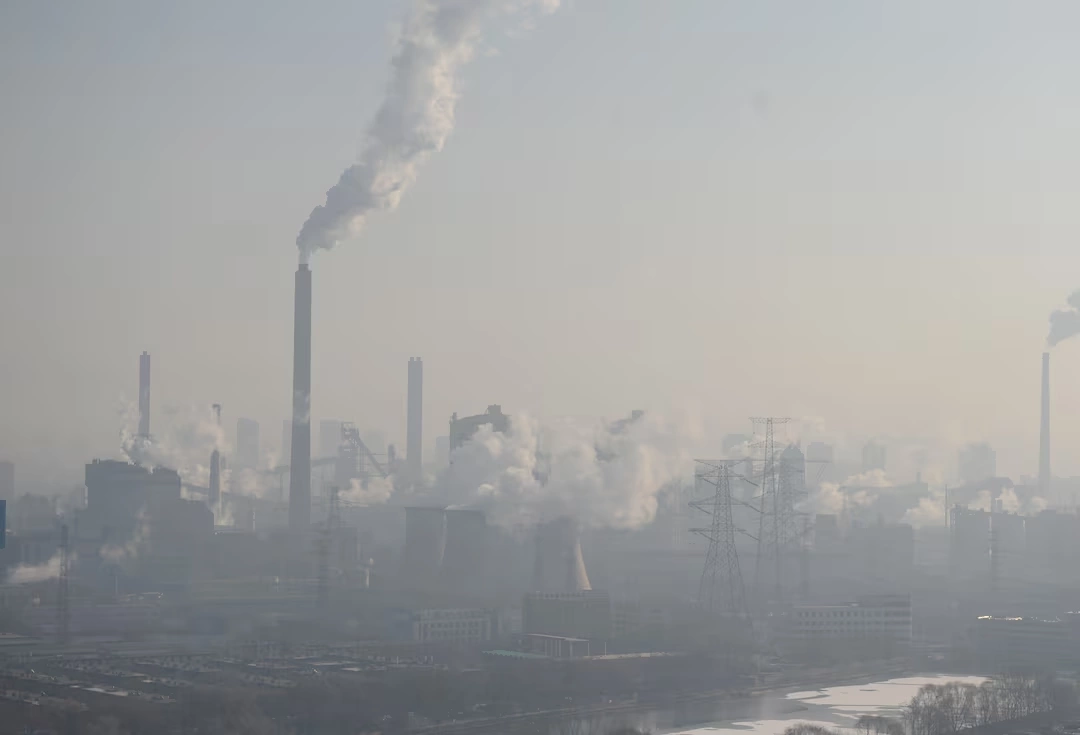 |
Smokestacks and cooling towers of a steel plant in Thai Nguyen, Son Tay province, China, on 28/12/2016. *Reuters* |
China utilizes a carbon intensity index to monitor its progress toward annual climate change goals. This index measures the CO2 emitted per unit of economic output (GDP).
The country does not publicly disclose details of its carbon intensity calculations. In a recent report on China's emission methodology, CREA researchers reconstructed the figures using GDP data and estimated emission reductions from fossil fuel use.
According to the calculation model, China's methodology, following its recent five-year plan, now excludes emissions from non-energy fossil fuel use. This category includes the use of oil and coal in chemical production, an industry that has seen rapid growth in recent years.
Conversely, the new method incorporates emissions from non-fossil fuel industrial processes, such as the cement industry. While cement production is one of the largest industrial emission sources, output in China has declined with the weakening real estate market.
Last september, at the United Nations General Assembly, President Tap Can Binh first announced China's plan to cut greenhouse gas emissions by about 7-10% by 2035 from peak levels.
According to International Energy Agency data, China remains the world's largest polluter, with emissions exceeding 12 billion tons in 2022, 2,5 times those of the United States. Researchers suggest the nation could still meet its 2030 climate commitments, despite actual pollution levels rising. However, this redefinition of carbon intensity is expected to undermine the country's climate goals.
Under the United Nations climate framework, China is free to adopt any definition it chooses to meet its national climate commitments. However, the report cautions, "retroactive changes in methodology or inconsistent calculations can erode the value of a nation's commitments."
Bao Bao (according to Reuters, Carbon Brief)