The Joint Ministry of Industry and Trade - Finance announced that the global petroleum market has recently been influenced by news regarding negotiations between the United States and Iran, and freight congestion in the Strait of Hormuz.
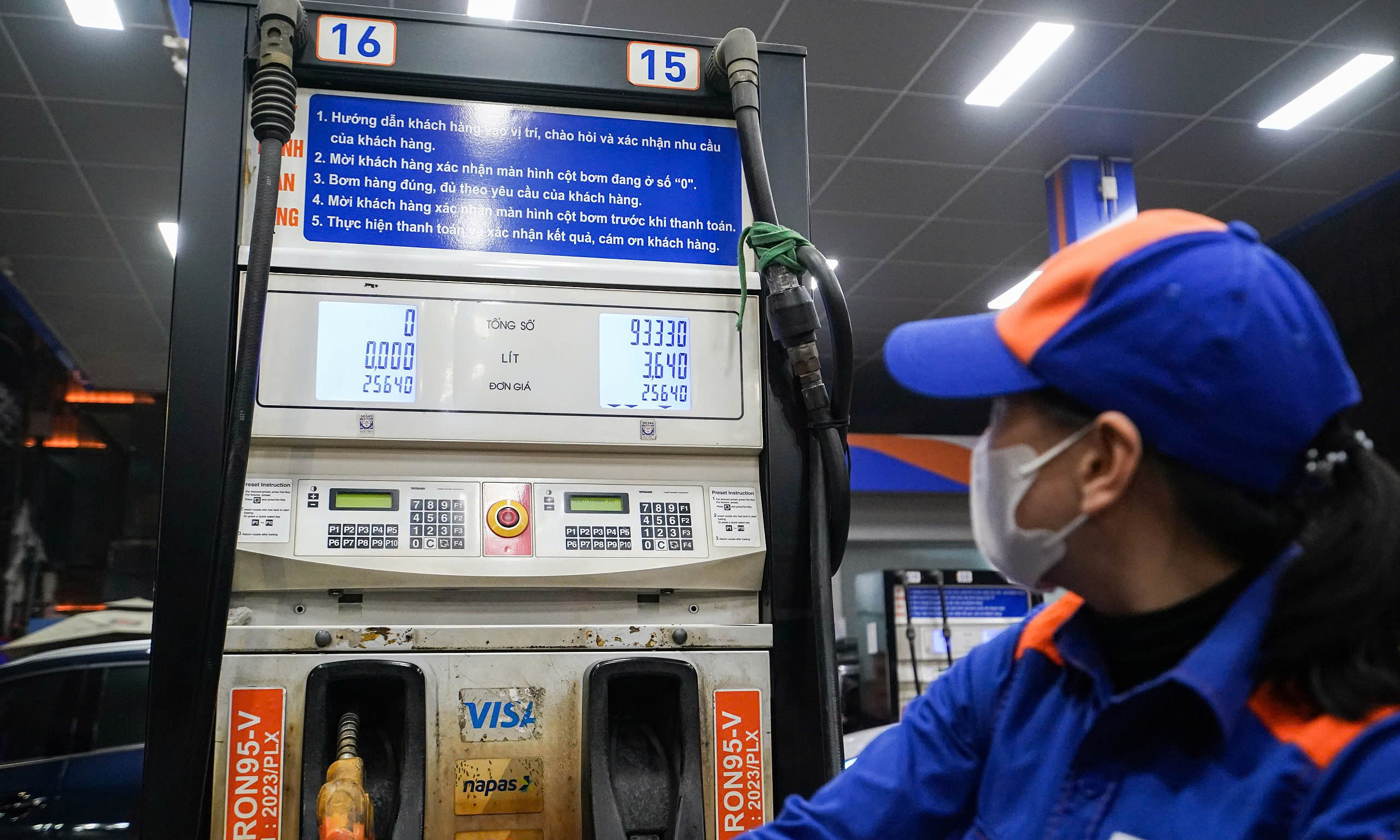
In this afternoon's price adjustment cycle, the Joint Ministry continued to lower domestic fuel prices. RON 95-III gasoline, a common type in the market, decreased by 1,390 VND to 24,150 VND per liter. Similarly, E5 RON 92 now costs 23,250 VND.
Diesel and mazut prices also fell compared to the previous adjustment cycle. Specifically, each liter of diesel is 1,110 VND lower, and mazut decreased by 1,040 VND compared to seven days prior.
During this cycle, regulators re-established contributions to the Fuel Price Stabilization Fund. Specifically, the contribution level is 500 VND for bio-gasoline, 300 VND for diesel, and 700 VND per liter or kilogram for RON 95-III gasoline and mazut.
Fuel prices changed as follows:
 |
Domestic fuel prices have undergone 23 adjustment cycles from late February to date. RON 95-III increased 12 times, decreased nine times, and remained unchanged for two cycles. Similarly, diesel prices saw 10 increases, 11 decreases, and two periods of price stability.
From 1/6, E10 RON 95-III gasoline will be widely available, replacing mineral RON 95-III gasoline in the market. E5 RON 92 gasoline will continue to be sold until the end of 2030.
According to Deputy Minister of Industry and Trade Nguyen Sinh Nhat Tan, the concurrent sale of mineral gasoline and bio-fuel in recent times aimed to help the market gradually adapt and support businesses in completing their distribution infrastructure.
However, citing international experience, he noted that maintaining too many fuel types for an extended period would lead to issues such as increased logistics, warehousing, and distribution costs. This also creates difficulties for retail businesses and reduces the effectiveness of green energy transition.
According to the Ministry of Industry and Trade leadership, the transition roadmap to E10 gasoline was thoroughly assessed by regulatory agencies and is not abrupt. He affirmed this transition roadmap does not impose or restrict people's choices, aiming for sustainable development, energy security, and fulfilling international commitments on emission reduction.
Additionally, based on the assessment results of vehicle compatibility with E10 gasoline, the Ministry of Industry and Trade stated that most oto and motorbikes currently in circulation in Vietnam can use this type of gasoline as recommended by manufacturers.
Phuong Dung