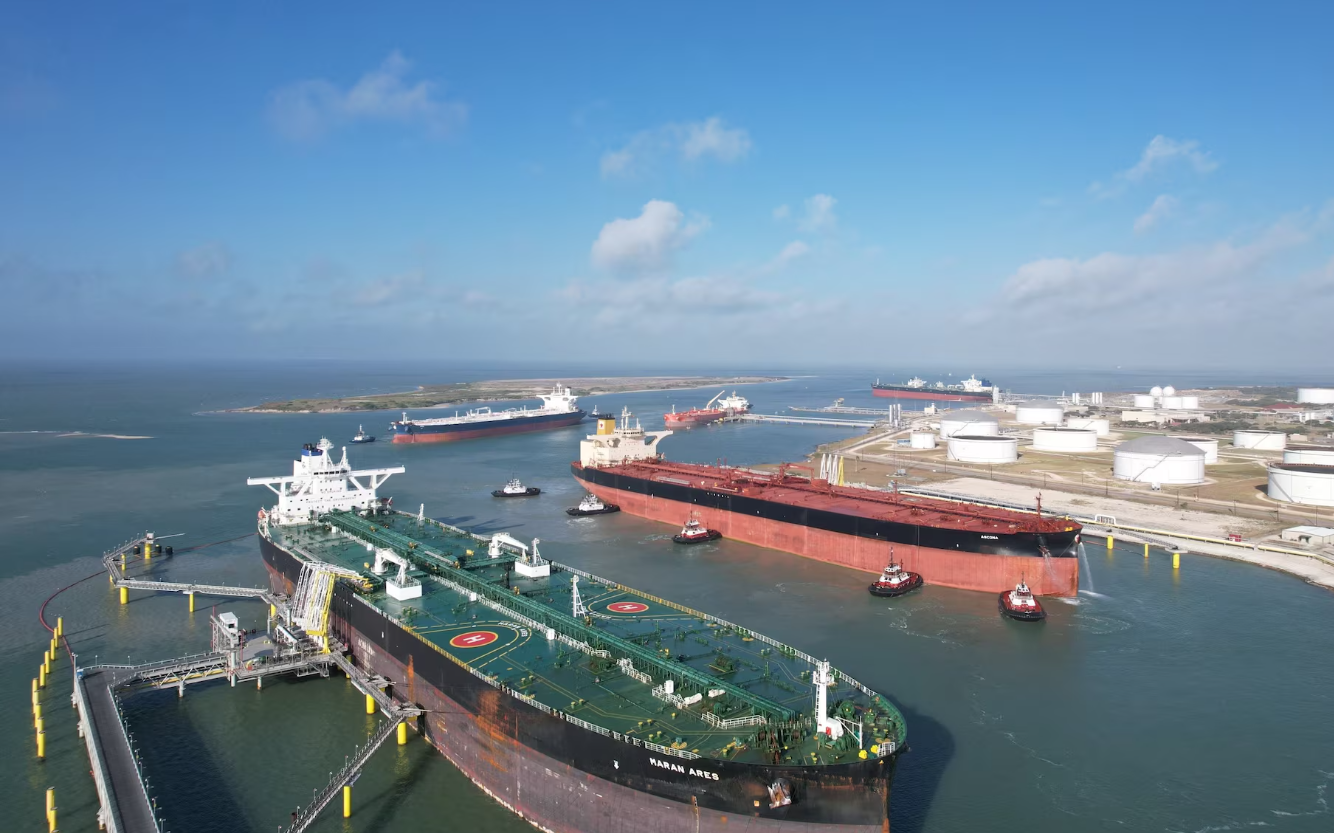
At the start of trading on 6/4, Brent and WTI crude oil prices rose 2,4%, reaching 111 USD and 114 USD per barrel, respectively. The ongoing Middle East conflict continues to threaten global oil supply.
Last week, US President Donald Trump issued a new ultimatum to Iran. On Truth Social, he demanded Iran reach an agreement to open the Strait of Hormuz by 8 PM US time on 7/4 (7 AM on 8/4 Hanoi time), or face attacks on its infrastructure.
“They will have no power plants or bridges left if nothing is done by Tuesday evening,” Trump stated in an interview with the Wall Street Journal.
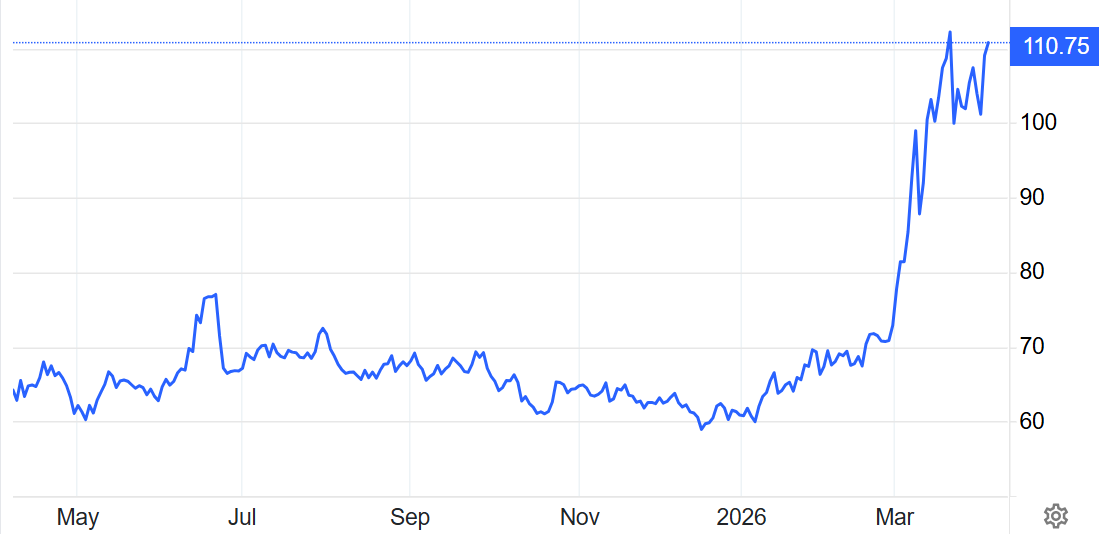 |
Brent crude oil price trends over the past year. Chart: *Trading Economics* |
The Strait of Hormuz, a waterway that transports about 20% of global oil and liquefied natural gas (LNG) supply, has been nearly blockaded since the conflict erupted in late February. This has caused crude oil, jet fuel, diesel, and gasoline prices worldwide to surge.
In a speech last week, Trump indicated the conflict could last another two to three weeks. According to TD Securities, the conflict would result in a global loss of about 600 million barrels of crude oil and 350 million barrels of oil products if it extends until the end of this month.
In the gold market, global gold prices continued to fall at the start of trading on 6/4, driven by Trump's threat to Iran. Currently, each ounce has lost 66 USD, falling to 4,610 USD per ounce.
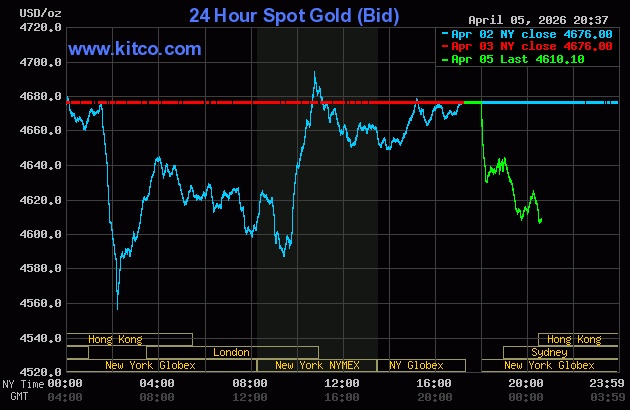 |
Global gold prices fell at the start of trading on 6/4. Chart: *Kitco* |
Since the conflict erupted, the precious metal has fallen more than 12%. The reason is that rising energy prices reduce the likelihood of global central banks cutting interest rates. Gold becomes less attractive in a high-interest-rate environment. Additionally, the precious metal faces pressure as investors need to reduce positions to offset other losing investments.
Beyond gold, other metals are also declining. Silver, platinum, and palladium prices are currently down 0,2-0,9%.
By Ha Thu (according to Reuters, CNBC)