Recent surveys show dragon fruit prices have surged in both retail markets and at farms. At stores, type 1 red flesh dragon fruit sells for 35,000-40,000 VND per kg, while white flesh varieties are around 20,000-25,000 VND, nearly doubling the prices seen in may when they hit their lowest point.
In the Binh Thuan growing region, traders purchase type 1 white flesh dragon fruit for 14,000-15,000 VND per kg, and red flesh for 19,000-20,000 VND. Many farmers report profits of about 3,000-4,000 VND per kg at these prices, after months of selling below cost.
According to Mr. Xuan, a dragon fruit trader in Binh Thuan, recent production decreased by 10% compared to the same period last year due to prolonged rain. Despite this, demand for selected produce remains stable. The market is also entering a gap in harvest, leading to supply scarcity and driving prices up after months of decline.
"We expect a new batch for export in about 3-5 days, which will lead to a more abundant supply", he said.
Type 3 dragon fruit prices have edged up to 5,000-12,000 VND per kg. Consequently, at many roadside stalls in TP HCM, red flesh dragon fruit is still offered at around 20,000 VND per kg.
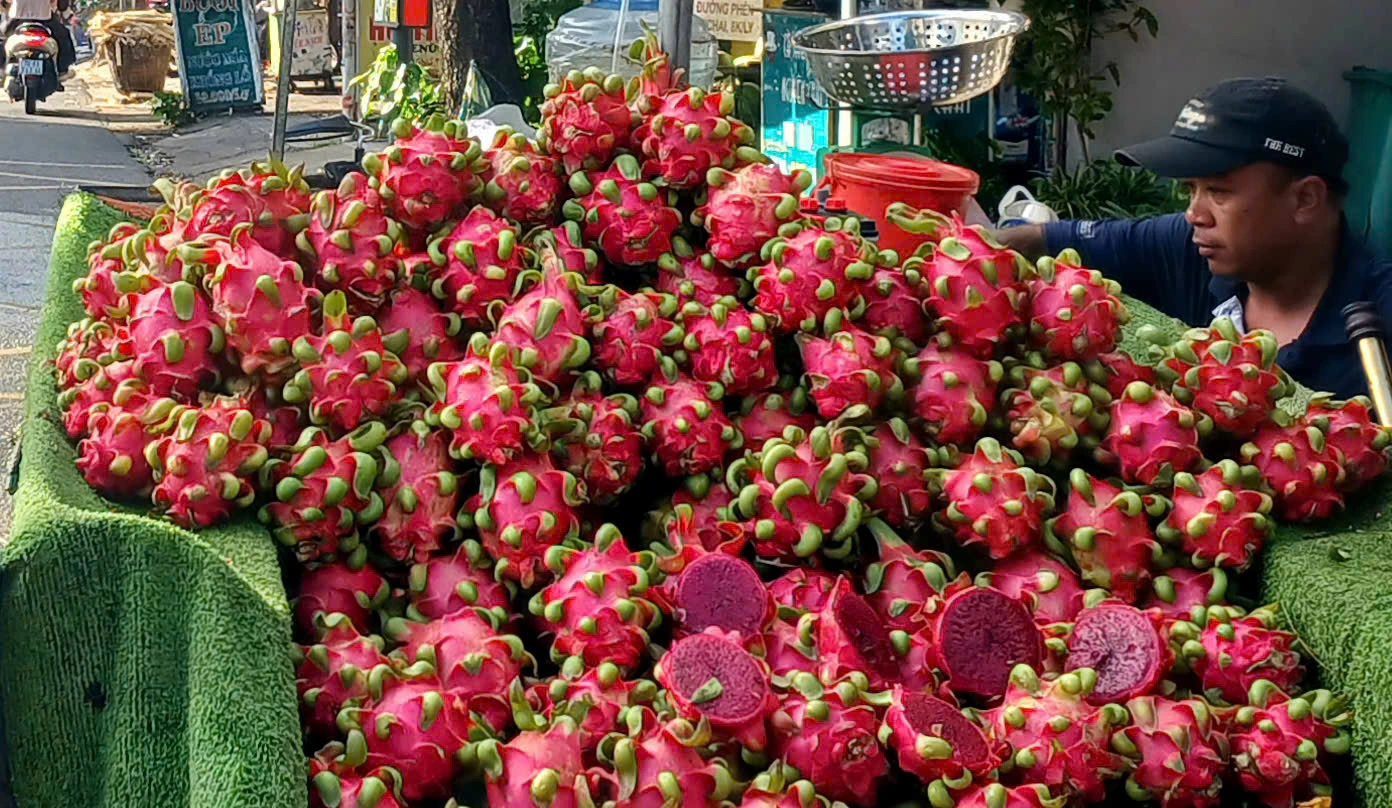 |
Red flesh dragon fruit sold on Pham Ngu Lao street, Hanh Thong ward. Photo: Thi Ha |
According to Mr. Canh, Chairman of the Binh Thuan Dragon Fruit Association, the price increase is primarily due to a drop in supply. This reduction followed an extended period of low prices, which prompted many farmers to shrink their cultivation areas or reduce investment in care. In recent days, many growing regions entered a new gap in harvest, further exacerbating market scarcity and accelerating price increases.
Mr. Canh noted that demand from export markets remains consistent. However, prolonged rain affected fruit quality, increasing the proportion of rejected fruit and reducing the volume of dragon fruit meeting export standards.
Customs data shows that in the first six months of the year, dragon fruit exports reached 280 million USD, a decrease of nearly 3% compared to last year. Mr. Canh explained that the decline in export value is mainly due to reduced supply. This reduction stems from farmers shrinking their cultivation areas or decreasing investment in care after a prolonged period of low prices, leading to lower overall production. Additionally, unfavorable weather resulted in a lower percentage of export-standard fruit, impacting the volume of goods shipped.
Thi Ha