Market surveys indicate that durian prices increased by approximately 5,000-7,000 dong per kilogram last week, an 8% rise compared to the previous week. This surge is attributed to increased purchases from the Chinese market.
Currently, grade A Thai durian (2.7 cells) is bought at farms for around 80,000 dong per kilogram in the Mekong Delta, 73,000 dong in the Southeast region, and 75,000 dong in the Central Highlands. Grade B durian (2.5 cells) ranges from 35,000-45,000 dong per kilogram. Meanwhile, Ri6 durian of grade A sells for 55,000-58,000 dong per kilogram, with grade B priced at approximately 25,000-30,000 dong.
Trung, a durian trader in Dak Lak, noted that export orders have increased over the past week, prompting farms to boost their collection efforts. "Prices have improved, and quality produce is quickly purchased", he stated.
At a durian farm on Hung Dao Vuong street, Vinh Long, the owner reported a more active purchasing atmosphere. To secure export-standard goods, many traders are willing to pay an additional 1,000 dong per kilogram to individuals who introduce orchards with export-quality durian.
In the first seven months of the year, fruit and vegetable exports are estimated to have reached 4.76 billion USD, a 23% increase over the same period in 2025. Conversely, imports totaled approximately 1.84 billion USD, up 27%, leading to a trade surplus of nearly 2.92 billion USD for the entire sector.
China remains the largest export market for Vietnamese fruits and vegetables, accounting for over half of the total turnover. The US, South Korea, Japan, the Netherlands, and other markets also maintained growth, diversifying outlets for Vietnamese agricultural products.
According to Dang Phuc Nguyen, General Secretary of the Vietnam Fruit and Vegetable Association, durian continues to be the sector's largest driver, contributing over 50% of total fruit and vegetable export turnover.
"In previous months, Vietnamese durian faced intense competition from Thailand. Now that Thailand's season has ended, Vietnamese durian is almost 'alone in the market', leading to much more favorable outlets", Nguyen explained.
He added that, in addition to fresh fruit exports, frozen durian is increasingly contributing to turnover growth. The sharp decline in durian prices recently, due to abundant supply, provided processing enterprises with lower-cost raw materials, enabling them to boost production and exports.
"Lower raw material prices allow enterprises to increase frozen durian export volumes", Nguyen stated. This product is now exported not only to China but also to the US, South Korea, Japan, and other markets, contributing significantly to the overall growth of the sector.
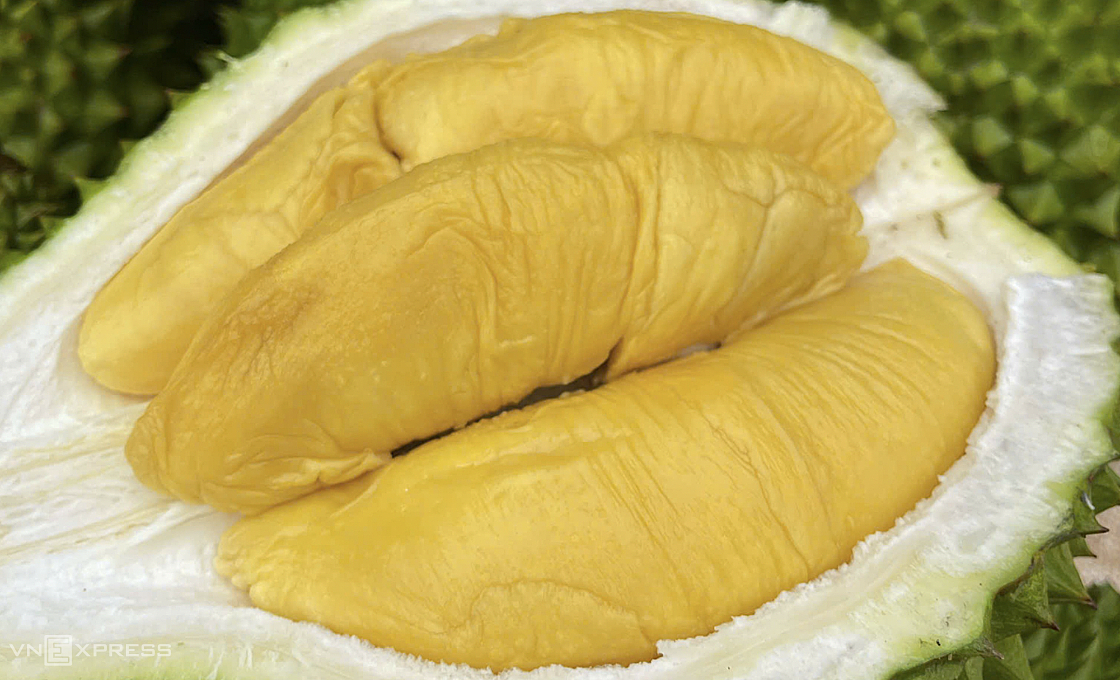 |
Durian in Dak Lak. *Photo: Phan Hang*
Export activities are also supported by policy. Recently, the Customs Department instructed regional customs branches to prioritize customs clearance for agricultural products on the same day, including outside of administrative hours, on weekends, and holidays. They also assigned officers to process procedures and supervise goods promptly. Accelerating the issuance of growing area codes and completing export procedures helps shorten delivery times, facilitating businesses.
According to Nguyen, the Central Highlands is about to enter its main durian harvest season, which extends until September-October. This period typically records the highest export turnover of the year. With the recovery of the Chinese market, the advantages from fresh and frozen durian exports, and supportive customs clearance policies, the fruit and vegetable sector is expected to continue its breakthrough in the remaining months of the year.
Thi Ha