The European Parliament (EP) decided to postpone a vote on a trade agreement with the US during a meeting on 23/2. The vote was originally scheduled for 24/2.
Bernd Lange, chair of the EP's Trade Committee, stated that a temporary 15% tariff the US is preparing to implement could subject about 7-8% of EU products to higher taxes than the two sides agreed upon last year. Furthermore, the future after 150 days, when these temporary tariffs expire, remains uncertain.
The EP is expected to reconvene on 4/3 to evaluate whether the US has provided clear information on the current situation and committed to adhering to the agreement reached by both parties last year.
This marks the second time the EP has decided to postpone a vote on the trade agreement with the US. Last month, they halted the process to protest President Trump's expressed interest in acquiring Greenland.
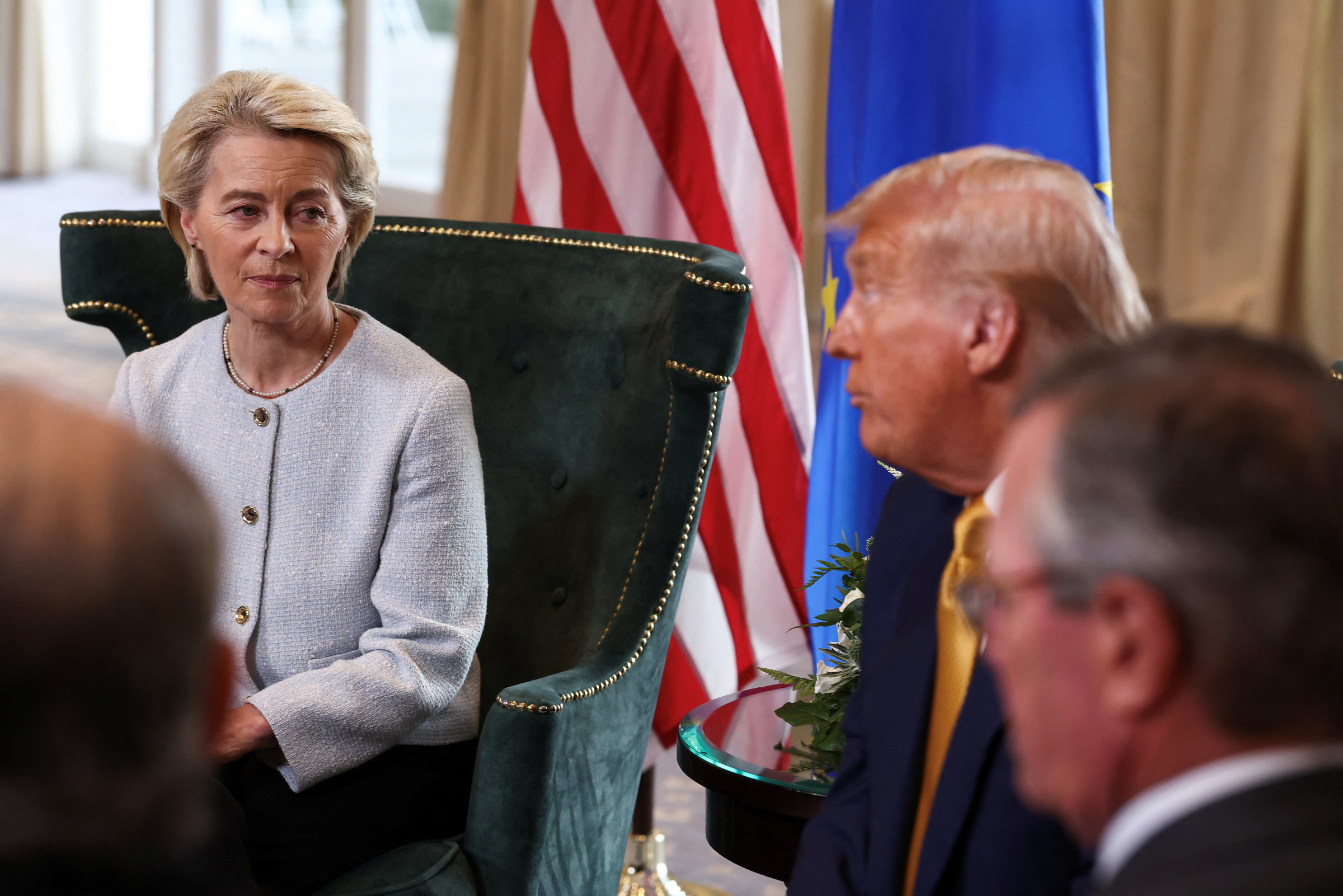 |
European Commission (EC) president Ursula von der Leyen and US President Donald Trump at an event in 7/2025. *Photo: Reuters*
Over the past few months, the EP has discussed proposals to eliminate various import tariffs on US goods (under the 2025 agreement) and to maintain a 0% tariff on lobsters (agreed upon in 2020). These proposals require ratification by the parliaments and governments of EU member states.
Last year's trade agreement set a 15% tariff on European goods entering the US, with exceptions for products subject to separate industry-specific duties, such as aluminum and steel. The agreement also allowed for a 0% tariff on certain products like aircraft and parts. In return, the European Union (EU) agreed to lift import tariffs on many US goods and retracted its threats of retaliatory tariffs.
Since last year, many parliamentarians have complained that the agreement was imbalanced. However, they appeared willing to approve it, provided that conditions were met, such as implementing measures to address a surge in imports from the US.
Nevertheless, it remains unclear whether the new 15% US tariff will supersede this agreement. If it does, tariff exemptions for the EU could be eliminated. The new tariff might also be applied in addition to Washington's current "most favored nation" tariffs, which are not applicable under the EU-US agreement. Consequently, for some European cheeses, the total tariffs could reach approximately 30%.
Ha Thu (according to Reuters)