The European Central Bank (ECB) maintained its benchmark interest rate at 2% last week, but issued a warning about potential price surges. Officials are now considering scenarios that would necessitate rate hikes to prevent sustained price increases.
"If the current shock causes inflation to significantly exceed our target, even if not sustained, a moderate policy adjustment may still be necessary. If we do not act, people will struggle to understand why there was no response," Lagarde stated at a conference in Frankfurt on 25/3.
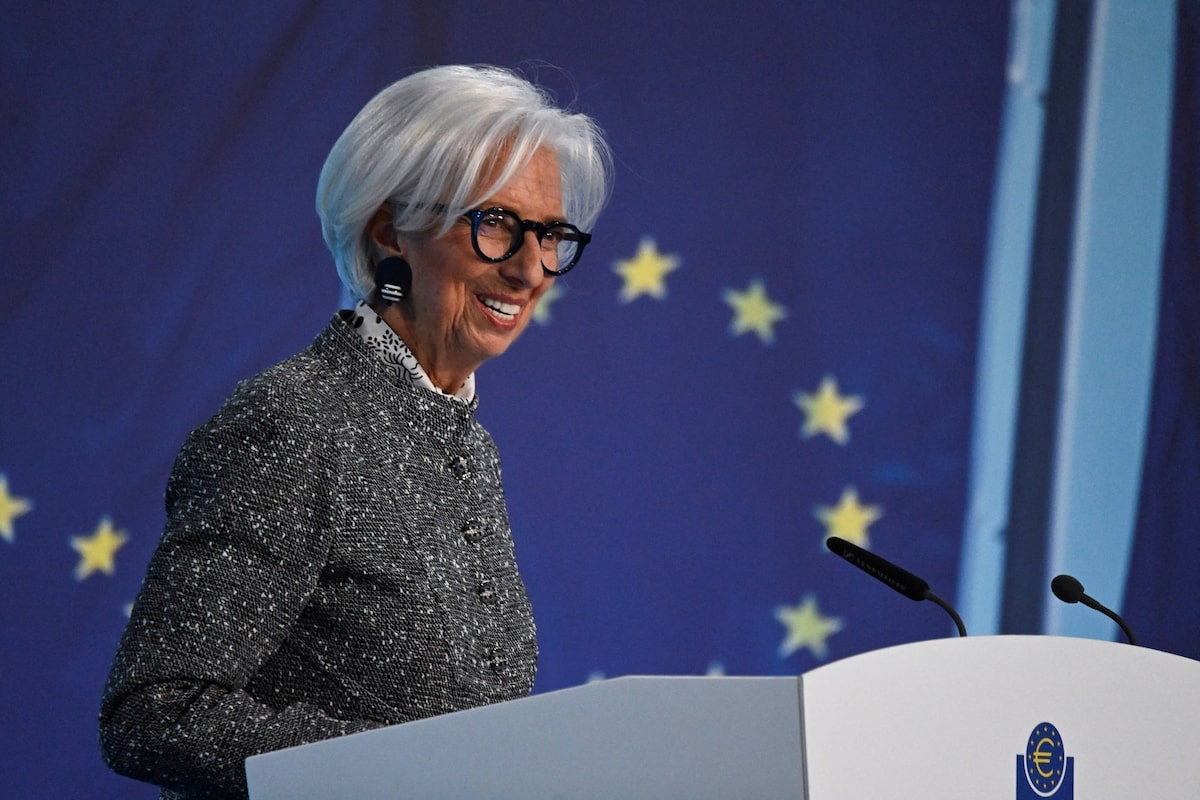 |
Christine Lagarde at the ECB headquarters in Frankfurt, Germany on 19/3. *Photo: Reuters*
Before the Middle East conflict intensified late last month, eurozone inflation had dipped below the ECB's 2% target. However, by February, this figure showed an upward trend, reaching 1,9%. The conflict has disrupted the Strait of Hormuz, causing global oil and gas prices to rise sharply and altering Europe's inflation outlook.
Under the baseline scenario, the region's average inflation is projected at 2,6% this year, 2% in 2027, and 2,1% in 2028. In a more adverse scenario, the ECB cautioned that inflation could reach 4% this year. The most severe scenario, which assumes a stronger and more prolonged energy price shock alongside extensive damage to Gulf energy infrastructure, could see inflation surpass 6% in early 2027.
"If projected inflation deviates significantly and for an extended period from our target, the policy response must be sufficiently strong or sustained," Lagarde explained. Concurrently, ECB chief economist Philip Lane noted that the bank is closely monitoring key indicators such as businesses' price increase forecasts and new hire wage data.
Analysts observed signs that the Middle East conflict is diminishing business confidence in Europe. The Purchasing Managers' Index (PMI) for March, released by S&P Global on 24/3, revealed that manufacturing and services output in the eurozone's private sector had fallen to a 10-month low.
Ha Thu (according to Reuters, CNBC)