Ngo Xuan Hai, Deputy General Director of Vietnam Electricity Group (EVN), shared this information at a seminar on ensuring electricity supply on 10/6.
Previously, peak hours were divided into two periods: midday and evening. However, according to Decision 963 issued by the Ministry of Industry and Trade on 22/4, these peak hours are now shifted to the evening, from 5:30 p.m. to 10:30 p.m. (excluding Sunday), with off-peak hours from 12 a.m. to 6 a.m.
The new peak and off-peak hour framework has not yet been implemented, awaiting the Ministry of Industry and Trade's amendment to regulations in Circular 60 regarding electricity retail prices. In a draft amendment to this circular in late May, the Ministry proposed immediate application of the new hours for manufacturing and business customers during this year's hot season. The National Load Dispatch Center (NSMO) and EVN, however, proposed implementing the new framework immediately in June.
EVN Deputy General Director Ngo Xuan Hai stated that manufacturing and business customers will be primarily affected by the change in peak and off-peak hours.
Households using electricity for daily living will not be affected, as they follow the current tiered retail price structure. Residential electricity prices are currently uniform throughout the day, irrespective of time slots.
Nevertheless, Hai noted that reducing electricity consumption during peak hours remains beneficial for the entire system, especially when evening demand surges as solar power generation ceases.
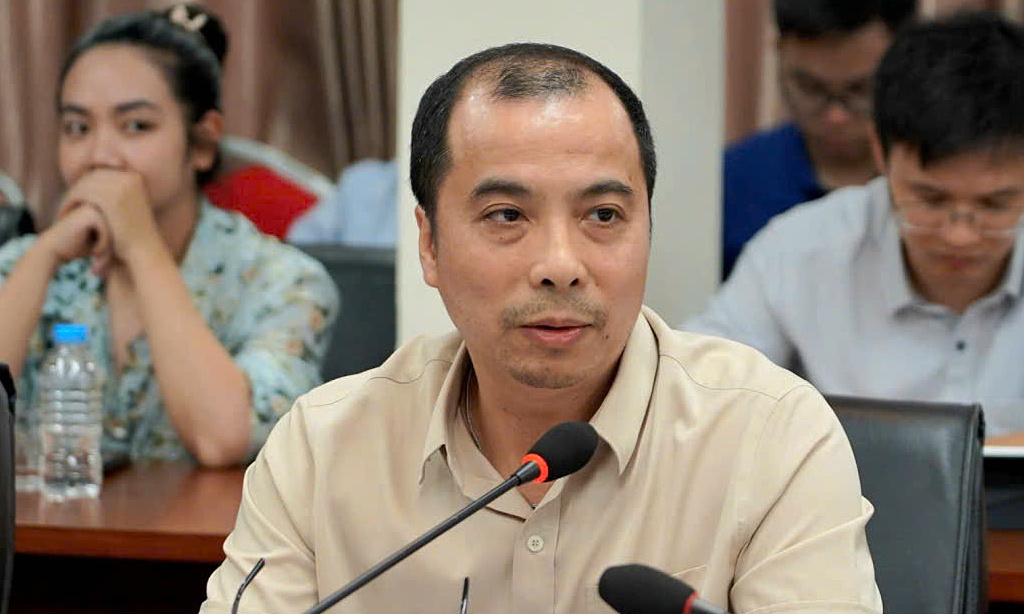 |
Ngo Xuan Hai, Deputy General Director of EVN, speaking at the seminar on 10/6. *Photo: Xay Dung Newspaper*
Bui Quoc Hung, Deputy Director General of Electricity (Ministry of Industry and Trade), added that shifting peak hours entirely to the evening will have varied impacts on manufacturing businesses and the commercial and service sectors.
Specifically, for industrial manufacturing, the impact depends on each company's operating model. For instance, garment manufacturers organize production in two shifts, while others operate continuously in three shifts, leading to different capacities for adjusting electricity consumption.
In contrast, commercial and service businesses have distinct electricity usage patterns. Shopping centers typically consume significant electricity during the day, especially on hot afternoons. Restaurants and hotels, however, consume more in the evening, coinciding with the new peak hours, which could result in a more pronounced impact.
Furthermore, Hung suggested that the change in time slots also affects the operational strategies of power generation units. Small hydropower plants with reservoirs, for example, can proactively store water during periods of low electricity prices. Conversely, they can increase power generation during peak hours to optimize business efficiency.
From a business perspective, Vu Xuan Thoan, Deputy Director of Song Cong Diesel Company, believes the policy's impact will not be significant for companies already operating on a three-shift, four-crew model, as the total peak period remains five hours daily. Conversely, businesses not operating continuously can rearrange production and shift breaks to reduce electricity costs.
According to an EVN representative, the goal of adjusting peak hours is to identify periods when the system experiences high pressure, encouraging customers to review and shift their electricity consumption to more suitable times. This policy aims to ensure operational safety and optimize overall costs for the national power system.
Currently, approximately 1.25 million electricity meters for manufacturing and business customers apply the peak and off-peak hour pricing mechanism. EVN will update the time slot configuration on these businesses' electricity meter systems. Due to the variety of meter types, reconfiguring them will require significant resources and is expected to take several weeks.
The electricity sector will prioritize reconfiguring meters for large electricity consumers and units capable of adjusting their consumption to adapt to subsequent heatwaves. According to Hai, once businesses understand the new peak hours, they can proactively adjust their electricity usage plans, enhancing production and business efficiency.
Phuon Dung