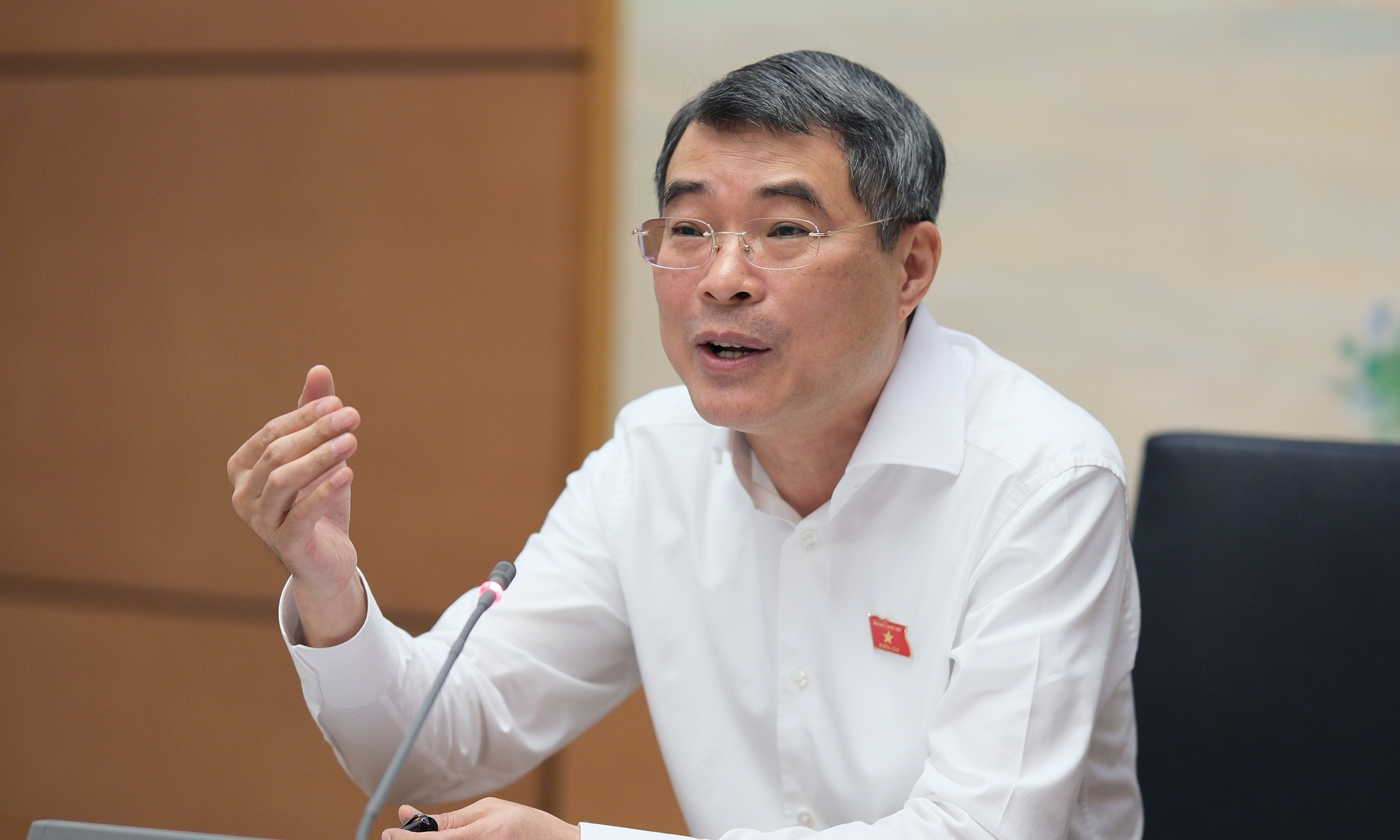
Nguyen Van Duoc, Chairman of the Ho Chi Minh City People's Committee, revealed these figures at a meeting on February 27, summarizing the Lunar New Year (Tet Binh Ngo) preparations and the socio-economic situation in February.
Ho Chi Minh City aims for an average annual growth rate of 10-11 percent, with Gross Regional Domestic Product (GRDP) per capita projected to reach 14,000-15,000 USD by 2030. To hit these double-digit growth targets, the city has identified a substantial investment capital requirement, estimated at approximately 1.2 quadrillion VND each year.
Public investment from the state budget is expected to contribute only 100-150 trillion VND, accounting for about 6 percent of the total need. The remaining 94 percent, or 900 trillion to one quadrillion VND, must come from the private sector and individual households. This highlights Ho Chi Minh City's reliance on non-state funding sources.
In the past one to two months, the city has received numerous proposals for large-scale investments, which Mr. Duoc considers a positive sign amidst the ambitious double-digit growth targets. However, he acknowledged the immense challenge, given that the city's economy already exceeds 3 quadrillion VND.
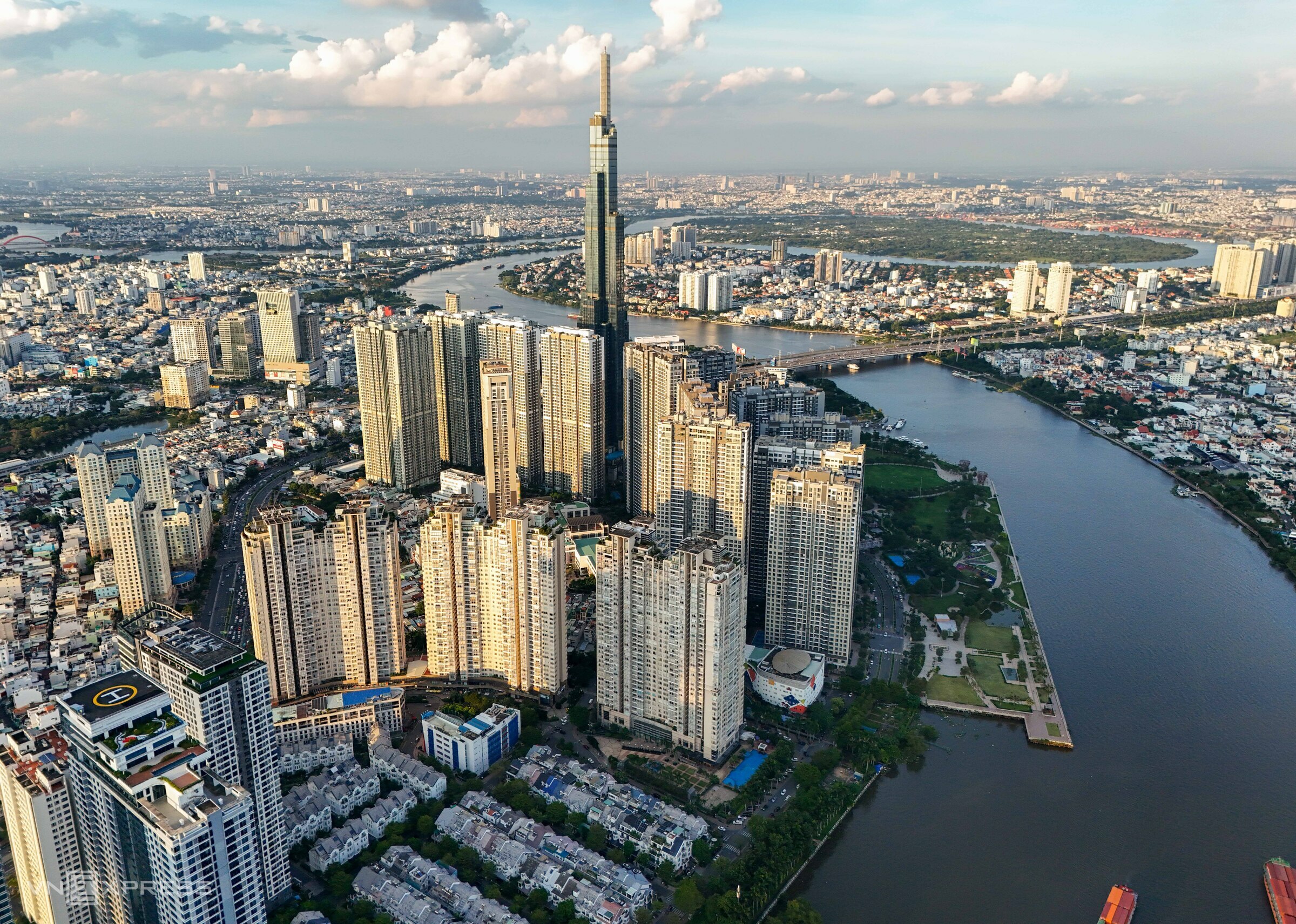 |
Real estate in Ho Chi Minh City's eastern district, along the Saigon River, featuring apartment projects, high-rise buildings, land plots, and townhouses in October 2024. Photo: Quynh Tran |
Real estate in Ho Chi Minh City's eastern district, along the Saigon River, featuring apartment projects, high-rise buildings, land plots, and townhouses in October 2024. Photo: Quynh Tran
"We cannot rely on public investment to create a breakthrough in growth," Mr. Duoc stated. He clarified that budget capital would serve as "seed capital", guiding and activating social capital flows, rather than being the primary driver. Consequently, the city's objective is to mobilize investment from society and the private sector.
For strategic investors, large corporations, and enterprises, the city leader has directed relevant departments to engage directly and ascertain their projected total investment for the entire 2026-2030 period. Ho Chi Minh City is not merely interested in registered figures but will monitor annual disbursement plans from 2026 to 2030, particularly the disbursement rate in the initial year. The aim is to ensure committed capital genuinely enters the economy, rather than remaining on paper.
Concurrently, administrative procedures must be expedited, reducing processing times for applications to enable investors to launch projects sooner. "We must support, accompany, and promptly resolve issues to ensure investors feel secure," Mr. Duoc emphasized.
A new strategy for capital mobilization involves fully integrating household investments into calculations. The city's administration requires each ward and commune to regularly compile statistics on new construction, home renovations, and housing types undertaken by residents. These figures will be converted into investment values and aggregated into the total social investment capital. This approach will transform previously dispersed and unquantified household resources into a significant component of the growth equation.
Beyond large corporations and individual citizens, Ho Chi Minh City has tasked the Ho Chi Minh City Business Association with reviewing and evaluating the investment and disbursement capacity of small and medium-sized enterprises (SMEs) from 2026 onwards.
Specialized departments, including the Ministry of Finance, Ministry of Transport, and Ministry of Construction, are responsible for compiling lists of major projects within their respective fields to gauge the potential scale of private capital mobilization.
Mr. Duoc repeatedly stressed that for businesses to confidently invest, the administrative apparatus must undergo transformation. The government needs to shift its mindset from "management" to "risk governance", partnering with enterprises. Administrative procedures must become more transparent and concise. Advisory officials must possess a thorough understanding of the law and provide consistent guidance, avoiding unclear instructions that could pose risks for investors.
According to the Ho Chi Minh City People's Committee's socio-economic report for February, the city's economy showed positive signs, with several key indicators recording high growth compared to the same period last year. The Index of Industrial Production (IIP) increased by an estimated 14.6 percent. Total retail sales of goods and consumer service revenue rose by over 13 percent, indicating continued recovery in domestic purchasing power. Export turnover also grew by 10.58 percent. Tourism remained a highlight, with an estimated revenue of over 125 trillion VND and more than 14.1 million visitors in the first two months of the year. Business activity was more vibrant, with new business registrations increasing by 63 percent year-on-year. Foreign Direct Investment (FDI) into the city also saw a rise of over 28 percent.
Le Tuyet