During a group discussion session of the National Assembly on the draft revised Petroleum Law on 4/8, Minister of Industry and Trade Le Manh Hung outlined the reasons for amending the law, including practical aspects of oil and gas industry operations and Vietnam's oil and gas fields and blocks.
According to Hung, production decline is occurring rapidly due to many years of exploitation. Meanwhile, Vietnam's oil and gas potential lies in deep offshore areas, which are more challenging and thus require more complex extraction conditions.
Concurrently, the goal of two-digit economic growth is linked with increasing energy demand. Therefore, Hung believes that more preferential policies are needed to attract investment.
The Minister of Industry and Trade also introduced three core new points of the revised Petroleum Law, including expanding the scope of oil and gas activities and extending offshore energy development activities related to oil and gas operations.
Regarding governance, according to the Minister, the draft law clearly specifies the principles of decentralization and delegation of authority from the Government and the Ministry of Industry and Trade to Vietnam National Oil and Gas Group (PVN). Le Manh Hung affirmed that the revised draft law ensures faster deployment of oil and gas activities and reduces many procedures compared to before.
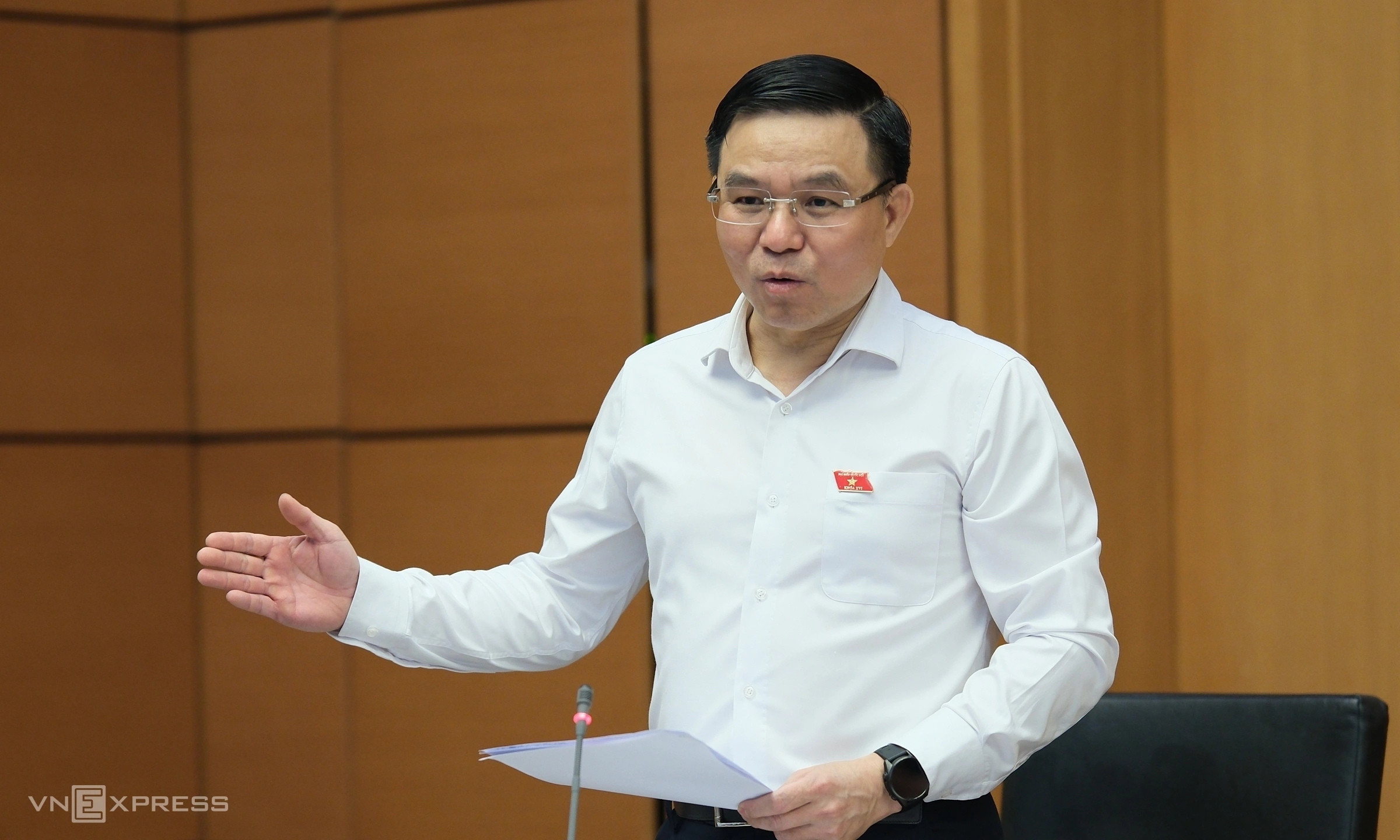 |
Minister of Industry and Trade Le Manh Hung spoke at the group discussion session on the afternoon of 4/8. Photo: Anh Tu. |
Contributing to the Hanoi group discussion, Do Duc Hong Ha, Vice Chairman of the National Assembly's Committee for Science, Technology and Environment, expressed concern that some provisions in the draft revised Petroleum Law could conflict with the Law on Management and Investment of State Capital in Enterprises (also known as Law 68).
Specifically, according to Ha, the draft stipulates that PVN's Board of Members approves the use of capital from the group and its 100% owned enterprises "regardless of the capital contribution level" when exercising the right to participate in oil and gas contracts or activities.
In contrast, under Law 68, the Board of Members can only independently decide on investment projects or investments with capital not exceeding 50% of equity and not surpassing specific levels regulated by the Government. Therefore, the Hanoi delegate argued that the draft provision exceeds authority, reducing the oversight and inspection role of the owner's representative agency.
Similarly, Pham Thuy Chinh, Vice Chairman of the Economic and Financial Committee, also stated that from a legislative technical perspective, granting PVN's Board of Members the authority to make investment decisions regardless of the capital contribution level could create a "strong exception" for the group.
Therefore, she proposed that the drafting agency design the law so that PVN's Board of Members would not need to seek approval from the owner's representative agency under Law 68, rather than making it independent of the capital level. Ha, on the other hand, proposed amending the phrase "regardless of the capital contribution level" to "in accordance with investment decision-making authority regulations" in Law 68.
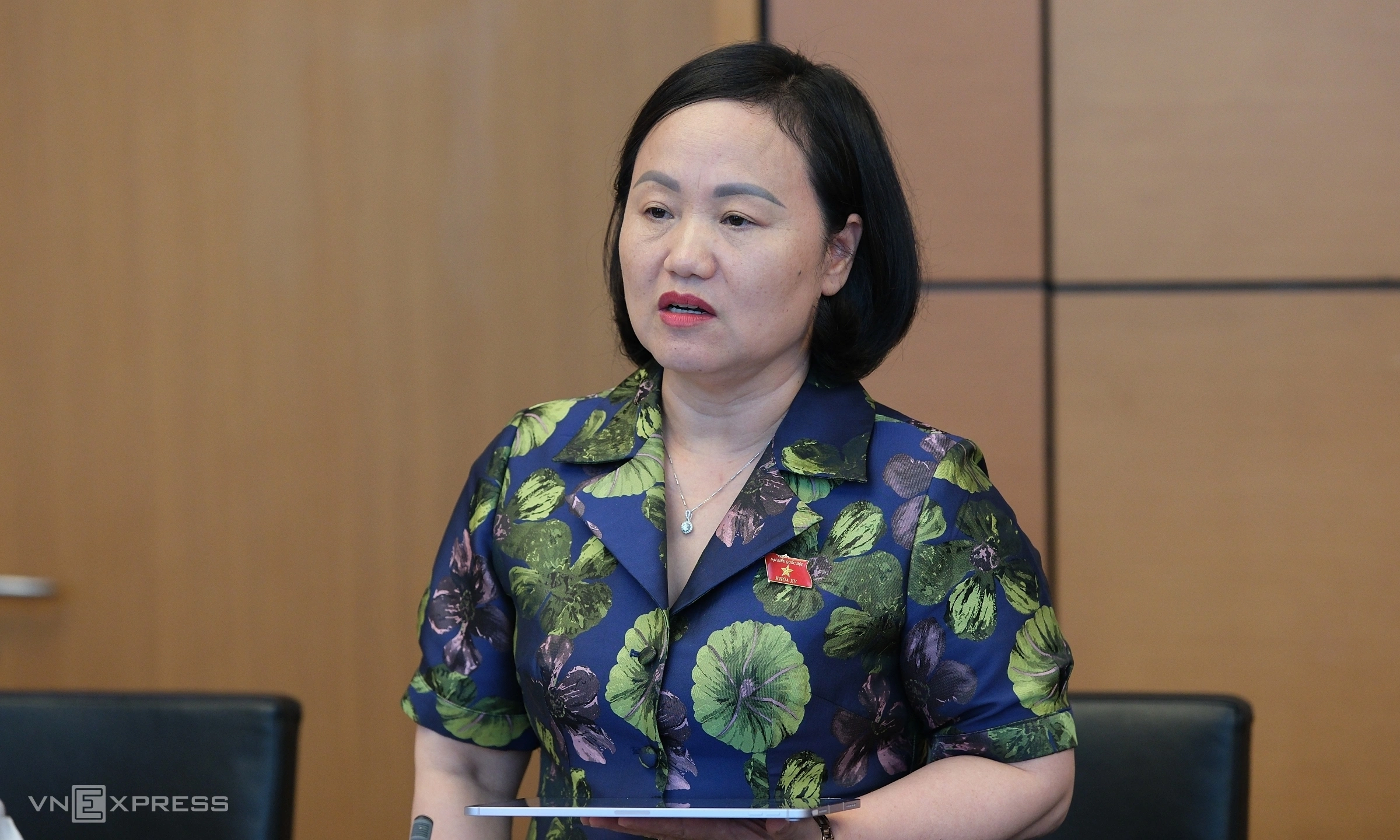 |
Pham Thuy Chinh, Vice Chairman of the Economic and Financial Committee, at the afternoon session on 4/8. Photo: Anh Tu. |
Explaining subsequently, the Minister of Industry and Trade stated that the regulations on capital utilization authority and investment decisions are specific to oil and gas activities. According to him, the law already provides for ODP (Overall or Preliminary Field Development Plan) approval, which is equivalent to Pre-FS (Pre-Feasibility Study) approval. FDP (Detailed Field Development Plan) approval is equivalent to FS (Detailed Feasibility Study) approval. Therefore, Hung said that the authority for investment decisions and capital utilization is corresponding.
Regarding PVN's capital contribution during the execution of oil and gas contracts, he stated that these contracts have been approved by the Prime Minister based on ODP and FDP. "Oil and gas contractors carry out capital calls and disbursements according to the provisions of the oil and gas contracts. This process is strictly managed," Le Manh Hung added.
Anh Tu