The lawsuit, filed on 3/8 by Democratic-led states in the U.S. Court of International Trade (CIT), seeks to halt the new tariffs, declare them illegal, and demand refunds for taxes already paid. New York Attorney General Letitia James stated, "After losing in the Supreme Court, the administration is again attempting to illegally raise taxes on families and businesses through a new round of tariffs."
The U.S. began imposing these new import tariffs on 60 economies on 24/7, following an investigation into alleged unfair trade practices. The tariffs, set at 10% and 12,5%, replaced a temporary 10% rate that expired concurrently. These new duties are projected to cover 99,4% of U.S. trade volume.
The states contend that the administration's invocation of Section 301 of the Trade Act of 1974 and concerns about forced labor are merely a pretext to quickly re-impose tariffs after previous policies were rejected by the courts. The White House, however, denies these claims.
White House spokesperson Kush Desai explained the administration's stance: "The U.S. is utilizing its lawful authority to compel nations to cease unreasonable practices, policies, and customs that hinder U.S. trade. It is unreasonable for a nation not to prohibit and effectively enforce a ban on importing goods produced with forced labor, as this harms U.S. trade and workers. Therefore, such issues must be addressed."
However, the states' lawsuit alleges that U.S. Trade Representative Jamieson Greer rushed the investigation of the 60 economies. It claims Greer ignored individual consultations required by regulations and failed to explain why nearly identical tariffs were applied to economies with vastly different policies.
The lawsuit asserts, "There is no logical connection between the alleged forced labor issue in global supply chains and the tariffs imposed by the Office of the U.S. Trade Representative (USTR)." The states argue that Section 301 permits trade measures only after investigating the actions of a specific country, and any resulting tariffs must be designed to terminate that particular behavior.
U.S. trade officials completed their investigation of the 60 economies in approximately 2,5 months, categorizing them into four tariff groups. The two primary tariff rates differed by only 2,5 percentage points.
The lawsuit also highlights the critical timing of the tariff implementation. The USTR announced the new tariffs on 23/7, just one day before the temporary 10% tariffs under Section 122 of the Trade Act expired. The plaintiff states argue this timing ensured a continuous application of the Trump administration's tariff policy.
This legal challenge follows previous setbacks for the administration's tariff policies. In February, the Supreme Court rejected Trump's import tariff policies based on the International Emergency Economic Powers Act (IEEPA). In response, on the same day, Trump signed an executive order imposing an additional 10% import tariff, citing authority under Section 122 of the Trade Act of 1974.
Later, in May, the U.S. Court of International Trade (CIT) also ruled against the 10% import tariffs, but its injunction only blocked their application to Washington state and two small businesses.
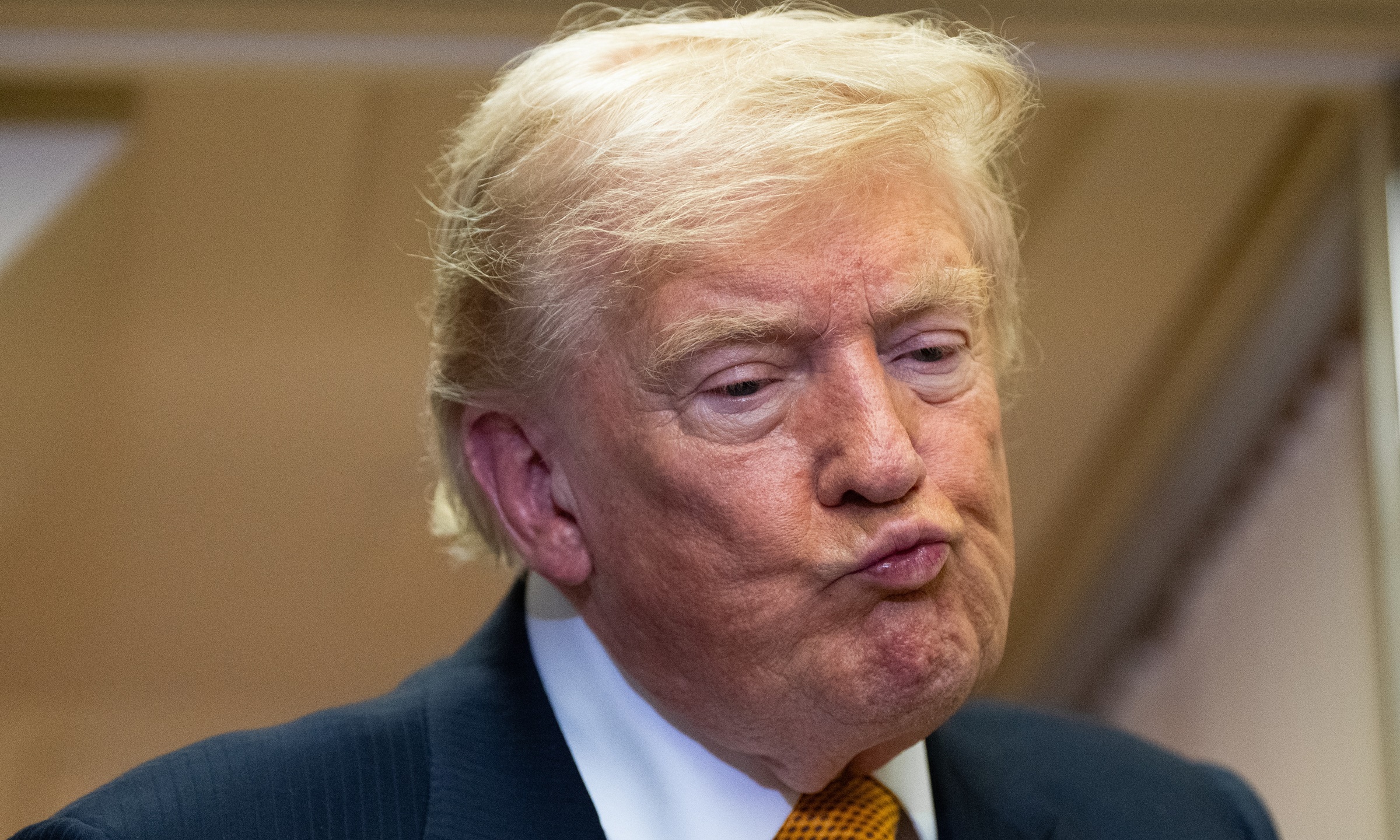 |
President Donald Trump on Air Force One on 8/7. Photo: AP |