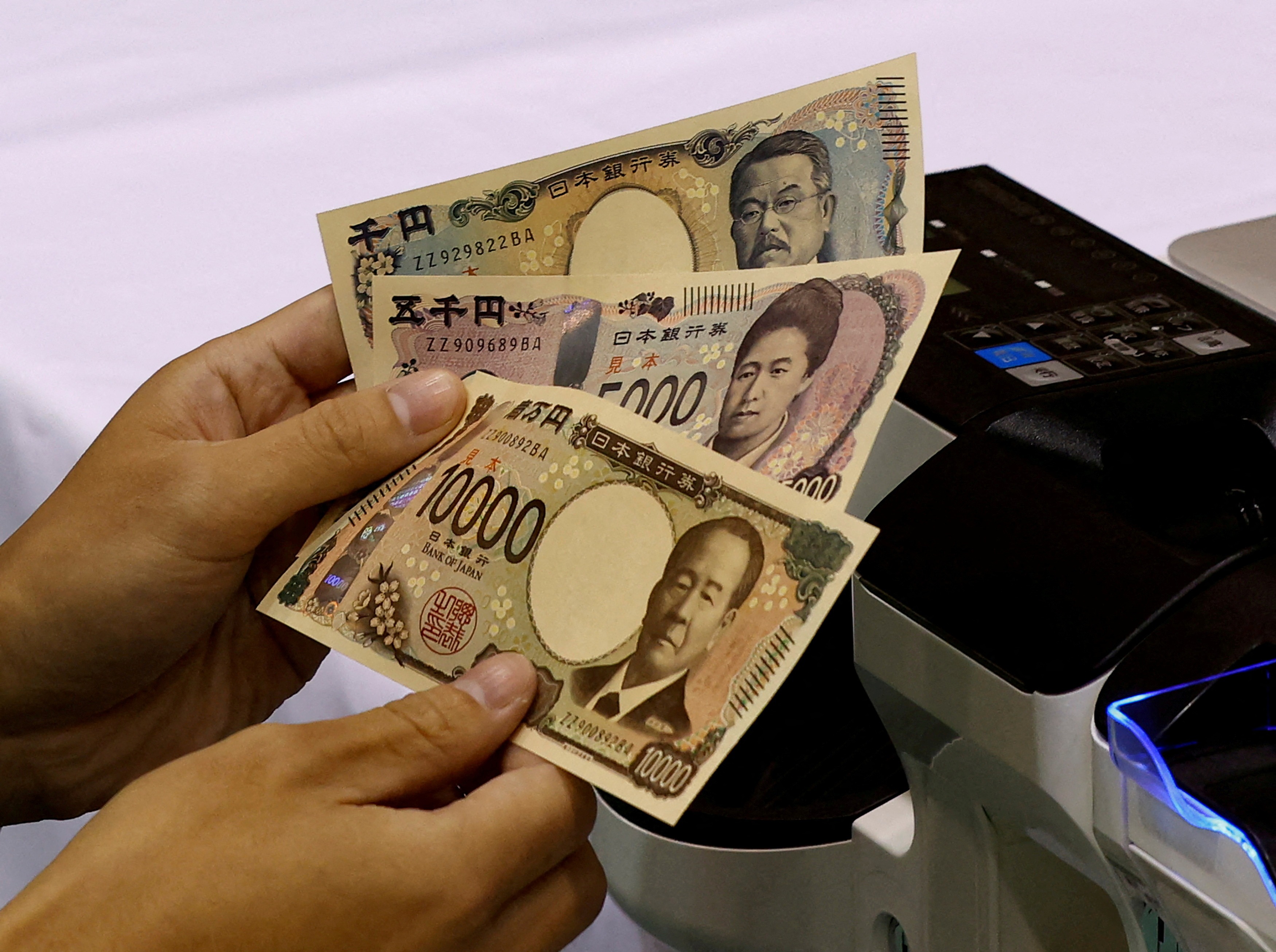
On the morning of 3/8, Japan's Ministry of Finance confirmed that it had collaborated with the US Department of the Treasury to buy yen on the foreign exchange market on 31/7. This rare coordinated action between the two nations comes as the yen recently hit a 40-year low against the US dollar.
Tokyo signaled its readiness to repeat the intervention if necessary, stating it "will not hesitate to undertake further coordinated interventions in the future." Japan's Minister of Finance, Satsuki Katayama, emphasized that the country "always closely monitors the situation and maintains tight communication with counterparts at the US Department of the Treasury."
Katayama stated the intervention aimed to "address the excessive and disorderly fluctuations of the yen in recent months." Last weekend, the Financial Times, citing close sources, reported that the New York branch of the Federal Reserve sold euros to buy yen on behalf of the US Department of the Treasury.
On 2/8, US President Donald Trump also confirmed that the US had purchased Japanese yen for the first time in more than a decade. He described the move as a "sign of friendship." "Their yen is weak, and they wanted a little help. We're always there to help Japan", he told reporters on Air Force One.
On X (formerly Twitter) on 2/8, US Secretary of the Treasury Scott Bessent also referenced the action. "The Department of the Treasury will not hesitate to participate in further coordinated interventions. We strongly support Japan's actions to prevent the yen from being excessively undervalued," he wrote. Reuters even captured Bessent's note during a cabinet meeting on 31/7, which read: "To do: Buy JPY 5-10 billion USD."
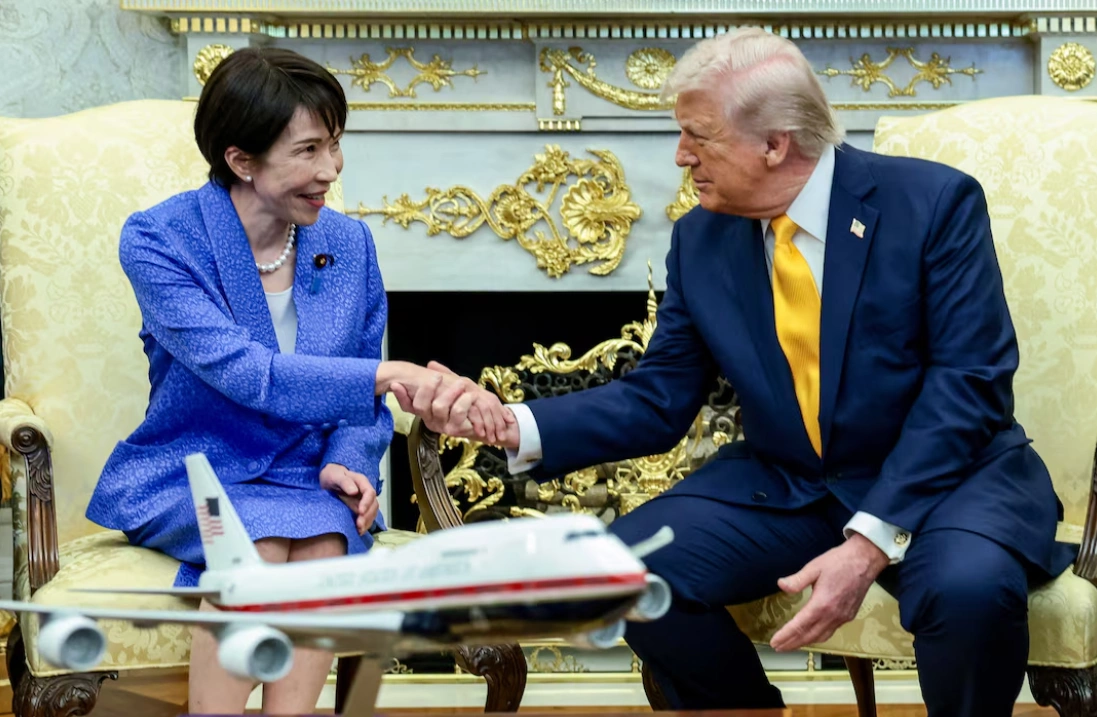 |
US President Donald Trump and Japanese Prime Minister Sanae Takaichi at the White House in March 2026. Photo: Reuters |
On the morning of 3/8, the yen's price briefly reached a three-month high against the US dollar, at 155,2 yen per US dollar. This marked the third consecutive session of appreciation for the currency, indicating the effectiveness of the coordinated intervention. The last time the US directly supported the yen was in 2011, when it cooperated with other G7 nations to stabilize the market following the double disaster of an earthquake and tsunami in Japan.
Analysts suggest multiple reasons for the US's recent decision. Firstly, a strong US dollar makes American exports more expensive compared to Japanese goods, a situation President Trump has expressed dissatisfaction with.
Conversely, while a weak yen benefits Japanese exporters and tourists visiting the country, it increases the cost of importing goods like oil and gas, fueling domestic inflation.
President Trump asserted that supporting the yen is "good for the world economy." He stated that the US would also benefit financially but did not elaborate.
Some analysts speculate that the Trump administration is concerned about rising US borrowing costs. To fund yen purchases, Japan would need to sell off US government bonds. Many countries currently hold these assets, but large-scale sales would increase US bond yields, consequently raising US borrowing costs. Japan is the largest holder of US government bonds.
"Put yourself in Bessent's shoes. Doing everything you can to help Japan as soon as possible is also beneficial for him," Rebecca Patterson, an analyst at the Council on Foreign Relations (CFR), told The Guardian.
Masahiko Loo, a senior strategist at State Street, suggested that the purpose of both sides "may be deeper than just intervention." The continuous weakening of the yen could trigger a sell-off of Japanese government bonds. Rising yields would then spread to global bond markets, precisely when both the US and Japan are grappling with increasing long-term borrowing costs.
Despite being a leading global economy, Japan has long contended with a weakening yen. Following a prolonged recession and deflationary period in the 1990s, the country maintained interest rates at 0% or even negative levels, hoping to revive its economy.
Japan ended negative interest rates in 2024, gradually raising them to the current 1%. However, the yen continues to depreciate as Japan's interest rates remain significantly lower than global rates, such as the 3,5-3,75% in the US. Many Western central banks are aggressively raising rates to combat inflation.
"Japan's persistently lower interest rates compared to other countries, especially the US, have encouraged international investors to borrow yen to invest in higher-yielding currencies," the Atlantic Council research institute noted in a report last month. Additionally, substantial capital outflows from Japanese businesses investing internationally, coupled with their tendency to retain profits abroad instead of repatriating them, also pressure the domestic currency.
For a nation heavily reliant on imported energy and food like Japan, this year's Middle East conflict has also had a significant impact. "Rising oil and gas prices worsen the trade balance and create additional inflationary pressure," Sayuri Shirai, an economics professor at Keio University, stated on CNN. Inflation erodes consumer purchasing power and curbs economic growth, thereby offering little impetus for the yen to recover.
Over the past few years, the Bank of Japan (BOJ) has intervened in the market multiple times to support its currency, most recently in late April. However, the effects have not been long-lasting.
Therefore, analysts are not overly optimistic that this coordinated intervention will reverse the yen's weakening trend. In a report last weekend, Shusuke Yamada, a Japan foreign exchange and interest rate strategist at Bank of America Securities, indicated that market sentiment suggests this action "can only buy time."
However, the British bank Barclays believes that the impact of this intervention is likely to be greater, thanks to the historic coordinated nature between the US and Japan. "But even if the yen continues to strengthen in the short term, we believe the pressures causing the currency to decline in the long term remain present," Barclays concluded.
Ha Thu (according to CNN, CNBC)