Many people routinely check their refrigerators and discard milk cartons or yogurt containers once they see the date on the packaging has passed. However, according to Rachel Zemser, a food scientist in the San Francisco Bay Area, this date primarily serves to estimate when food is at its peak quality and freshness, not its absolute safety limit. Consequently, many foods remain safe to consume even after the date indicated on the packaging.
Food safety professor Donald Schaffner of Rutgers University shares this view, stating that these dates mainly assist manufacturers and retailers with internal inventory control, rather than indicating food safety.
A 2019 study by Johns Hopkins Bloomberg School of Public Health found that over 80% of Americans discard food nearing its labeled 'use by' date. Disposing of edible food leads to waste and environmental pollution. When discarded, food decomposes and releases methane, a super-pollutant that warms the planet 80 times more effectively than CO2.
Data from the US Department of Agriculture (USDA) indicates that in 2010, the average American discarded 99 kg of food waste. The agency aims to cut food waste by 50% by 2030. In California alone, residents throw away 2,5 billion intact meals, with organic waste accounting for half of the state's total refuse.
Reforming 'use by' labels is a measure recommended by many experts and policymakers. The US currently has approximately 50 conventional 'use by' labels, such as "best by/best before", "enjoy by", and "sell by", which often confuse consumers.
California is the first state to mandate standardized food dating. Starting 1/7, manufacturers and retailers in the state may only use two types of labels: "best if used by", indicating when food is at its peak quality and flavor; and "use by", marking the point when food is no longer safe to consume. The "sell by" label is now restricted to internal use for inventory management.
The sole exception for a mandatory 'use by' date is infant formula. Experts advise against using expired formula for infants, as its nutrient content diminishes over time.
Similar policies to standardize 'use by' labels are also being drafted by New York state policymakers and await the Governor's signature.
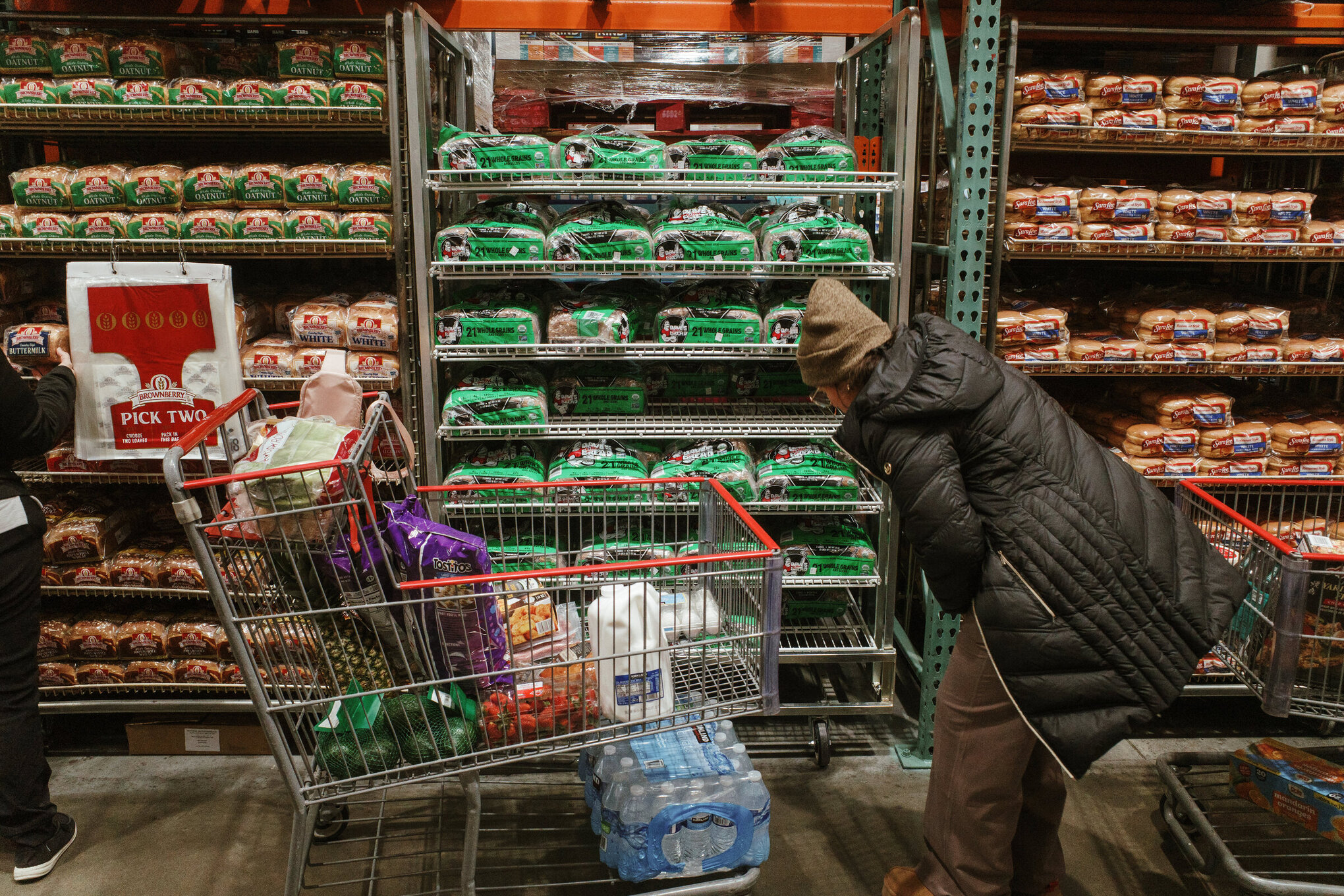 |
Shoppers at a supermarket in Lenexa, Kansas, US, 1/2026. *Photo: AFP*
In fact, food safety experts confirm that some foods can be consumed years past their 'use by' date. Examples include unopened canned goods like beans, tomatoes, fruits, and vegetables, as well as any packaged liquid foods that can be stored at room temperature. Similarly, shelf-stable soy milk, almond milk, or heat-treated foods in sealed containers that do not require refrigeration are also usable beyond their labeled date.
Dry foods, such as biscuits, crackers, and cereals, also have an extended shelf life because their low moisture content inhibits bacterial growth.
However, experts advise caution with beef, poultry, or fish, which can spoil even when refrigerated. These meats and fish should be sealed in bags or containers and frozen before their 'use by' date for longer storage. Additionally, consumers should only purchase sufficient quantities of food and regularly check their pantry and refrigerator.
Bao Bao (via AP)