The Ministry of Finance is currently soliciting opinions on a draft Resolution by the National Assembly Standing Committee regarding the environmental protection tax rates for petroleum products.
Accordingly, the agency proposes reducing the environmental protection tax on gasoline (excluding ethanol) from 2,000 dong to 1,000 dong per liter. Similarly, the tax rate for diesel could also be halved, from 1,000 dong to 500 dong.
For jet fuel, the regulatory body proposes reducing this tax to 1,000 dong, a decrease of 500 dong from the current rate.
If approved, these tax rates would be effective from the date the draft Resolution is signed and promulgated until 30/6. Should an extension be necessary, the Ministry of Industry and Trade will submit a proposal to the Ministry of Finance for consolidation and presentation to the government.
The environmental protection tax is an indirect tax, included in the selling price of goods. A reduction in this tax will lower the corresponding retail prices. For instance, if the environmental tax on gasoline (excluding ethanol) drops by 1,000 dong, its retail price could decrease by approximately 1,080 dong per liter (including the value-added tax reduction). Similarly, a 500 dong reduction in the environmental tax on jet fuel and diesel could lower their retail prices by about 540 dong.
The Ministry of Finance's proposal is based on recommendations from the Ministry of Industry and Trade. Currently, the environmental protection tax accounts for about 6,7% of the base price structure for petroleum products. Reducing this tax to 0 dong would require the government to submit it to the National Assembly for consideration and decision. However, adjustments within the existing tax framework fall under the authority of the National Assembly Standing Committee.
Previously, the Ministry of Industry and Trade described the current situation as "urgent", citing volatile world petroleum prices due to the Middle East conflict. This necessitates rapid response measures from regulators. Consequently, they proposed the maximum possible tax reduction within the environmental protection tax framework for the National Assembly Standing Committee's decision. Gasoline, diesel, and jet fuel are the items considered for reduction, as there is still room for adjustment.
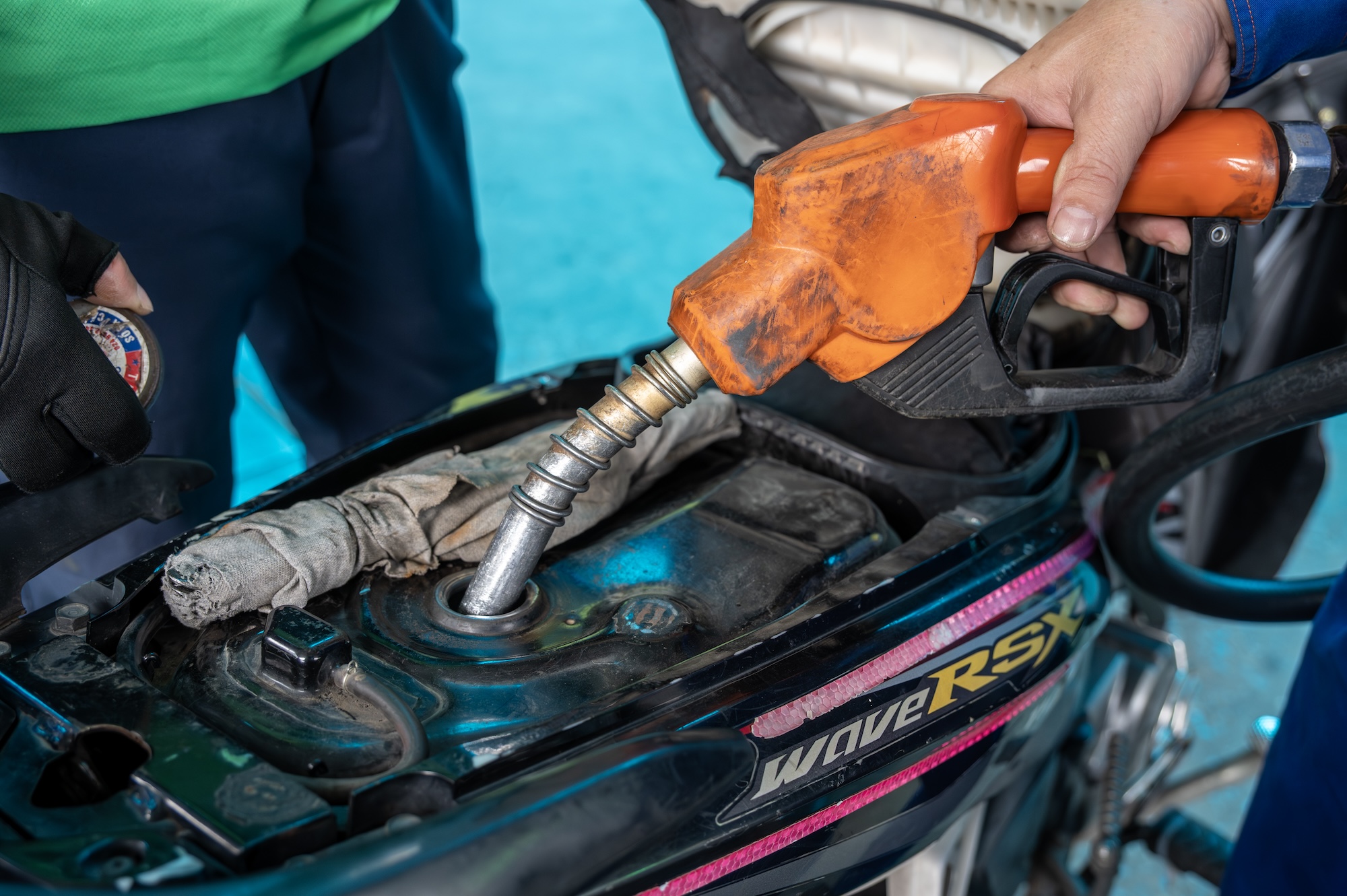 |
People fueling up at a gas station, 7/3. *Photo: Giang Huy* |
According to calculations by the General Statistics Office (Ministry of Finance), this solution will result in a lower increase in the Consumer Price Index (CPI) compared to maintaining the current environmental tax on petroleum, thereby helping to curb inflation.
The draft Resolution was developed under an expedited procedure and is expected to take effect from the date of its signing and promulgation.
The Ministry of Finance estimates that the proposed environmental protection tax reduction could lead to an average monthly budget shortfall of approximately 1,790 ty dong (including the reduced value-added tax portion). This is viewed as a form of state support for citizens, promoting production and business activities.
The Ministry also stated that the proposals in the draft are consistent with Vietnam's international commitments and do not contravene any international treaties to which Vietnam is a signatory. The draft's content also ensures compliance with national defense and security requirements.
To mitigate the impact on the budget balance, the government has directed the Ministry of Finance and related agencies to enhance revenue management, combat revenue loss, transfer pricing, and tax evasion. Concurrently, central and local budgets will continue to review and cut unnecessary expenditures to ensure balance.
Furthermore, if world crude oil prices rise, state budget revenue from oil will also increase, helping to offset the revenue reduction caused by the environmental protection tax adjustment.
Phuong Dung