On the morning of 24/4, with unanimous approval from all attending delegates, the National Assembly passed a Resolution on the socio-economic development plan for the 2026-2030 period.
The National Assembly resolved to strive for economic growth of 10% or more annually until 2030, with a per capita GDP of 8,500 USD. This goal aims to transform Vietnam into a developing country with modern industry, high-middle income, and to be among the top 30 global economies by GDP size by 2030.
The Government is tasked with achieving double-digit economic growth while maintaining macroeconomic stability, controlling inflation, and proactively adjusting taxes and fees in emergencies.
"We are determined to prevent an economic crisis from occurring under any circumstances", the National Assembly's Resolution states.
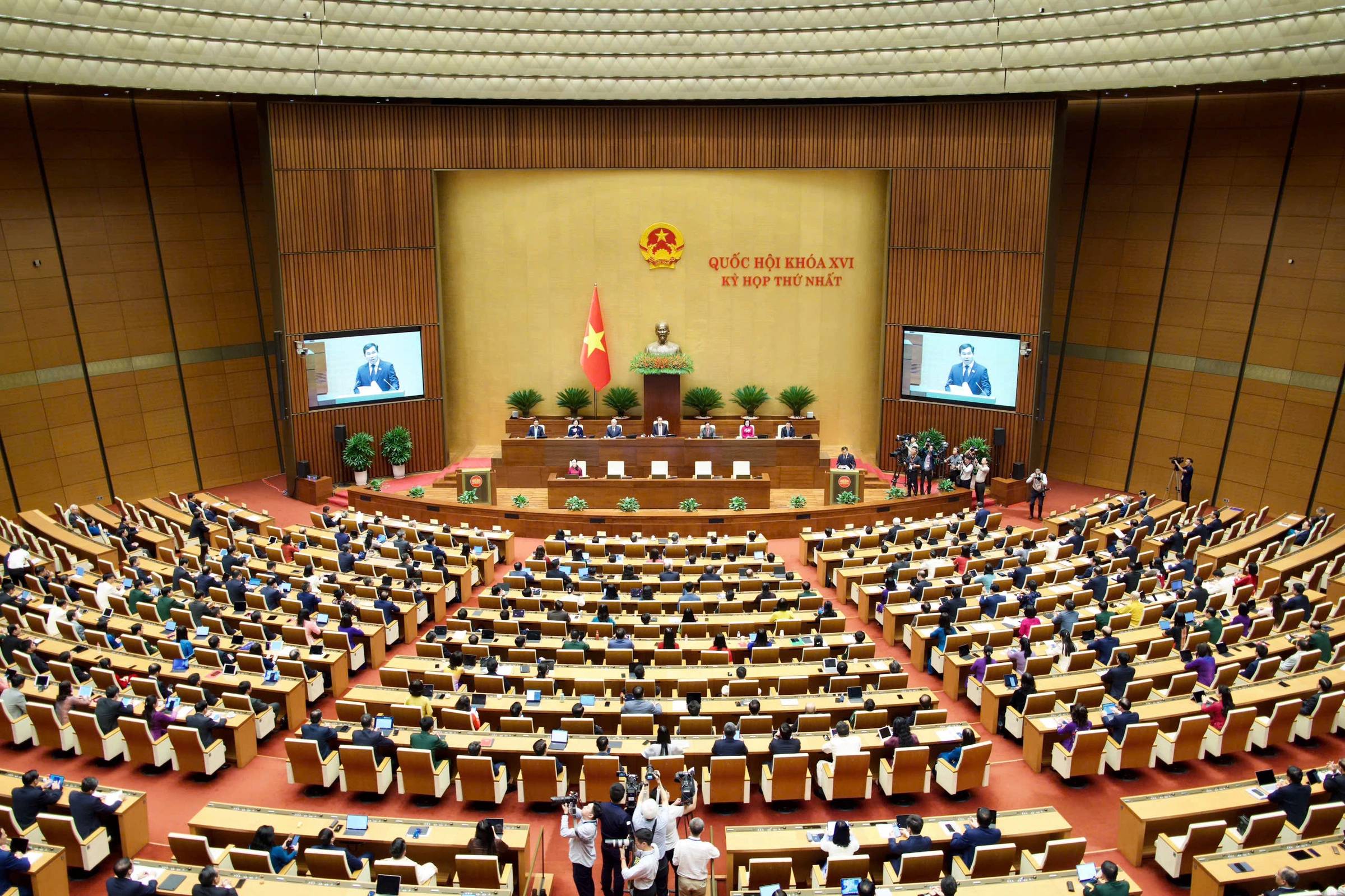 |
National Assembly session on the morning of 24/4. Photo: National Assembly Media |
The domestic capital market must be prioritized for development as a long-term fundraising channel, reducing reliance on bank capital. Vietnam needs solutions to upgrade its stock market, improve its national credit rating, and implement specific policies to enhance the effectiveness of international financial centers and free trade zones.
For the banking system, the National Assembly requires continued resolution of weak credit institutions and cross-ownership, while improving system quality and safety.
Science, technology, innovation, and digital transformation are key drivers in shifting the growth model. The National Assembly emphasizes focusing on enhancing the competitiveness of foundational industries like energy, mechanical engineering, new materials, and digital technology, linked with deep participation in global value chains.
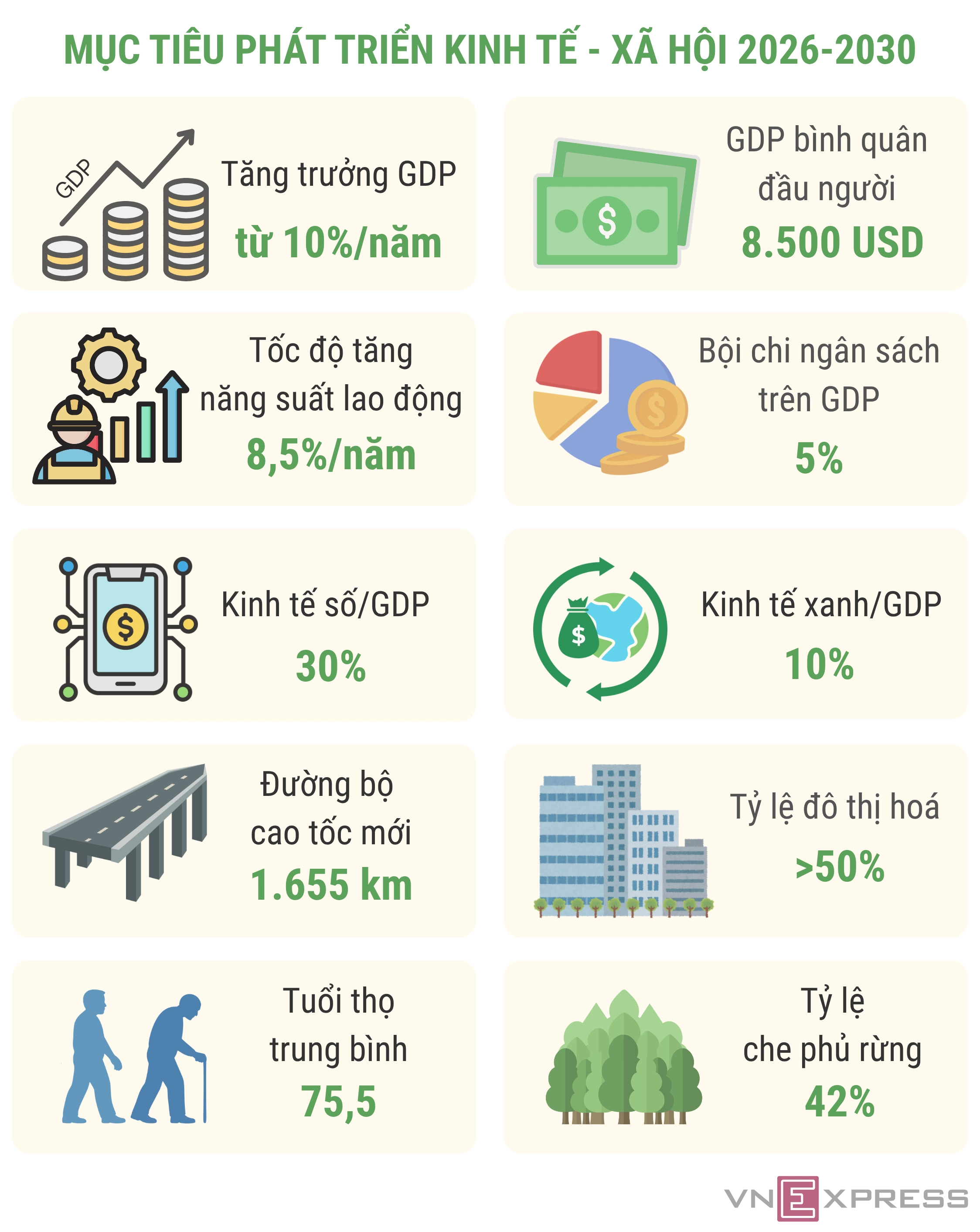 |
Some socio-economic development targets from now until 2030 according to the National Assembly's Resolution. Graphics: Anh Tu |
The Resolution sets a target for Vietnam to have 20 large enterprises participating in global value chains by 2030. The number of businesses in the economy aims to reach 2 million, double the current figure.
Regarding foreign direct investment (FDI), the National Assembly calls for "selective attraction", shifting from tax incentives to output-based support, technology transfer, and fostering connections with domestic enterprises.
Additionally, the National Assembly urges the Government to review, amend, and complete the legal system for digital economy development, investment, and business, particularly in areas such as land, planning, trade, minerals, and construction.
For infrastructure, Vietnam plans to put 5,000 km of expressways into operation by 2030, with 1,655 km to be completed in the next 5 years. Key projects such as international transshipment seaports, major airports, and the North-South high-speed railway will receive concentrated investment. Energy infrastructure is also prioritized to ensure security, boost renewable energy, and research appropriately scaled coal-fired power plants with emission treatment roadmaps.
By 2030, Vietnam aims to establish strong growth poles with three special economic zones and five regional-level free trade zones. The business investment environment is also expected to rank among the top 3 in ASEAN and the top 30 globally by 2028, thanks to efforts to maximize administrative procedure reduction.
To unleash resources, the National Assembly demands a definitive resolution for long-standing stagnant projects.
Previously, the Minister of Finance reported that approximately 200,000 hectares of land and 3.3 quadrillion VND are tied up in investment and land projects, which need to be unblocked to generate resources for economic growth.
*Anh Tu*