On the morning of 24/4, the National Assembly passed the Law amending and supplementing a number of articles of the Tax Laws, with over 93% of attending delegates approving it.
Accordingly, tax incentives for electric cars with fewer than 24 seats will continue for three more years. Specifically, the special consumption tax for electric vehicles with fewer than 9 seats will remain at 3% until the end of 2030.
From 2031, this tax for electric vehicles is projected to increase by 3,5-4 times. Details are as follows:
| Vehicle type | Tax rate until end of 2030 (%) | Tax rate from 2031 (%) | Increase (times) |
| Electric cars with fewer than 9 seats | 3 | 11 | 3,7 |
| Electric cars 10 to fewer than 16 seats | 2 | 7 | 3,5 |
| Electric cars 16 to 24 seats | 1 | 4 | 4 |
| Van trucks, pickups | 2 | 7 | 3,5 |
Previously, most opinions within the Economic and Finance Committee suggested that extending special consumption tax incentives for electric vehicles with fewer than 24 seats is necessary. This extension contributes to green transition and environmental protection. However, the verification agency requested the Government to consider the policy extension period to ensure objectives are met and benefits are harmonized.
In its report on feedback and adjustments before the National Assembly voted on the law, the Government stated that extending the policy until the end of 2030 helps citizens transition their vehicles.
For businesses, extending tax incentives enables them to proactively develop medium and long-term investment plans for production lines, product development, charging station infrastructure, and increasing the localization rate.
 |
National Assembly delegates attending the session on the morning of 24/4. Photo: National Assembly Media |
According to the Government, China is the country with the strongest development in the electric vehicle industry. This nation has supported the electric vehicle industry with USD 903 billion over three years, offering investment incentives for charging stations, buyer support, and reduced administrative procedures.
Similarly, the United States also provides USD 5,000 per electric vehicle, a level similar to the EU. However, Vietnam currently lacks a comprehensive support mechanism for electric vehicles.
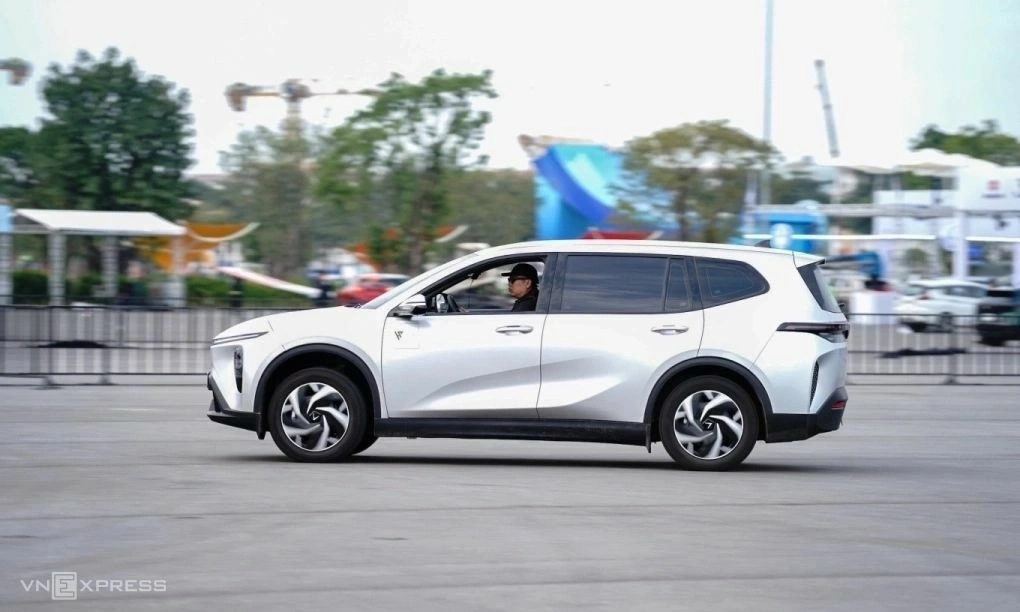 |
Limo Green - a VinFast car model. Photo: Thanh Nhan |
Furthermore, the operator believes that continuing to extend tax incentives can help Vietnam reduce compliance costs for international commitments, especially those related to greenhouse gas emissions and carbon credits.
According to BloombergNEF's Electric Vehicle Outlook 2025 report, electric car sales in Vietnam increased more than 10 times, from fewer than 10,000 units in 2022 to over 100,000 last year. This growth rate allows Vietnam's electric vehicle market to catch up with Thailand and potentially surpass many other developing economies.
Anh Tu