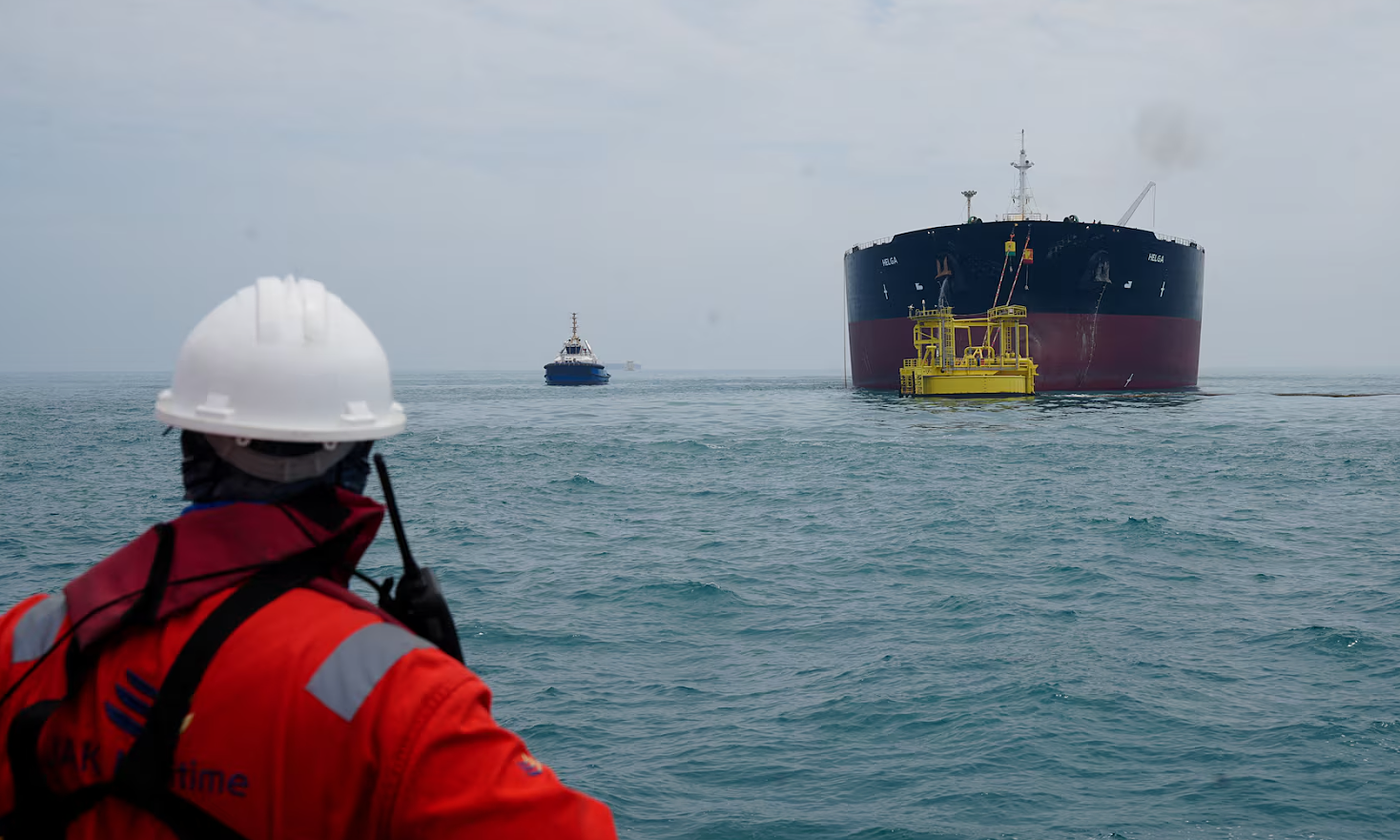
In a directive issued on 12/3, Prime Minister Pham Minh Chinh urged the Ministry of Industry and Trade, the Ministry of Finance, and other relevant agencies to accelerate the replenishment of national petroleum reserves. The directive also called for refining the mechanism for releasing these reserves in emergencies. This urgency stems from the prime minister's assessment that the Middle East conflict is severely impacting the global energy supply chain, with future developments predicted to remain complex and carrying risks of supply chain disruptions and energy flow interruptions. Such developments could affect domestic petroleum prices and supply.
Currently, mandatory reserves held by key enterprises ensure 20 days of supply, as regulated. At a meeting early this week, Deputy Minister of Industry and Trade Nguyen Sinh Nhat Tan stated that Vietnam has not yet had to utilize its national reserves. These reserves are specifically designated for severe shortages in imported sources or significant declines in domestic production. He affirmed that authorities have developed response scenarios, and domestic petroleum sources are sufficient to meet consumption demand until the end of march.
 |
An employee at a store on Lang street, Hanoi, pumps fuel for a customer on 11/3. *Photo: Hoang Giang*
According to regulations, Vietnam's petroleum reserve structure comprises three sources: commercial reserves at key petroleum businesses (20 days) and distributors (5 days); production reserves at two refineries; and national reserves. The national reserve alone accounts for approximately seven days of use.
Beyond reserve solutions, the prime minister tasked the Minister of Industry and Trade with managing and ensuring petroleum supply for the domestic market. This includes closely monitoring market developments, supply and demand, reserves, and distribution system operations. The ministry must also coordinate with the Ministry of Finance to manage prices effectively, preventing policy exploitation or group interests.
Key traders are required to develop supply plans, ensure full petroleum provision for the distribution system, and maintain regular sales at listed prices.
Vietnam National Oil and Gas Group (PVN), Vietnam National Petroleum Group (Petrolimex), Binh Son Refining and Petrochemical, and Nghi Son Refining and Petrochemical must operate their refineries stably, optimizing production to increase domestic supply. They also need to proactively diversify raw material sources, production, reserves, and supply to match market demand.
The Ministry of Finance is assigned to increase supervision over the establishment, management, and use of the Petroleum Price Stabilization Fund. This ministry also leads the implementation of tax policies for petroleum, facilitating import activities.
The State Bank of Vietnam directs credit institutions to facilitate foreign currency and credit access for businesses to import, reserve, and trade petroleum.
Government leaders also assigned local authorities to create favorable conditions for businesses to trade, transport, circulate, and distribute petroleum. Relevant agencies must prevent and strictly handle acts of hoarding, speculation, and cross-border petroleum smuggling. The prime minister noted that gas stations must not cease sales without reason, causing local shortages or supply disruptions.
Another solution outlined in the directive encourages people and businesses to use petroleum sparingly, prioritizing public transport, electric vehicles, and biofuels to reduce reliance on fossil fuels.
The domestic petroleum market has recently seen fluctuations as the Middle East conflict escalated from late february, leading to concerns about supply shortages. In many localities, people rushed to buy and hoard, causing consumption demand to increase by 50-100% in a short period.
Since late february, domestic retail prices have undergone four adjustments, implemented according to Government Resolution 36 on 6/3. Currently, each liter of RON 95-III gasoline is 25,240 dong, an increase of over 5,000 dong compared to late february. Diesel is now 26,470 dong, 7,200 dong higher than before the Middle East conflict.
Phuong Dung