Prime Minister Pham Minh Chinh has directed the State Bank of Vietnam to expedite the completion of a research dossier and proposal for establishing a national gold exchange. This instruction, issued in a dispatch on 24/1, emphasizes the urgency of submitting the report to the Standing Government in January. The move comes as 2026 marks the pivotal first year of Vietnam's 2026-2030 five-year socio-economic development plan, aiming to usher in a new era of national growth.
The concept of a national gold exchange has been advocated by experts for many years, driven by the expectation that it would create an accessible platform for citizens to trade the precious metal and ensure domestic prices align with international markets. This long-discussed idea is now actively being pursued by Vietnamese regulators.
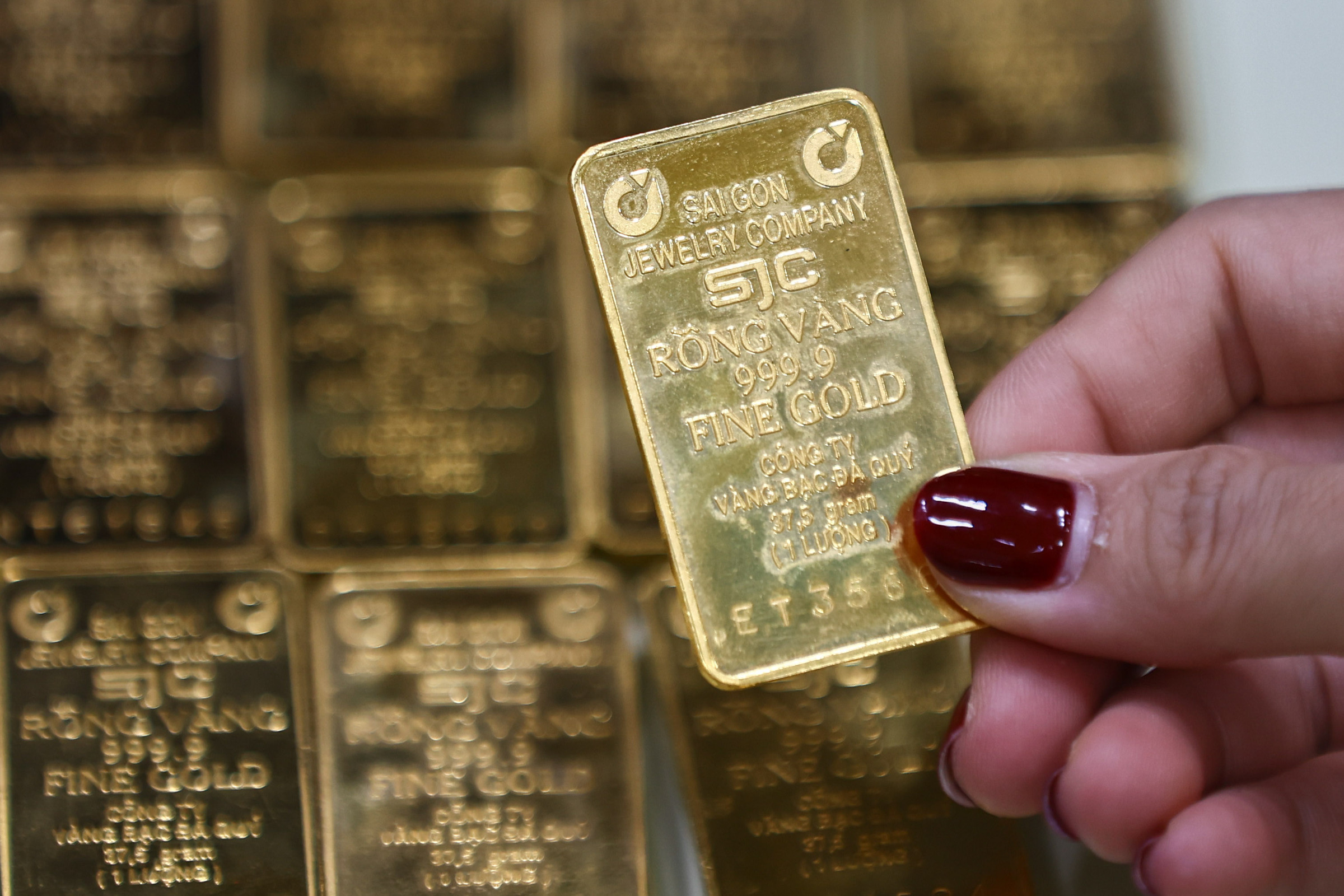 |
Gold bars at SJC headquarters in District 3, 3/2025. *Photo: Quynh Tran* |
Last month, the National Assembly urged the Government to promptly research and develop appropriate solutions and a roadmap for establishing a gold exchange. This followed earlier calls from deputies for measures to stabilize the gold market, with some suggesting the creation of a national gold exchange or allowing gold to be traded on a commodities exchange within an international financial center in Vietnam.
To further stabilize the market, the Government has implemented several measures, including increased inspections and audits. Notably, the state monopoly on gold bar production will be abolished from 10/10/2025, signaling a shift towards a more open market.
The State Bank of Vietnam is actively researching the legal framework for the gold exchange, with plans to submit it to the Government. This model is expected to enhance transaction transparency, enabling the Government to manage the gold market effectively.
The State Bank of Vietnam plans to pilot the gold exchange in three giai doan. The initial giai doan will focus on physical gold products. In giai doan two, regulators will expand the offerings to include gold bars. The final giai doan will see the introduction of various types of domestic gold in circulation, fund certificates, and derivatives, establishing connections with international markets.
Beyond the gold exchange initiative, the Prime Minister has also directed the State Bank of Vietnam to manage monetary policy proactively and flexibly, ensuring inflation control and macroeconomic stability. The banking sector must direct credit towards production, priority sectors, social housing, infrastructure, and digital technology. Simultaneously, the State Bank is tasked with controlling risks, addressing bad debts, and managing weak credit institutions.
The Ministry of Finance will continue to implement a reasonably expansive fiscal policy, enhance budget discipline, and combat tax evasion. The Ministry aims to increase this year's budget revenue by at least 10% compared to the estimated performance for 2025. Concurrently, it will continue to reduce and extend taxes and fees to support businesses and citizens. The Ministry is also tasked with developing the stock and corporate bond markets, transforming them into channels for medium and long-term capital mobilization to support double-digit growth.
Regarding investment, the Government requires accelerating the allocation and disbursement of public investment capital from the beginning of the year, aiming for 100% disbursement of the plan. Ministries, sectors, and localities must promptly finalize resolutions to remove obstacles for stalled projects, while increasing the attraction of high-tech foreign direct investment (FDI) in semiconductors, artificial intelligence (AI), and digital technology.
For consumption, the Ministry of Industry and Trade will implement synchronized solutions to stimulate demand, stabilize markets, control prices, and combat smuggling and trade fraud. Regulators also need to focus on diversifying export markets, effectively utilizing free trade agreements (FTAs), and expanding into Halal, Middle Eastern, Latin American, and African markets.
Phuong Dung