On the morning of 5/8, Governor Pham Duc An of the State Bank of Vietnam, authorized by the Prime Minister, presented to the National Assembly a draft law. This draft proposes amendments and additions to several articles across three key laws: the State Bank of Vietnam Law, the Anti-Money Laundering Law, and the Law on Credit Institutions.
Accordingly, in the draft, the government proposed adding crypto asset services to the scope of anti-money laundering efforts. Authorities presented 15 suspicious indicators in the crypto asset sector that require monitoring, aiming to meet the requirements of international organizations on anti-money laundering as Vietnam pilots this asset market.
The 15 indicators can be divided into four groups: unusual transactions; concealment of origin or technology; unclear customer identity; and high-risk partners or regions in the crypto asset sector.
Regarding unusual transaction indicators, the draft proposes including the fragmentation of crypto asset transactions into multiple low-value amounts, or large-value transactions with unclear purposes, in the suspicious category.
Consecutive deposits, transactions, and withdrawals of crypto assets within a short period could also be a suspicious indicator requiring anti-money laundering monitoring.
Regarding customer identity, the draft identifies one suspicious indicator as a customer refusing or delaying to provide documents or information about the origin of assets, or failing to provide a reasonable explanation for the transaction's purpose.
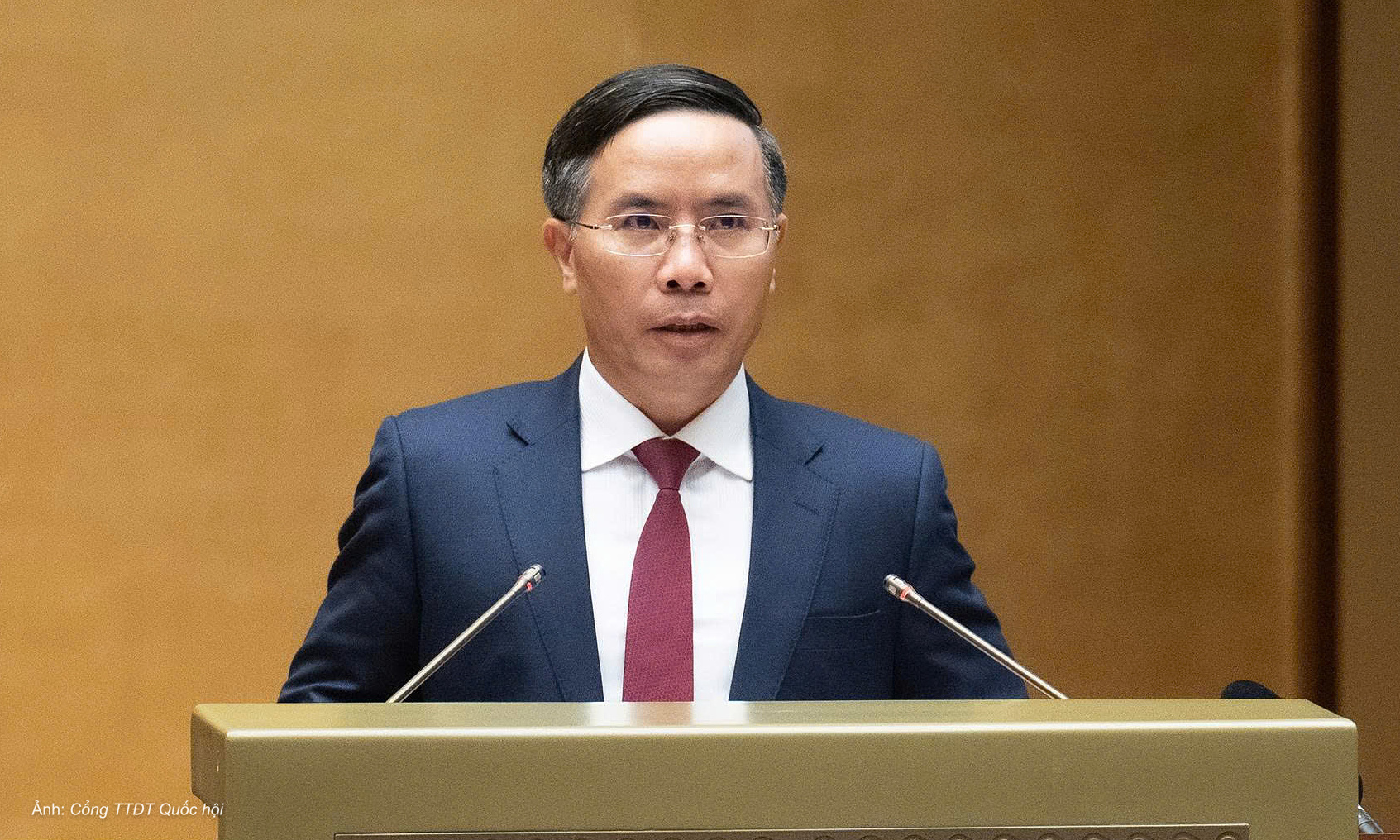 |
Mr. Pham Duc An, Governor of the State Bank of Vietnam, at the National Assembly session, on the morning of 5/8. *Photo: National Assembly Portal*
Reviewing this draft, Phan Van Mai, Chairman of the Economic and Financial Committee, requested the government to review regulations on reporting suspicious transactions and crypto asset services.
Additionally, the reviewing agency requested an assessment of the reasonableness of the information required for collection and the accessibility of data sources for this verification.
Furthermore, the Economic and Financial Committee proposed clearly defining the inspection authority for anti-money laundering among relevant agencies, such as the Government Inspectorate, the State Bank Inspectorate, and the Ministry of Finance. This aims to avoid overlaps and enhance the effectiveness of anti-money laundering inspections and supervision by ministries and sectors.
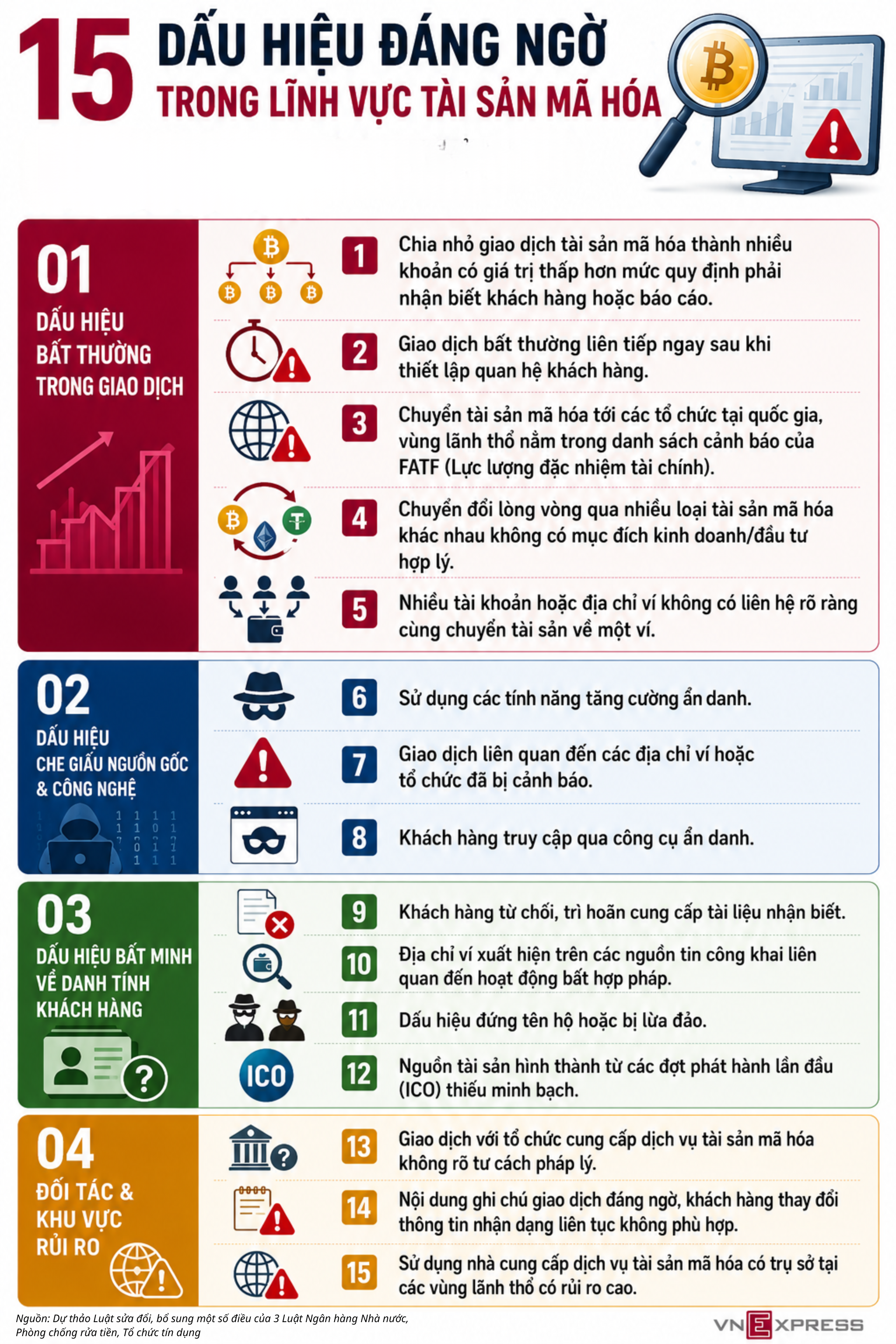 |
15 unusual indicators in the crypto asset sector. *Graphic: AI-assisted*
Anh Tu