Vietnam's Ministry of Agriculture and Environment is implementing a series of measures to bolster agricultural exports, which are facing significant challenges due to escalating logistics and production costs stemming from the ongoing Middle East conflict. The Ministry's proposals include debt extensions and market expansion strategies for affected businesses.
At a press conference on 1/4, Mr. Tran Gia Long, Deputy Director of the Planning and Finance Department (Ministry of Agriculture and Environment), detailed the initiatives. The Middle East conflict, ongoing for over one month, has driven up logistics and production expenses, thereby reducing the competitiveness of Vietnamese agricultural products in international markets.
To mitigate financial strain on struggling businesses, the Ministry advocates for policies offering debt extensions, debt repayment restructuring, and assistance with warehouse storage for goods. This support is particularly crucial for the seafood and fruit/vegetable sectors. "The Ministry is coordinating with industry associations for products such as cashew, coffee, pepper, seafood, rice, and fruits/vegetables to update order status, inventory, and prices, and to propose solutions to address difficulties specific to each industry," Mr. Long stated.
Addressing transportation risks, the Ministry is continuously updating information on maritime security in the Red Sea and Suez Canal. This effort includes establishing an early warning mechanism for costs, insurance, and delivery times, enabling businesses to respond proactively. Furthermore, Vietnam's Trade Offices in the Middle East have been instructed to enhance their role in resolving emerging trade disputes.
 |
Mr. Tran Gia Long provides information at the press conference. Photo: Gia Chinh
Beyond direct financial aid, agencies and businesses are promoting the utilization of Free Trade Agreements (FTAs) and boosting cross-border e-commerce. These efforts aim to compensate for the shortfall in orders and diversify market access.
The geopolitical situation has notably impacted the export turnover of many key product groups. According to data from the Ministry of Agriculture and Environment, rice exports decreased by about 8% in value due to increased transportation costs. Similarly, wood exports fell by 2,4% in major consumer markets such as America and Africa.
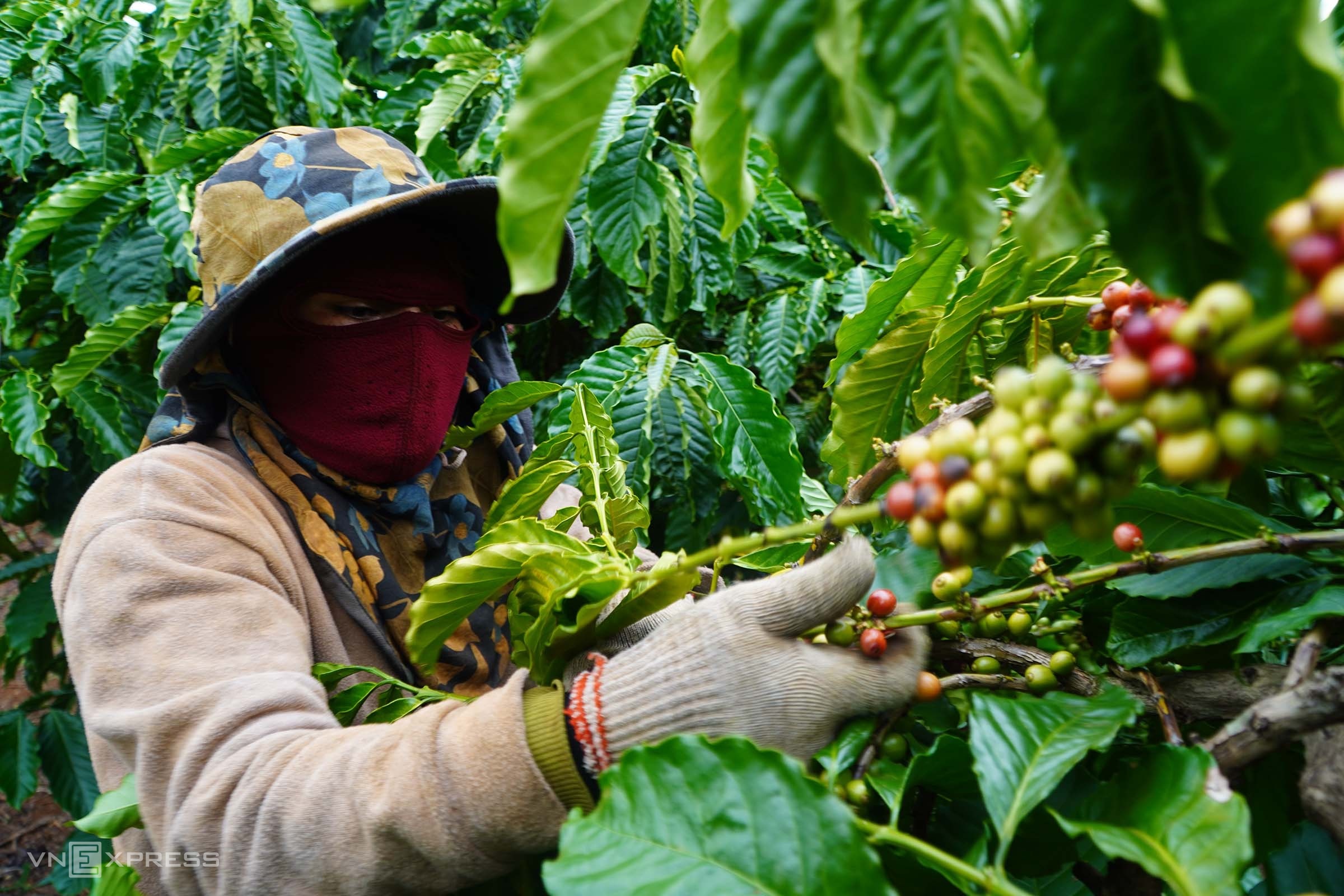 |
The coffee industry is affected by the Middle East conflict. Photo: Dac Thanh
Input imports have also significantly narrowed. The volume of fertilizer imports decreased by over 30%, causing domestic prices to rise by 5-11%. Soaring costs also led to a 2,7% reduction in seafood exploitation output. While livestock and aquaculture maintained growth momentum, the faster increase in input costs compared to selling prices is creating an "underlying impact", narrowing the profit margins of the entire industry.
In the medium and long term, the agricultural sector will continue to refine policies, boost domestic market consumption, expand export markets, and restructure the industry. These strategic adjustments aim to increase productivity and enhance the quality of agricultural exports.
Gia Chinh