This information is detailed in Decree 101/2026/ND-CP, issued by the Government and effective from 1/4. The decree aims to guide the implementation of the Law on Technology Transfer, notably outlining support mechanisms for businesses applying and innovating technology. These policies are structured into four main groups: support for technology adoption, promotion of cooperation, support for transfer activities, and development of business support networks.
The first policy group assists businesses implementing projects in prioritized investment sectors, professions, or geographical areas that need to receive technology transfer from science and technology organizations. To qualify, businesses must meet two concurrent conditions: the project must be eligible for incentives under investment laws, and the business must have a technology transfer contract or a registered transfer certificate as per current regulations.
These businesses receive support through science, technology, and innovation programs and tasks implemented by the State. They can also participate in activities that develop the innovation system and ecosystem.
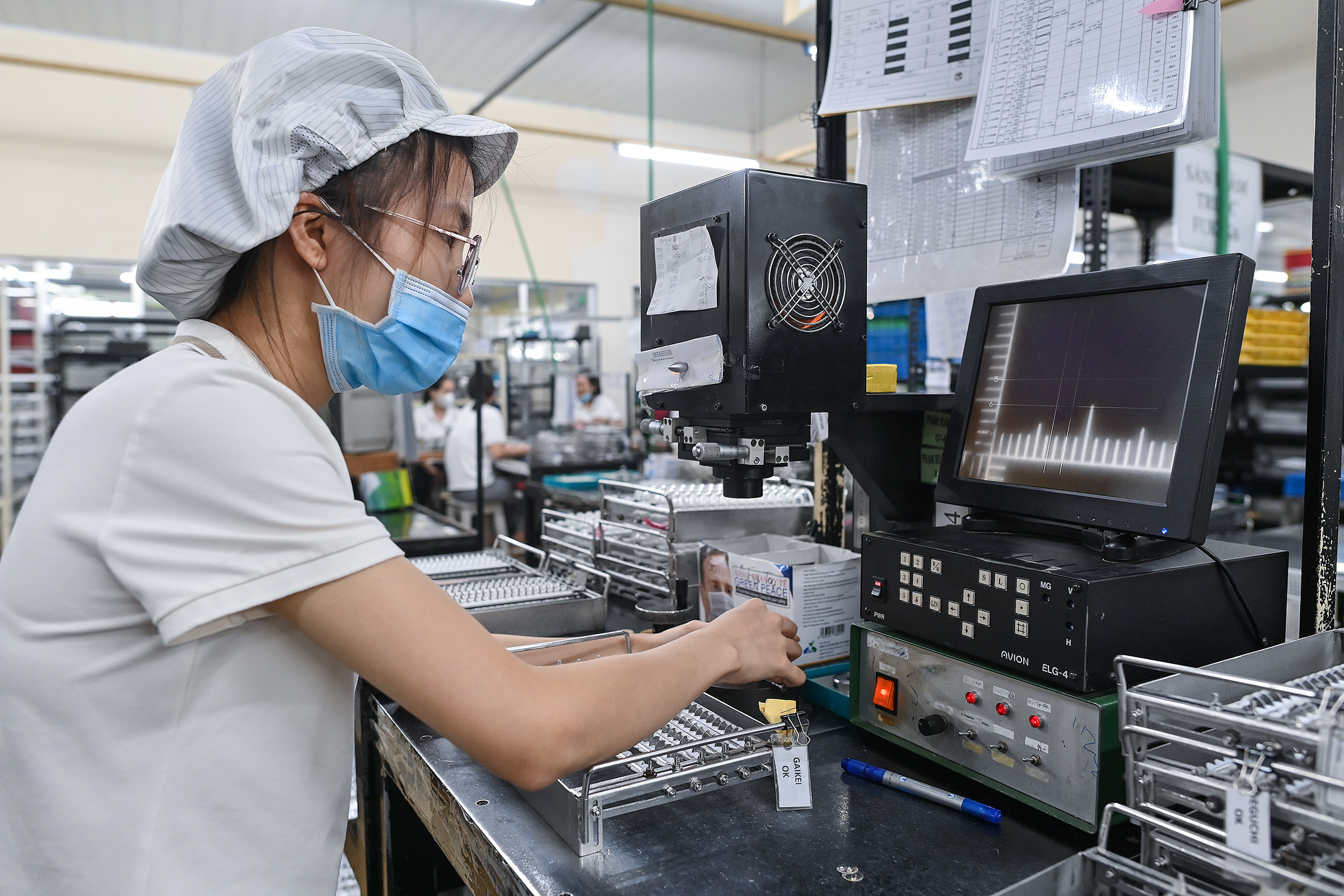 |
Lens production line at Cty R - Technical Research, a Japanese FDI company. Photo: Giang Huy.
In addition to technology adoption, the second policy group encourages businesses to cooperate with domestic and foreign agencies, organizations, and individuals, especially higher education institutions, research institutes, innovation centers, and creative startup support centers.
Encouraged forms of cooperation include developing and refining technology to create prototypes, testing, and product demonstrations; calibrating and mastering technology, technical processes, and production lines. Activities also aim at commercializing research results, establishing science and technology businesses, and linking product and service value chains based on technology platforms.
Regarding human resources, businesses can participate in training, expert exchanges, and host student interns, researchers, or engineering trainees involved in research and innovation. Concurrently, public-private partnership models in investing and operating laboratories, innovation centers, digital platforms, or co-working spaces are also encouraged, helping businesses access research and testing infrastructure more conveniently.
Cooperation also extends to exploiting and sharing data, technology information, intellectual property, and expert networks via digital platforms. Additionally, businesses can participate in building the innovation ecosystem, connecting with domestic and international forums, events, and networks to expand development opportunities.
Priority policies apply in several ways, such as supporting technology innovation projects and transfer activities, and prioritizing the assignment or selection for science and technology tasks. This group also gains access to and use of laboratories, research centers, and related technical infrastructure.
Furthermore, businesses can access resources from the National Technology Innovation Fund and science and technology development funds of ministries, sectors, and localities. These entities are prioritized for participation in innovation networks, domestic and international support programs, and consideration for recognition and honors in science and technology activities.
Funding for these policies comes from the budget allocated for science, technology, and innovation, along with related funds and support programs.
The decree also extends support to organizations and businesses undertaking technology transfer activities, applicable to transferors, transferees, and intermediary organizations in the science and technology market. This group receives priority consideration for support and commissioned science, technology, and innovation tasks.
The fourth policy group focuses on developing a network of organizations that support small and medium-sized enterprises (SME), cooperatives, and business households. This network receives prioritized investment from the budget for science, technology, and innovation. Support is implemented through science and technology programs, assigning tasks, or commissioning organizations within the network, and organizing networking activities such as forums and clubs. Simultaneously, organizations and businesses are facilitated to participate in domestic and international platforms, programs, and networks.
Hoang Dan