Lee Young, a resident of Cardiff, Wales, UK, has been struggling to dispose of his broken refrigerator for the past two months. "I took it to the recycling center in July, but they would not accept it," he said.
The broken appliance remains in his garden. He is unsure when the local authority's collection service will resume.
Residents in Newport city, Wales, face a similar situation. Michael Enea, a social activist, frequently observes people abandoning refrigerators and freezers on the streets.
Collection and disposal of this waste have been stalled for months since recycling company Unimetals filed for liquidation weeks before last Christmas. The company employed 650 staff and operated dozens of facilities in London, Halesowen, Staffordshire, and other locations, accounting for 30% of the nation's refrigerator recycling market share.
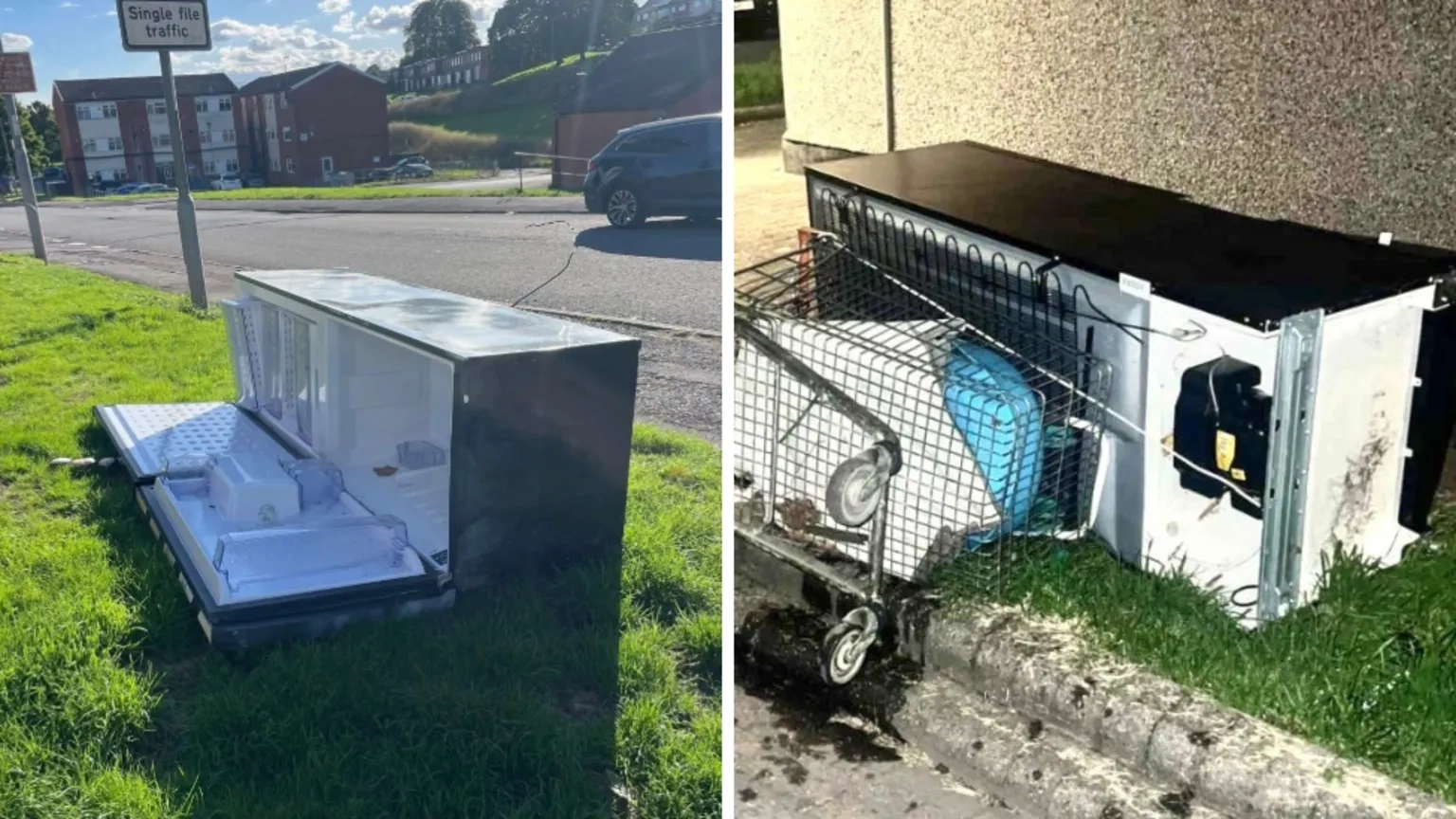 |
Refrigerators abandoned on a street in Newport city, Wales. *Photo: Michael Enea* |
Unimetals, established in 2023, specialized in metal recycling, focusing on critical minerals essential for the transition away from fossil fuels. The acquisition of Sims Metal (Australia) recycling facilities in the UK led to financial difficulties amid market pressures. In early 2025, an oversupply of scrap and steel exceeded demand, causing a drop in their output prices. Sims allowed a deferral of the final payment, but Unimetals could not raise sufficient funds and filed for liquidation, selling its assets.
The liquidation of a major recycling business created a collection void, leaving tens of thousands of refrigerators and freezers at Newport's docks.
The Local Government Association (LGA) stated that the UK faces a widespread shortage of capacity for processing and recycling cooling appliances. Consequently, about one-fourth of Welsh local councils have temporarily suspended household collection services for refrigerators and freezers because waste disposal sites have run out of storage space.
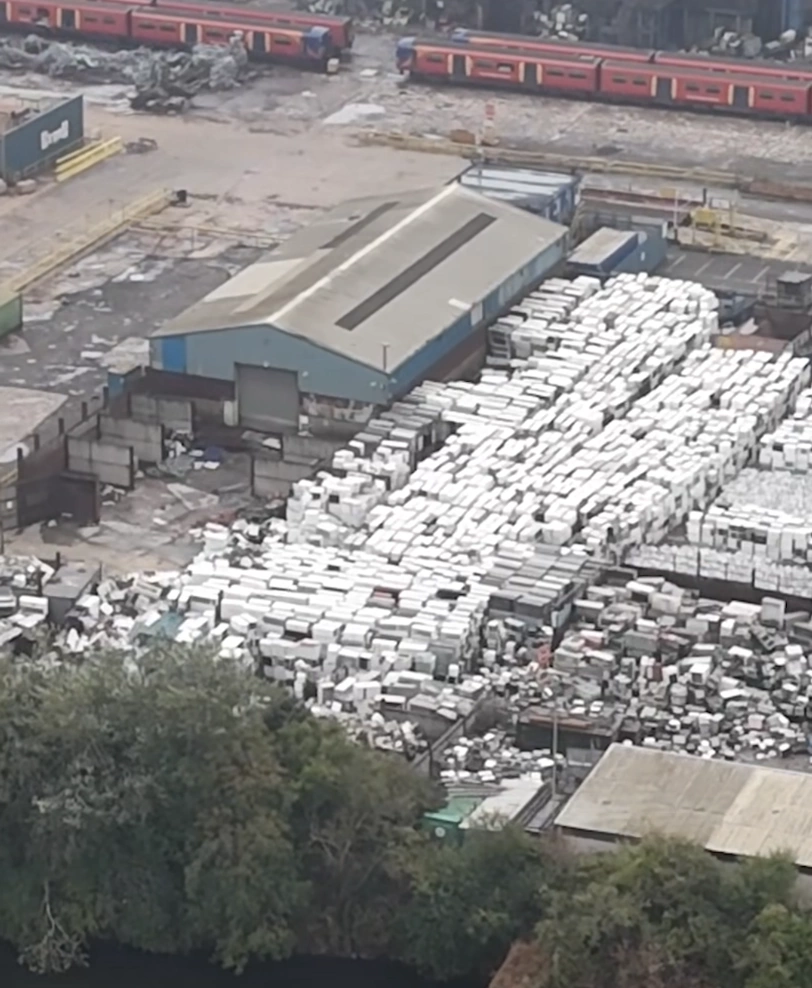 |
Tens of thousands of broken refrigerators at Newport city docks, August. *Source: Screenshot from Wales Online video* |
To address the "broken refrigerator crisis", Oxfordshire county local council urged the government to reactivate the Newport recycling plant. Meanwhile, Associated British Ports (APB), which took over operations of the facility, is discussing with third parties about its future and the existing recyclable materials.
An APB spokesperson stated that, in the interim, the broken refrigerators and freezers are being managed "responsibly and will be transferred to another dedicated recycling facility at an appropriate time."
Doctor David Santillo, a research scientist at Greenpeace, warned that some broken refrigerators and freezers might still contain "the most toxic chemicals", such as hydrofluorocarbons (HFCs). HFCs are used in air conditioning systems, industrial chillers, and refrigerators, and are also greenhouse gases thousands of times more potent than CO2.
Santillo noted that some chemicals in old cooling appliances could have "broader impacts" on the environment. He added that leaving these appliances outdoors for extended periods risks generating "toxic fumes" if a fire occurs. The Greenpeace expert urged the UK government to enhance its capacity for recycling these appliances, adding that refrigerator and freezer recycling is a national issue.
The Department for Environment, Food and Rural Affairs (Defra) stated its understanding of the challenges local authorities face and is working to address the waste processing capacity shortage. Authorities currently permit the temporary storage of broken cooling appliances and freezers at sites meeting specific environmental conditions.
By Bao Bao (via BBC, The Guardian)