


The Middle East conflict, now lasting more than two months, has caused the largest disruption to global oil supply in history. This has pushed the average gas price in the US to 4,43 USD per gallon (about 1,17 USD per liter), a nearly 40% increase compared to the same period last year, according to GasBuddy.com.
In California, gas prices even exceeded 6 USD per gallon (nearly 1,6 USD per liter). This state is the largest market for the US restaurant industry.
Wingstop, a chicken wing restaurant chain, stated that rising gas prices contributed to an 8,7% decrease in its first quarter store sales. CEO Michael Skipworth described the current environment as "unpredictable", noting that this year's revenue might decline, partly due to expectations of sustained high gas prices.
Many experts do not anticipate consumers will find relief soon. According to forecasts from data firm LSEG, other restaurant chains like Shake Shack and Jack in the Box are also expected to report weak sales growth in their upcoming earnings reports.
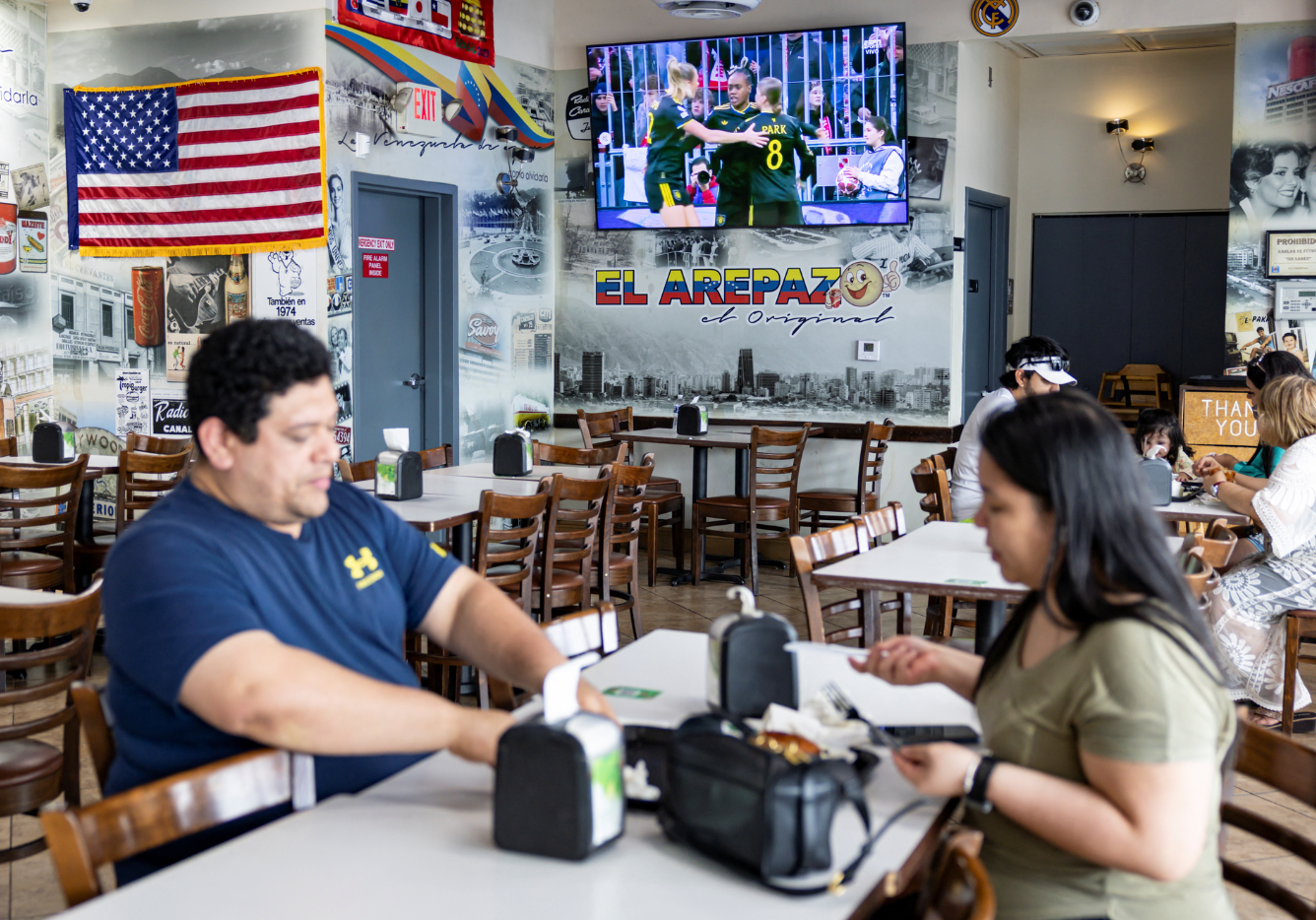 |
Inside a restaurant in Florida, April 2026. Photo: Reuters |
Inside a restaurant in Florida, April 2026. Photo: Reuters
Even chains with strong previous quarter results are exercising caution. Chipotle reported a 0,5% increase in store sales, exceeding forecasts. However, the company maintained its full-year revenue outlook, expecting it to remain flat. Chief Financial Officer Adam Rymer attributed this partly to instability surrounding the conflict and rising gas prices.
Sentiment on Wall Street reflects this less positive outlook. The number of analysts lowering their second quarter earnings forecasts for the restaurant industry is currently double the number raising them, according to LSEG.
Sebastien Fernandez, head of analytics at consulting firm Revenue Management Solutions, identified the 4 USD per gallon mark as a "turning point". After the conflict began, his company analyzed 14,6 billion restaurant transactions over the past four years. The results indicated that as gas prices rise, customer traffic to restaurants gradually decreases. However, once prices surpassed the 4 USD threshold, the impact doubled.
They estimate that an average gas price of 4,2 USD would lead to a customer traffic decrease of about 1,5%. If prices reach 5,1 USD or higher, fast-food chains could see customer traffic fall by 3%.
Even before the sharp increase in fuel costs, Americans had already reduced their restaurant spending. This prompted chains to launch discount programs to attract customers back. Last week, Taco Bell announced an 8% increase in its US restaurant sales for the first quarter. In January, the company introduced value meals starting from 3 USD.
"We are seeing a record number of value menus", stated Mark Wasilefsky, Director of Restaurant Financial Research at TD Bank.
Domino's CEO Russell Weiner explained to investors last week that competitors' promotions contributed to their lower-than-expected revenue growth in the previous quarter. Despite its ability to maintain discount programs, Domino’s still lowered its full-year revenue forecast.
Meanwhile, some chains, like Starbucks, have benefited from consumer caution. CEO Brian Niccol noted they are attracting more lower-income customers, who view Starbucks as "a small indulgence". Beverages are often considered "affordable indulgences" compared to travel, helping some restaurant chains boost revenue.
This week, fast-food chain McDonald's is expected to announce its first quarter earnings. This report is considered a major indicator of the US restaurant industry's health. Recently, the chain's revenue has exceeded forecasts, thanks to its value meals.
Ha Thu (according to Reuters)


