According to Reuters sources, Venezuela's oil exports have stalled because the country's port authorities have not received orders authorizing cargo ships to depart. This situation occurred as the US had removed President Maduro and his wife from the capital Caracas and declared it would oversee the political transition process in the South American nation.
Many ships had finished loading crude oil and fuel, with plans to travel to the US and Asia, but were not permitted to depart. Other vessels scheduled to receive oil left empty, according to data from the tracking platform TankerTrackers.
On 3/1, no oil tankers were loading at Jose, Venezuela's main oil port. On the same day, US President Donald Trump announced that the "oil embargo" against Venezuela became fully effective.
Last month, Trump blocked sanctioned oil tankers from entering and leaving the country's waters, reducing export activities to a minimum.
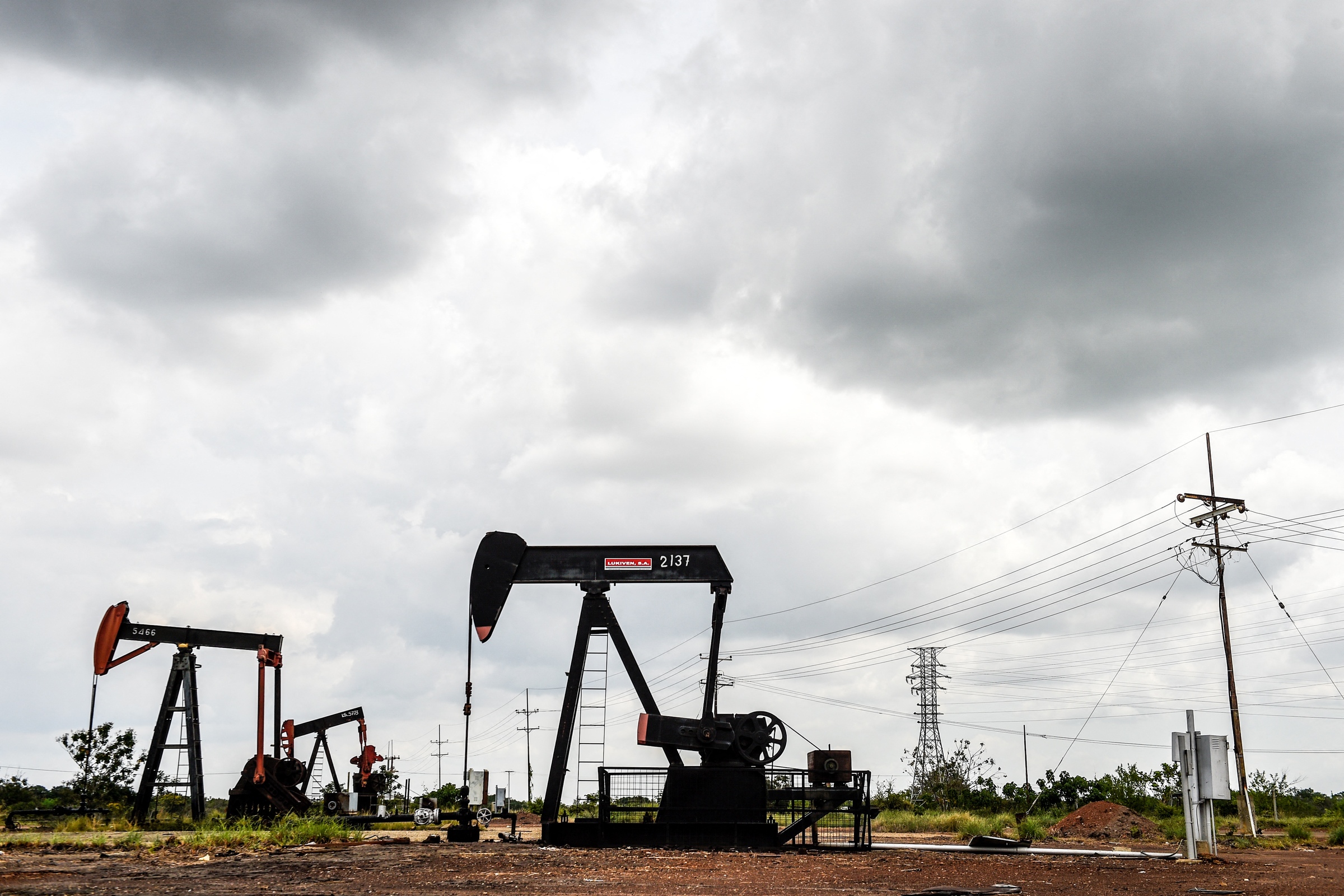 |
Oil pumping rigs in Maracaibo, Venezuela in 5/2018. Photo: *AFP*. |
According to sources and documents from Petroleos de Venezuela S.A. (PDVSA), the complete halt of oil exports – including vessels leased by partner Chevron – could force the country to rapidly cut production, as storage tanks and floating offshore facilities have filled quickly in recent weeks.
According to data from the International Energy Agency (IEA), Venezuela possesses crude oil reserves of approximately 303 billion barrels, accounting for about 17% of the global total. The country once produced up to 3,5 million barrels of oil per day, before Hugo Chavez and Maduro took control.
However, in recent years, production has fallen to approximately 1 million barrels of oil per day, equivalent to 0,8% of the global total, due to a lack of investment, maintenance, international sanctions, and an economic crisis that has driven the oil and gas industry into decline.
At a press conference on 3/1, President Trump stated he would bring the world's largest oil and gas corporations to invest billions of USD in Venezuela. According to him, these corporations would cover the costs to rebuild the country's dilapidated extraction infrastructure.
However, experts believe this plan will not be easy. Any business looking to reinvest in Venezuela would face a series of challenges, from security risks and dilapidated infrastructure to legal disputes related to the operation to arrest Maduro and the risk of prolonged political instability.
Phien An (according to Reuters)