Vingroup, a prominent Vietnamese conglomerate, announced on 26/1 its entry into the carbon credit market with two significant projects focused on electric motorcycles and charging stations. These initiatives aim to reduce greenhouse gas emissions and generate revenue through the sale of carbon credits. The charging station project, in particular, is projected to reduce up to 3,5 million tons of CO2 each year.
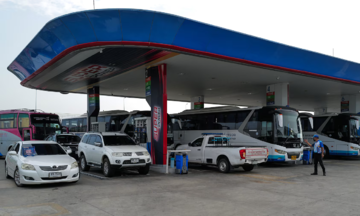
The V-Green charging station carbon credit project is registered under Verra's VCS standard, one of two widely recognized international carbon credit standards Vingroup is utilizing. For this infrastructure, the enterprise led by billionaire Pham Nhat Vuong plans to establish approximately 6,000 car charging stations with 620,000 charging ports by 2029. Project development commenced in 4/2024, with an estimated charger lifespan of 10 to 15 years. This transition from fossil fuels to electricity, with its inherently lower emission factor, is the primary driver behind the projected CO2 reduction.
The project operates with the participation of local communities and cooperative, franchised partners. Vingroup has clarified that it retains ownership of the carbon credits generated by franchised charging stations within the project.
 |
Users driving a VinFast Evo200 electric motorcycle. *Photo: Ngoc Thanh*
A carbon credit is a tradable license or certificate, possessing commercial value, that grants its holder the right to emit one ton of CO2 or another greenhouse gas from a specified list. According to statistics from the Carbon Credits exchange, the price of carbon credits in the voluntary market in 2025 is between 4-6 USD per credit. If Vingroup successfully sells its credits within this range, it could generate 14-21 million USD annually from the charging station project alone.
Prices could be higher if credits are approved for sale to airlines under the Corsia program (a program for reducing and offsetting greenhouse gas emissions with international flights), typically fluctuating around 20 USD per credit. Late last year, Verra announced that its VCS standard was approved for eligibility to participate in Corsia during its first compliance phase, 2027-2029.
The VinFast electric motorcycle carbon credit project is registered under Gold Standard's GS4GG standard. For this project, Vingroup will collect data, monitor sales volume, distance traveled, and corresponding emission reductions. This project is currently in the stakeholder consultation phase, a mandatory step in the carbon credit project registration process, and is expected to last for five years, with the possibility of two renewals.
Prior to Vingroup's initiative, Selex Motors successfully registered a small-scale electric motorcycle carbon credit project under the Gold Standard. Their project sold credits for five years, with a total projected emission reduction of over 197,000 tCO2.
Thuy Truong