"One hectare of Ngoc Linh ginseng cultivation requires approximately 3 billion VND for seedlings. After five to seven years, if conditions are favorable, it can yield 6-7 billion VND, averaging a profit of about 500 million VND per year," shared Thao, a long-time ginseng farmer. According to her, this profitability is attractive compared to many other crops, but the high risks and significant initial investment deter many potential growers.
In the initial years, Thao frequently faced low plant survival rates and the constant fear of theft during harvest season. More recently, as production has increased, market access has become a challenge for these ginseng farmers. This is primarily due to weak purchasing power and the product not yet having a geographical indication, combined with a market flooded with counterfeit goods. These factors leave growers like Thao in a predicament: "we have the goods, but they are hard to sell."
On the market, Ngoc Linh ginseng remains among the most expensive medicinal herbs, with prices typically ranging from 100-200 million VND per kilogram, depending on root size and age.
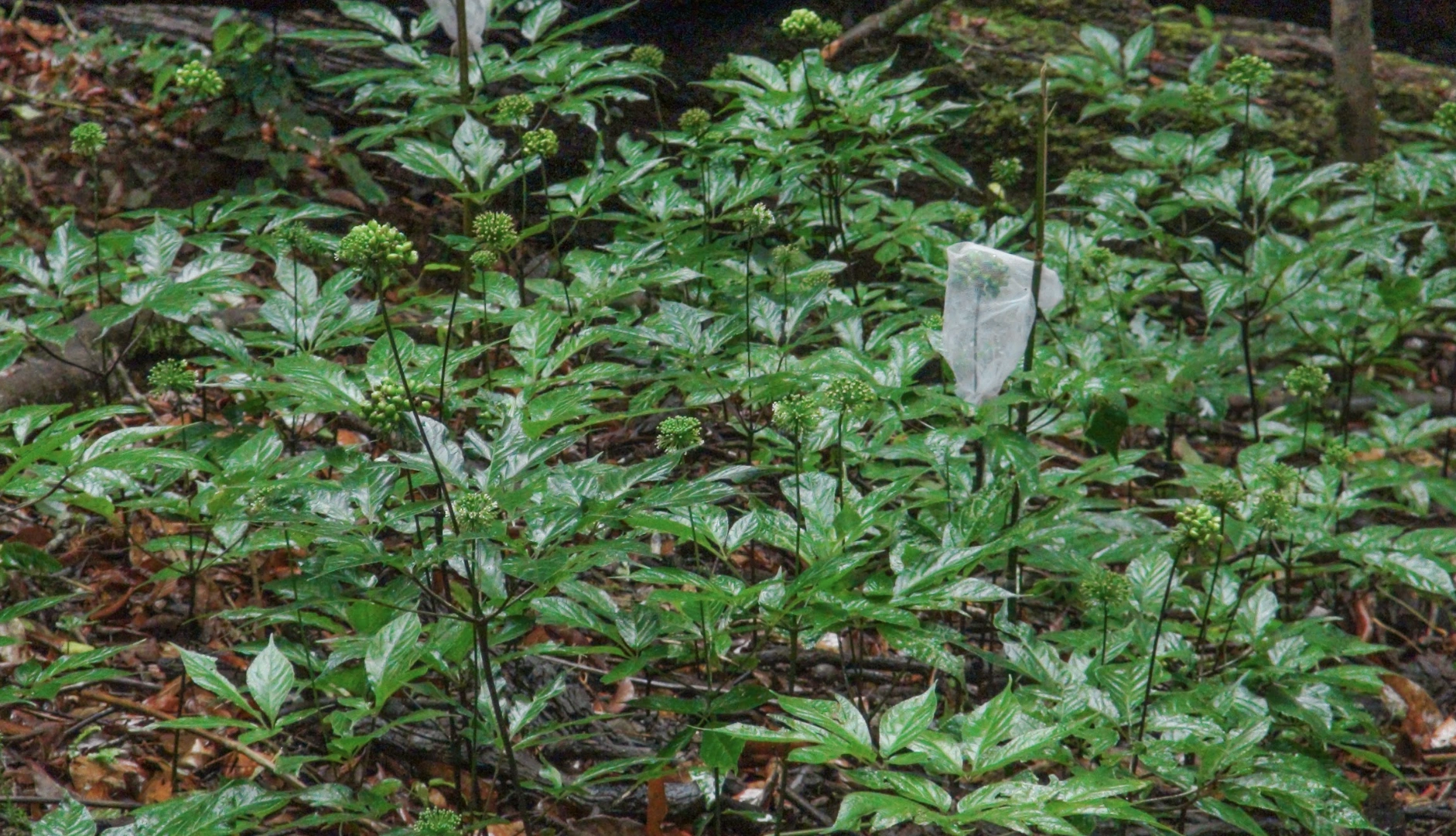 |
Ngoc Linh K5 ginseng garden in old Kon Tum (now Quang Ngai). Photo: Thi Ha |
Since 1997, when the value of ginseng became widely recognized, unsustainable exploitation pushed this medicinal plant onto the Red List, facing extinction. Subsequently, cultivation models under the forest canopy were implemented, laying the groundwork for future development. However, after over 20 years, the scale of cultivation remains fragmented.
Nguyen Tan Liem, Director of the Department of Science and Technology of Quang Ngai, stated that Ngoc Linh ginseng seed sources are currently inconsistent, technical processes among cultivation areas lack uniformity, and deep processing capacity is limited. Crucially, the prevalence of counterfeit and untraceable products directly impacts the reputation and brand value.
Ngoc Linh ginseng thrives only under the canopy of primary forests, requiring a growth cycle of six to 10 years to reach optimal quality. The survival rate after many years is only about 40-60%, leading to high investment costs and significant risks. With initial investments reaching billions of VND per hectare, few farmers can scale up production.
Furthermore, legal barriers are also a major bottleneck for this medicinal herb. Pham Xuan Quang, Chairman of the People's Committee of Mang Ri commune, explained that most ginseng cultivation currently takes place under natural forest canopies but lacks land use right certificates. This prevents farmers from registering cultivation area codes and participating in the geographical indication system, making it difficult to link with businesses for consumption.
"We are seeking solutions to support farmers and businesses, but we need more specific mechanisms to develop this medicinal plant," Quang said, adding that Ngoc Linh ginseng is constrained by major bottlenecks in production organization and market operation, rather than its inherent potential.
Expanding the production scale of this "national treasure" also faces numerous market challenges. According to Nguyen An, Commercial Director of Vingin Joint Stock Company, the prevalence of fake ginseng, mainly from wild pseudo-ginseng and smuggled foreign goods, makes it difficult for consumers to distinguish genuine products. Many products labeled as Ngoc Linh ginseng are, in fact, cheap day ginseng.
"Some varieties have a wholesale price of under 1 million VND per kilogram but are sold at prices equivalent to real Ngoc Linh ginseng," he noted.
Discovered 53 years ago on the Ngoc Linh mountain range, Ngoc Linh ginseng transformed from a rare forest plant into a recognized national product in 2017 and gradually became a "national treasure," opening up development opportunities for Vietnam's medicinal plant industry. Nguyen Quang Trung, Deputy Director of the Department of Agriculture and Environment of Quang Ngai, reported that the province's ginseng cultivation area currently spans about 3,225 hectares. With significant development potential, Trung believes Ngoc Linh ginseng could become a multi-billion USD industry if developed correctly.
Indeed, many countries worldwide have successfully transformed valuable medicinal herbs into billion-dollar industries. In South Korea, for example, ginseng only truly became an industry when developed through a complete value chain. Products extended beyond fresh roots to functional foods, beverages, and cosmetics, thereby increasing their value many times over through standardization and global brand building.
In Vietnam, some businesses have started to move in this direction. Vingin currently develops over 30 product lines from ginseng, while also collaborating with farmers by providing seeds, transferring technical expertise, and guaranteeing off-take. According to Nguyen An, this approach helps expand cultivation areas and ensures a stable supply of raw materials for processing.
Thaco Agri, the agricultural company of Tran Ba Duong, recently surveyed a Ngoc Linh ginseng cultivation area of approximately 3,500 hectares in Tra Linh commune, aiming for a high-tech production model.
Vietnam aims to expand its ginseng cultivation area to about 10,000 hectares by 2030, more than three times the current size, and to boost research, gene conservation, and standardize production processes. However, to achieve this goal, beyond expanding acreage, a complete value chain needs to be established—from seeds, cultivation, and inspection to processing and market access for Ngoc Linh ginseng. As long as the market remains confused with genuine and fake products, legal frameworks are unclear, and production is not integrated into a value chain, this medicinal plant will struggle to move beyond being a specialty product, despite its status as one of the world's most expensive.
From a management perspective, Nguyen Tan Liem stated that the locality is promoting the application of science and technology, including DNA analysis to differentiate real from fake ginseng. Concurrently, it is developing a set of standards based on active ingredient content and expanding geographical indications. These initiatives are considered foundational for long-term quality control and brand protection.
Thi Ha