On 29/3, Prime Minister Pham Minh Chinh surveyed the proposed site for a strategic petroleum reserve in Hai Binh ward, Thanh Hoa province, within the Nghi Son economic zone. The Prime Minister requested Thanh Hoa province to quickly work with households whose land is slated for acquisition and expedite site clearance. Concurrently, the Ministry of Industry and Trade was instructed to guide project development for rapid deployment in emergencies.
The Prime Minister emphasized the need to diversify supply sources, stating, "Investigate who can perform well and assign them to implement the project, with the goal of ensuring Vietnam's energy security."
This initiative follows previous discussions by the Prime Minister with leaders of countries possessing significant petroleum reserves and production capabilities, seeking cooperation to establish strategic reserves, including the Nghi Son location. Last week, during an official visit to the Russian Federation, the Prime Minister met with Zarubezhneft Company, a key partner in Vietnam's oil and gas sector. The group proposed long-term, stable oil and gas supply and developing an oil reserve system in Vietnam.
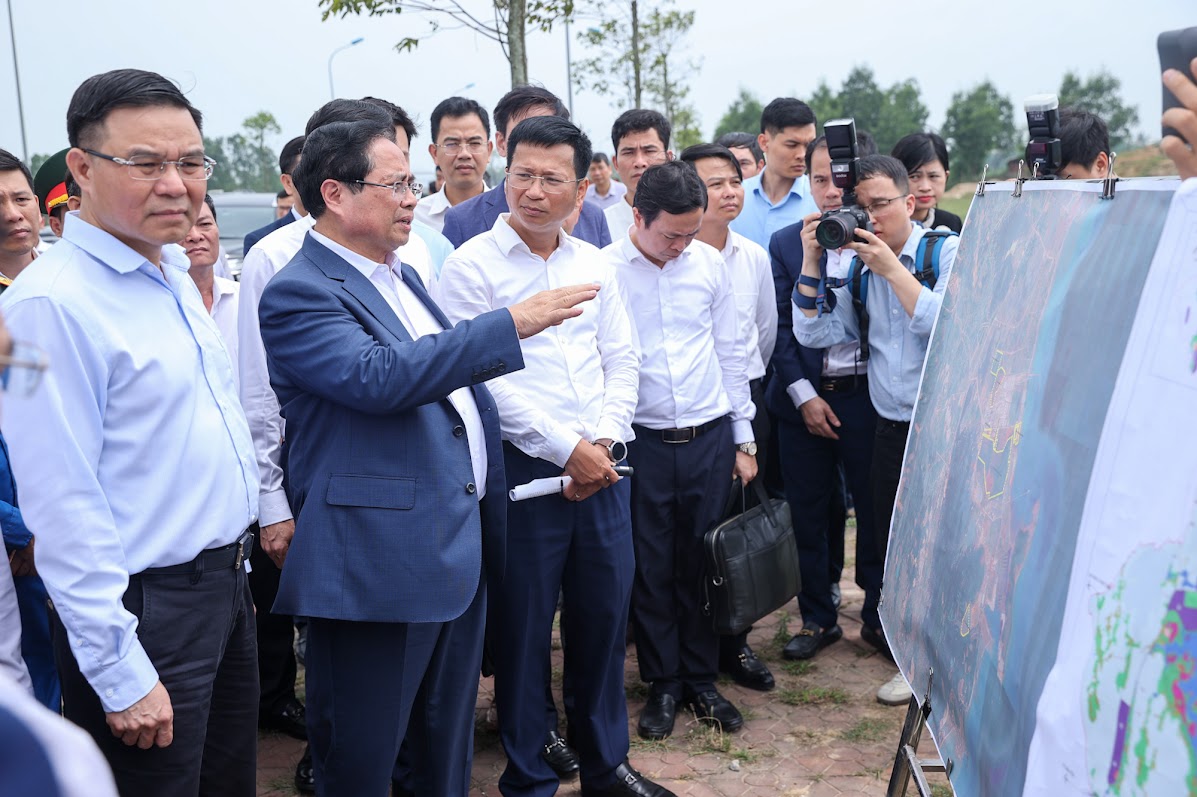 |
Prime Minister Pham Minh Chinh surveyed the proposed site for a strategic petroleum reserve in Nghi Son, on 29/3. *Photo: VGP* |
Currently, Vietnam does not have a separate national petroleum reserve. Existing reserves are stored at the warehouses of major petroleum wholesalers through contracts, with fees paid according to norms to the units. This reserve level is only about seven to 10 days of consumption.
According to Decision 861/2023 on the planning of petroleum and gas storage and supply infrastructure, Vietnam will build its own petroleum storage facilities to increase reserve capacity. The total national crude oil and petroleum product reserves aim to reach 75-80 days of net imports, increasing to 90 days by 2030. In Conclusion 14, the Politburo also directed Vietnam to promptly develop a national strategy for long-term supply and reserve of raw materials and fuels.
Vietnam plans to soon build a strategic petroleum reserve amidst ongoing tensions in the Middle East, creating the largest "energy bottleneck" ever. Experts believe that establishing a national strategic petroleum reserve system is a crucial intervention tool for the State to regulate supply-demand and prices. Experts also noted the development of centralized energy reserve infrastructure for petroleum, liquefied natural gas (LNG), and other energy sources.
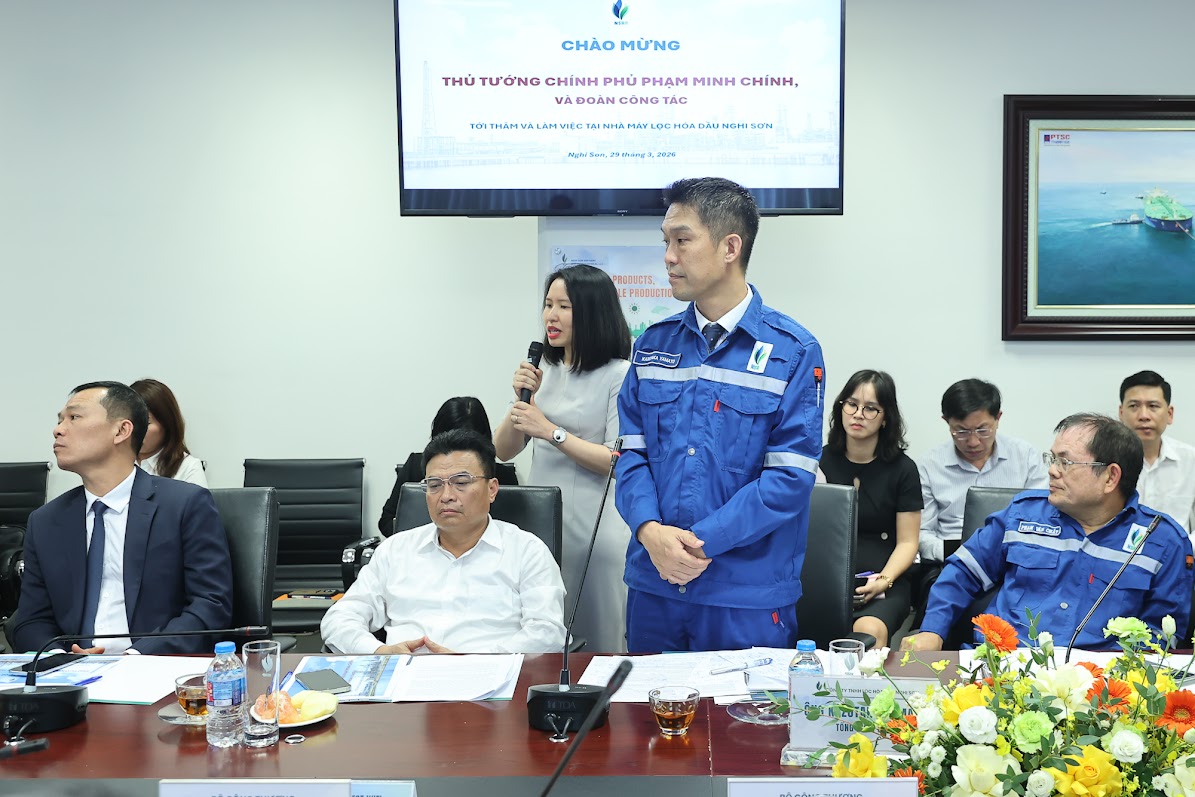 |
The General Director of Nghi Son Refinery reported at the meeting. *Photo: VGP* |
At the meeting with the Prime Minister on the same day, leaders of Nghi Son Refinery and Petrochemical Company stated that the plant was operating stably at maximum capacity in March. They had secured sufficient crude oil sources to operate continuously until the end of May, thereby maximizing output to meet domestic demand. Nghi Son Refinery and Petrochemical is a joint venture project invested by major corporations from Vietnam, Japan, and Kuwait. The plant has a designed capacity of about 200,000 barrels of crude oil per day, equivalent to 10 million tons per year. Under normal conditions, the plant supplies petroleum products to the Vietnamese market, meeting about 35% of domestic demand.
Prime Minister Pham Minh Chinh said Vietnam will continue to work with relevant countries and partners to support and ensure crude oil input supply for the project. The government is also promoting solutions to facilitate the transportation of petroleum through the Strait of Hormuz to Vietnam. The government leader affirmed that Vietnam will expedite the construction of a strategic crude oil reserve in the Nghi Son area, serving the plant and other needs. Additionally, he requested the joint venture parties to urgently diversify crude oil input sources for the project. According to the Prime Minister, the parties need to innovate their cooperation mindset based on the spirit of harmonious benefits and shared risks. He also proposed that, in the current context, the plant temporarily limit the production of other petrochemical products to focus on petroleum products, especially jet fuel.
By Phuong Dung