On 27/3, the University of Michigan released its March consumer confidence survey results. The index fell to 53,3 points, the lowest since 12/2025. This figure was also below analysts' forecasts in a previous FactSet survey.
"Confidence declined across all age groups and political affiliations," stated Joanne Hsu, director of the University of Michigan's surveys. "The sharpest drop was among middle and high-income consumers, who own stock assets, due to surging gasoline prices and financial market volatility following the conflict."
The conflict in the Middle East is driving global oil prices up more than 50%, while US stock indices have fallen about 6% in the past month. Investors doubt the conflict will end soon, despite US President Donald Trump stating they are negotiating with Iran.
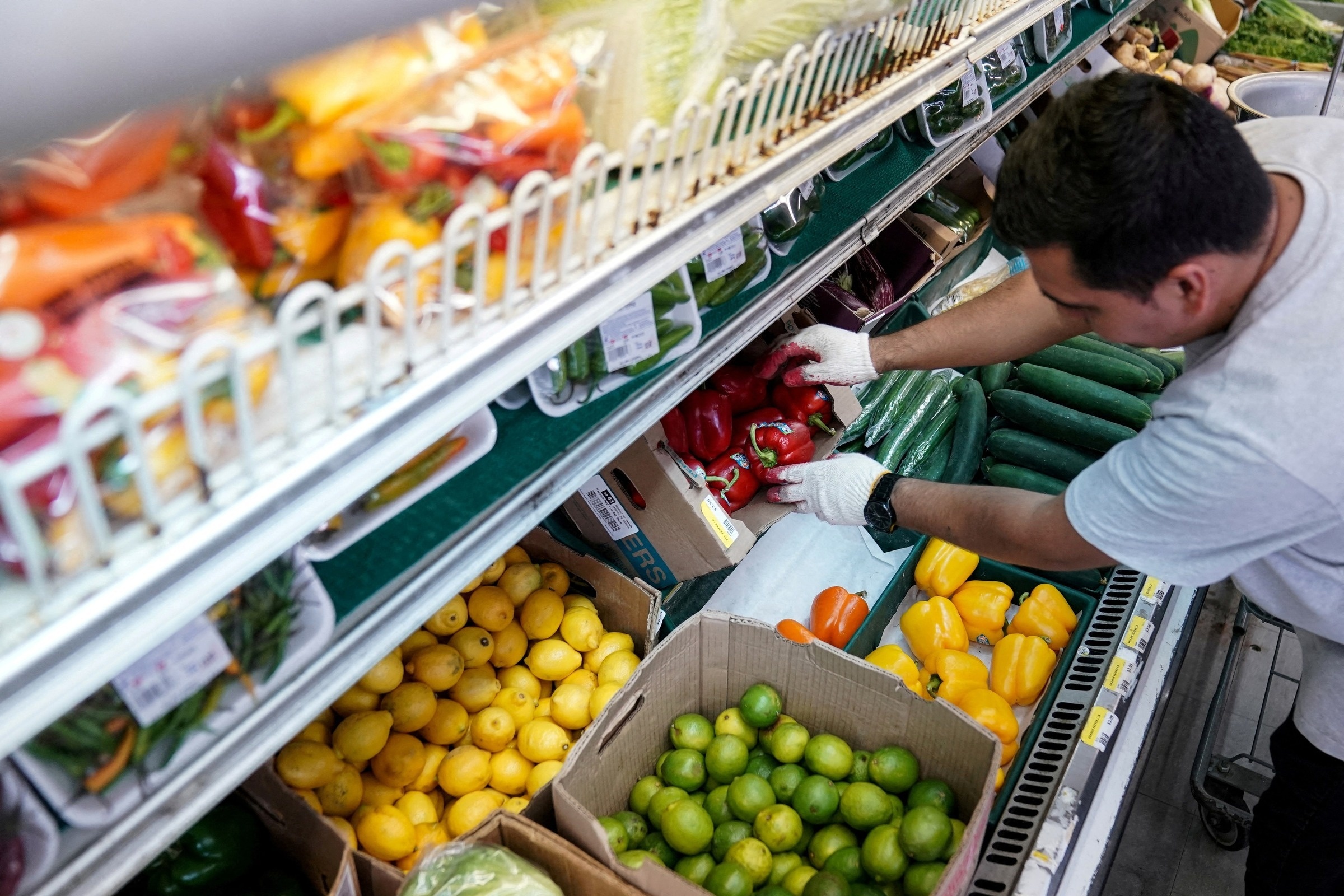 |
An employee arranges vegetables in a supermarket in Washington, US. *Photo: Reuters* |
If the Middle East conflict persists for months, the economic outlook could quickly worsen, creating a downward spiral. A declining stock market would lead to weak spending, ultimately triggering a recession.
"In a K-shaped economy, the impact from high-income groups could quickly spread," warned Heather Long, chief economist at Navy Federal Credit Union.
The survey also revealed that Americans expect inflation next year to reach 3,8%. Last month, they only anticipated 3,4%. However, they do not believe high inflation will persist for the next 5-10 years.
This somewhat reassures the US Federal Reserve (Fed). The agency closely monitors public inflation expectations, especially long-term ones, as these figures reflect Americans' confidence in the Fed's ability to control prices. The Fed's target for the personal consumption expenditure (PCE) index is a 2% increase. In January, this figure rose 2,8%.
"Consumers may not believe recent negative developments will be prolonged. However, this view could change if the Iran conflict continues or energy prices impact overall inflation," Hsu stated.
Nevertheless, declining consumer confidence does not always equate to weaker spending. The index hit a record low in 2022 when US inflation reached a 40-year high. Consumer confidence also plunged in 2023 when the US Congress was deadlocked over debt ceiling negotiations. Yet, during those periods, Americans continued to spend.
Consumer spending currently accounts for two-thirds of the US economy. This activity is more heavily influenced by the labor market, such as whether layoffs increase. Last year, despite weak job growth, unemployment claims remained at historical lows.
Since mid-2023, US wage growth has consistently outpaced inflation, meaning consumers still have spending power. However, if layoffs rise and finding jobs becomes more difficult, they will be forced to tighten their belts.
In fact, spending has shown signs of weakening in recent months. Retail sales in January fell 0,2% after remaining flat in 12/2025. Cold weather is believed to be the reason for restrained spending in the first month of the year.
By Ha Thu (based on Reuters, CNN)