Last week, global gold prices briefly surpassed USD 4,600 before adjusting to approximately USD 4,360, then rebounded to close near USD 4,500 an ounce.
This trend reinforces the expectation that gold has formed a short-term bottom, holding firm within the USD 4,300-4,600 support range.
A Kitco survey of 16 experts revealed that half anticipate gold prices to rise next week, 19% expect a decline, and 31% foresee prices remaining stable. Concurrently, an online survey of 263 individual investors showed that 53% expect an increase, 23% predict a decrease, and 24% believe the precious metal will maintain its current price.
Some experts suggest the recent dip was an overreaction to geopolitical tensions, while gold's long-term upward trend remains intact. Technical factors, such as maintaining the support zone and an upward trend along the 200-day moving average, continue to support the precious metal's price.
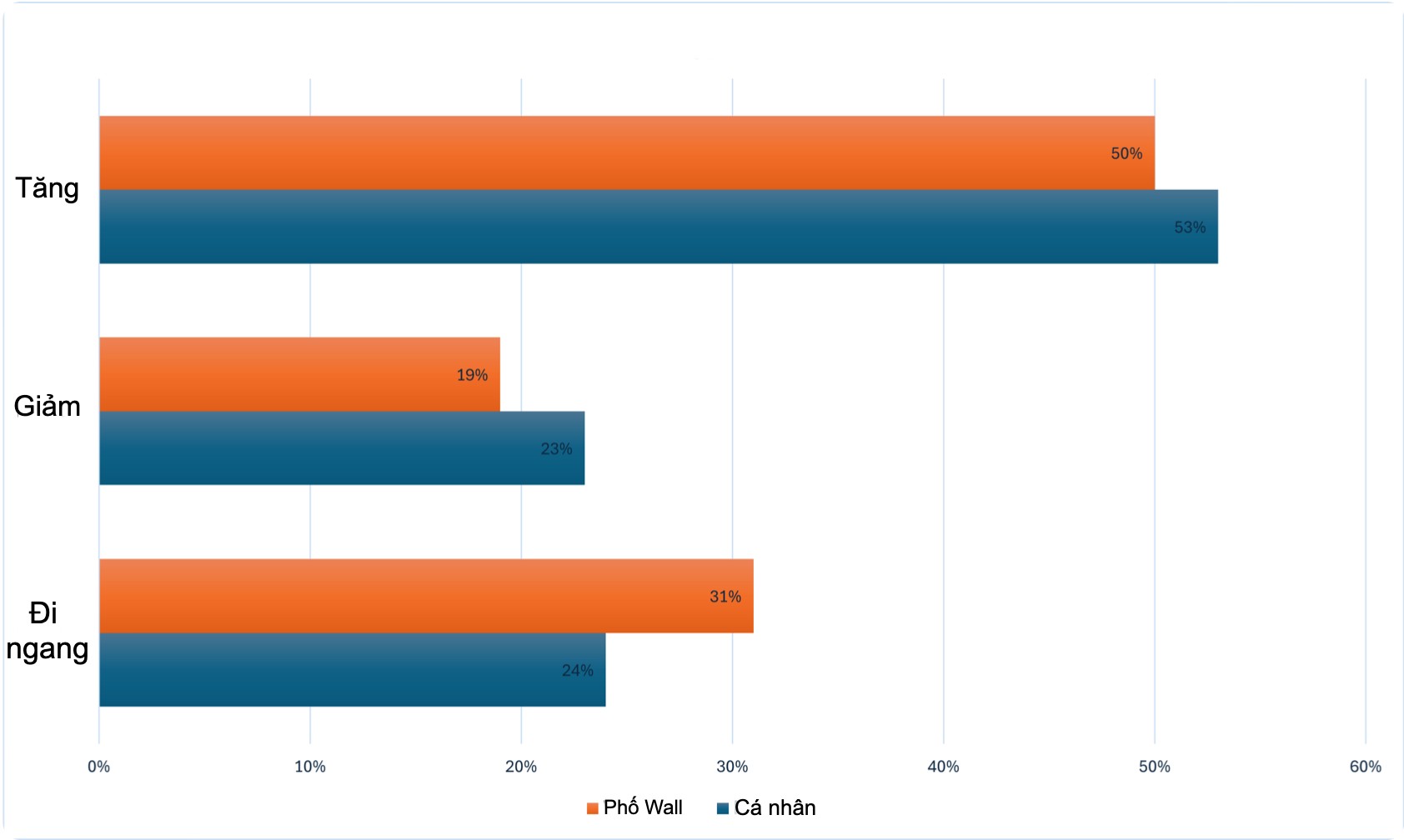 |
A Kitco survey of Wall Street and individual investors on gold price movements from 31/3 to 3/4.
Marc Chandler, Managing Director at Bannockburn Global Forex, commented, "Spot gold prices held the 200-day moving average around USD 4,092, the lowest level since last November."
"The upward momentum was capped mid-week, with an expected target above USD 4,602. If it surpasses this level, the technical outlook becomes more positive, potentially heading towards USD 4,760. However, escalating conflict in Iran could push prices back to their lows, with a support zone around USD 4,350-4,375."
"There is speculation that if Middle Eastern oil-exporting countries need revenue, they might be selling US bonds and gold", he added.
John Weyer, Director of Commercial Hedging at Walsh Trading, noted that instability from Iran's tensions makes the metal market difficult to forecast. He believes technical factors remain important, but geopolitical risks could unexpectedly push gold prices well beyond the USD 5,000 mark.
Next week, the market will focus on the US monthly jobs report, data seen as a key factor influencing monetary policy expectations. Additionally, statements from Federal Reserve Chair Jerome Powell, along with other economic indicators on employment, consumer confidence, and manufacturing purchasing managers' index (PMI), will be released.
Quynh Trang