The Australian Department of Home Affairs announced on 10/3 that new regulations would take effect the following day.
The subclass 407 visa allows foreign workers to participate in vocational training programs in Australia for up to two years. This enables them to gain work experience, which can lead to skilled or permanent residency visas, eventually allowing them to apply for permanent residency.
Previously, applicants could apply for the subclass 407 visa concurrently with their sponsoring employer's application. If their previous visa expired while in Australia, they would immediately receive a bridging visa to remain in the country while awaiting their subclass 407 visa.
Under the new regulations, this process is sequential. Applicants must wait for government approval of the employer's sponsorship eligibility and the nominee application before submitting their subclass 407 visa application. A bridging visa is only granted after the final step, specifically once the visa application has been successfully lodged.
Australian officials explained that the new rules ensure training programs genuinely support skill development, aiming to reduce "permanent temporary stay" situations. This phenomenon involves individuals ineligible for permanent residency repeatedly applying for temporary visas to prolong their stay in Australia. Such practices destabilize the immigration system and make individuals vulnerable to exploitation.
The department advises sponsoring entities to complete trainee procedures before the planned training start date. Applicants already in Australia must maintain a valid visa while awaiting approval of their sponsoring entity.
 |
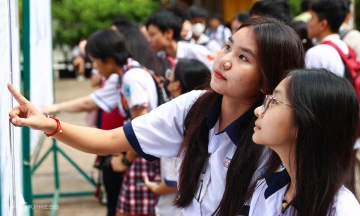
Students at a vocational training facility in Australia. *Photo: TAFE International Western Australia Fanpage* |
Earlier this month, Australia surprised many international students by doubling the post-study work visa (subclass 485) application fee to 4,600 AUD, effective immediately without prior notice.
These changes follow a series of policy tightenings for international students over the past two years, aimed at controlling immigration levels.
For example, the post-graduation work period for international students was reduced from 4-6 years to 2-4 years, English language requirements increased by 0,5 points to 6,0-6,5 IELTS, and financial proof and student visa application fees also rose.
Last year, Australia capped international student intake at 270,000, a decrease of more than 53,000 from the previous year. In 2026, the cap will increase to 295,000, though this figure remains 8% lower than the peak period following the Covid-19 pandemic.
By Khanh Linh