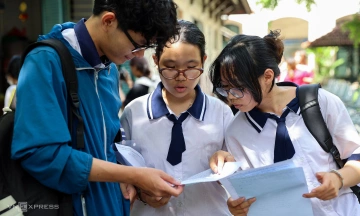
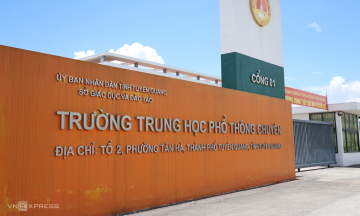
One day before the high school graduation exam, localities nationwide finalized all preparations, encompassing facilities and the deployment of officials and teachers.
In TP HCM, the locality with the highest number of candidates, nearly 143,000 students, over 25,000 individuals have been mobilized, including over 18,000 invigilators.
The city reviewed all security and safety conditions, including the installation of 24/24-hour surveillance camera systems. The Department of Education and Training stated that over 240 exam venues had previously served as grade 10 exam locations in early june, ensuring their suitability.
The department also provided training for all officials and teachers regarding the exam. This included specific coordination with the police to prevent candidates from violating regulations, detect exam fraud, and prepare security screening equipment.
 |
Deputy Minister of Education and Training Le Quan inspected preparations for the high school graduation exam in Can Tho in early june. Photo: MOET
In Ha Noi, over 129,000 candidates will sit for the exam at over 220 locations. All exam venues have conducted trial runs of their technical systems, including cameras, computers, photocopiers, backup generators, and the electricity, fan, and lighting systems in the exam rooms.
The city also provided training on preventing high-tech fraud, paying attention to details such as observing candidates' clothing. This measure aims to prevent the misuse of thick, loose attire to conceal miniature devices like earphones, cameras, recording devices, or personal items for transmitting exam questions or receiving answers from outside.
This year marks the first time the high school graduation exam is organized under a two-tier local government model. Consequently, Lao Cai established support groups based on communal clusters, formerly at the district level, to enhance assistance for exam venues, especially in mountainous, remote areas, and locations at risk of floods and landslides.
The province also allocated approximately 4.3 billion dong to support boarding, semi-boarding students, and those in difficult circumstances participating in the exam.
Many high schools in Lao Cai and Da Nang encouraged students from distant or disadvantaged areas to remain at school immediately after the closing ceremony. This ensured their health, psychological well-being, and academic readiness. Some institutions, such as Nuoc Oa Ethnic Boarding Secondary and High School (Tra My commune, Da Nang), arranged accommodation for boarding students and assigned teachers, medical staff, and caterers to accompany them throughout the exam.
In An Giang, exam papers were transported to the Phu Quoc special zone. For the Kien Hai special zone, with nearly 160 candidates, the "Volunteer Police Vehicle Team" transported students to Rach Gia ward yesterday afternoon to participate in the exam.
The provincial police also formed several teams to support candidates and their families, including "communication soldiers", "security and safety assurance vanguard", and a "hotline support information reception team" for candidates.
Phu Tho, Thanh Hoa, Nghe An, Hue, Dong Nai, Vinh Long, and other provinces confirmed their readiness with numerous contingency plans to support candidates in unexpected situations or those affected by natural disasters.
Meanwhile, various ministries and sectors, including public security, cipher, health, and electricity, collaborated with the Ministry of Education and Training to ensure the exam's safe execution. Nearly 6,000 university officials and lecturers traveled to localities yesterday to inspect and supervise the exam boards.
 |
Backup generator at Ngo Quyen High School, Dong Nai. Photo: Cong Nghia/Bao Dong Nai Online
The 2026 high school graduation exam will take place on june 11-12, involving over 1.2 million candidates, an increase of over 61,600 compared to last year. The total number of exam locations nationwide is nearly 2,500. Candidates will complete registration procedures this afternoon.
According to the Ministry of Education and Training, the exam structure remains largely stable, with only minor technical adjustments to regulations to align with organizational restructuring and the two-tier local government model.
Challenges include the risk of extreme weather conditions, such as heatwaves and storms, during the exam period. Additionally, the candidate scale in many localities has significantly increased after mergers, requiring tighter management and operations. The risk of fraud using high-tech devices and artificial intelligence continues to be a concern for authorities.
Duong Tam